Abstract:China's top anti-graft body warned Walmart Inc. and its membership chain Sam's Club over the removal of products from Xinjiang Uygur Autonomous Region.
Walmart Inc., an American multinational retail corporation that operates a chain of hypermarkets, discount department stores, and grocery stores from the United States, headquartered in Bentonville, Arkansas, faces backlash from Chinese consumers As Sams' Club removed items from Xinjiang.
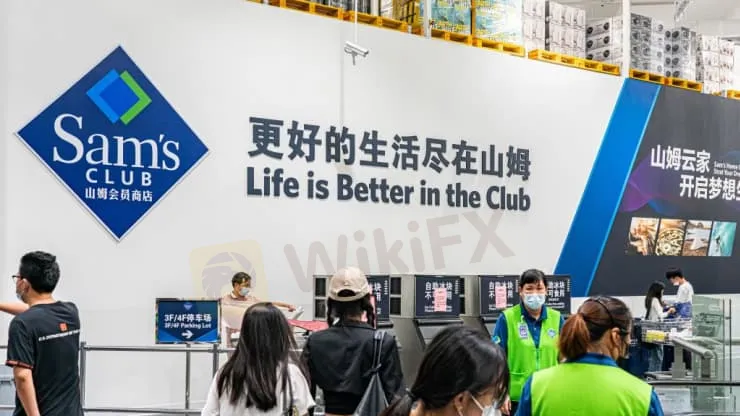
As much as American megacorps have tried to balance their economic interests in China with Washington's exhortations about genocide in Xinjiang, they're increasingly finding themselves between a rock and a hard place. They can either be denounced at home for using cotton and other items produced in Xinjiang, or face a boycott or potential ban in China if they speak out.
Enough to Washington's delight, it appears Wal-Mart, the largest retailer in the US, which also has a thriving operation in China, has chosen the latter.
To wit, Bloomberg reports that Chinese social media platforms like Weibo erupted with criticism aimed at Wal-Mart after the company was accused of blacklisting products from Xinjiang from its Sams' Club stores in the country. BBG added that the backlash “raises the risk that the world's biggest retailer will be swept into escalating tensions between China and the US over the western province.”
Posts on Chinese social media showing zero results for the word “Xinjiang” once plugged into Sam's Club's Chinese-market app were going viral, with some even making it into the US social media ecosystem.
The issue was the top-trending item on Weibo as of Friday afternoon, with more than 170MM views and over 10K.
Some even claimed that Chinese customers were withdrawing their Sams' Club membership in droves.
Europe and the United States press the Chinese people's cohesion switch again and again! Because Wal-Mart and Sam used U.S. laws in China and removed goods from Xinjiang, China, the Chinese people spontaneously withdrew from the Wal-Mart and Sam membership system.
Users claimed they had previously purchased items like apples and dates from Xinjiang that had apparently been de-stocked.
All this is happening one day after President Joe Biden signed a law barring all goods produced in Xinjiang from the US market.
According to BBG, it's unclear whether goods produced in Xinjiang were ever sold at Sam's Club, and if so, when they were removed by the retailer. Brands from Dolce & Gabbana and fast-fashion retailer H&M have all ignited similar backlash from the Chinese people over what are perceived to be insults to the Chinese nation.
In order to try and avoid facing a similar backlash, Intel has already apologized to Chinese customers after asking suppliers not to use any labor or products sourced from Xinjiang to ensure compliance with the new US law, which bars all products or services from Xinjiang from being sold in the US unless the seller can prove they weren't made with forced labor.
But Wal-Mart is really stuck here. It's already struggling to keep up with the competitive supermarket industry in China. Sam's Club has been a bright spot due to its sales of mostly imported goods (it's unclear how many products from Xinjiang were even sold by the retailer previously). Wal-Mart plans to have 100 stores in the country by 2028, up from just 33 currently.