Abstract:World trade has never stopped as long as world working hours are still open. 24 hours a day from Monday to Friday. The world financial centers integrate to form the world’s foreign exchange market. Information and communication network technology support the integration between world financial centers that can make trade more quickly and efficiently.
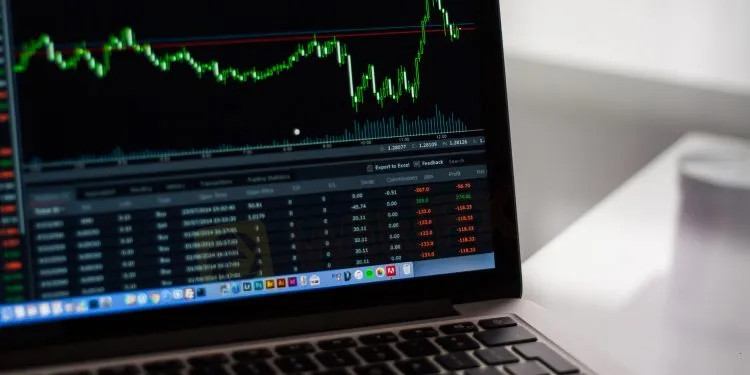
In the world of foreign exchange trading, there are many new terms that traders may only hear once. Thus, many traders who do not understand the world of foreign exchange well. Then, have you ever heard the word “Spot Market?” Understanding the spot market will make you go one step to becoming a successful trader.
What is Spot Market?
A spot market is a place where financial instruments, such as commodities, currencies, and securities, that you can trade for immediate delivery. Transfers are cash exchanges for financial instruments. Futures contracts, on the other hand, are based on the delivery of basic assets in the future.
Exchange and over-the-counter (OTC) markets can provide spot trading and/or futures trading.
Understanding Spot Market
Spot markets are also referred to as “physical markets” or “cash markets” because direct trade is effectively exchanged for assets. While the official transfer of funds between buyers and sellers may take time, such as T+2 on the stock market and in most currency transactions, both parties agree to trade now. Non-spot transactions, or futures, agree on the current price, but the transfer and transfer of funds will be done at a later date.
Futures trading in expiring contracts is also sometimes called spot trading because the contract expires means that the buyer and seller will exchange cash for the underlying asset immediately.
Spot Price
Spot Price is the current price of a financial instrument. This is the price at which you can buy or sell an instrument immediately. Buyers and sellers create spot prices by posting their buy and sell orders. In liquid markets, spot prices can change by the second, because orders are fulfilled and new ones enter the market.
Spot and Exchange markets
Exchange brings dealers and traders who buy and sell commodities, securities, futures, options, and other financial instruments. Based on all orders given by participants, the exchange provides the price and volume currently available to traders with access to the exchange.
The New York Stock Exchange (NYSE) is an example of an exchange where traders buy and sell shares. This is a spot market.
Chicago Mercantile Exchange (CME) is an example of an exchange where traders buy and sell futures contracts. This is a futures market.
Spot Market and Over-the-Counter
Trade that takes place directly between the buyer and seller is called over-the-counter (OTC). Centralized Exchange does not facilitate this trade. The foreign exchange market (or the forex market) is the largest OTC market in the world with an average daily turnover of $ 5 trillion.
In OTC transactions, prices can be based on spot or futures prices/dates. In an OTC transaction the terms do not have to be standard, and as such, may be subject to the discretion of the buyer and / or seller. As is the case with exchanges, OTC stock transactions are usually spotted trades, while futures or forward transactions are often not spotted.