Celebrate the New Year and Usher in a Safer 2026 for All Traders!
As the new year begins, WikiFX extends our sincere gratitude to traders worldwide, our industry partners, and all users who have consistently supported us.
简体中文
繁體中文
English
Pусский
日本語
ภาษาไทย
Tiếng Việt
Bahasa Indonesia
Español
हिन्दी
Filippiiniläinen
Français
Deutsch
Português
Türkçe
한국어
العربية
Abstract:A look at the day ahead in Asian markets from Jamie McGeever

Economic data from Asia‘s two economic powerhouses kicks off the global trading day on Monday – a batch of July indicators from misfiring China, and Japan’s Q2 GDP report.
We get the first insight into how Chinas COVID-hit economy started Q3, with July readings of industrial output, retail sales, house prices and urban investment. Economists are generally looking for recovery, albeit gradual.
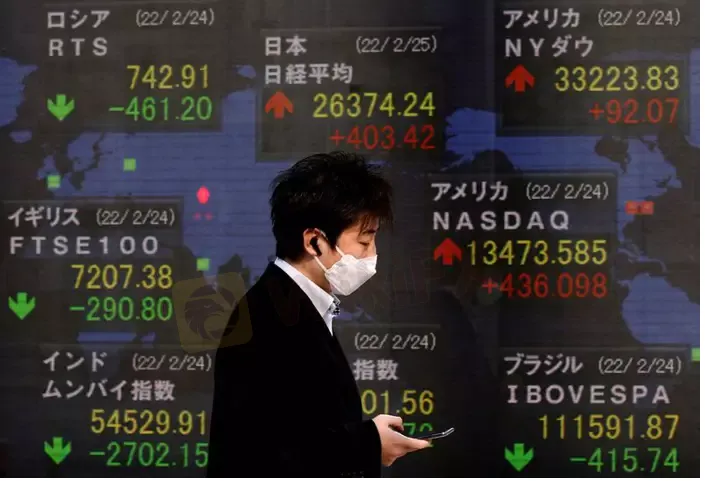
Chinese stocks snapped a five-week losing streak on Friday to close the week up 0.8%, lifted by the feel-good factor on Wall Street and an easing of Sino-U.S. tensions over Taiwan.
Also on Friday, however, five U.S.-listed Chinese state-owned companies whose audits are under scrutiny by the U.S. securities regulator said they would voluntarily delist from the New York Stock Exchange.
Meanwhile, Japans economy is expected to have bounced back strongly in the second quarter after contracting in the first, with economists forecasting quarterly growth of 0.6% and annualised expansion of 2.5%.
Japans yen rose around 1% against the dollar last week – its third weekly rise in four. Could it break convincingly through the 130 per-dollar barrier this week?
The tone across Asia on Monday will also be set by the growing hope that U.S. inflation has peaked. This could further fuel the rally in risk assets, steepen the U.S. yield curve and weigh on the dollar.
Later on Monday, the U.S. Treasury releases its “TIC” data for June, which measures flows in and out of U.S. sovereign debt. In light of the recent political strains, Chinas demand will be closely watched.
Key developments that should provide more direction to markets on Monday:
Japan Q2 GDP estimate
China industrial output, retail sales, house prices, urban investment data (July)
New York Fed manufacturing index (August)
Feds Christopher Waller speaks on banking and finance


Disclaimer:
The views in this article only represent the author's personal views, and do not constitute investment advice on this platform. This platform does not guarantee the accuracy, completeness and timeliness of the information in the article, and will not be liable for any loss caused by the use of or reliance on the information in the article.

As the new year begins, WikiFX extends our sincere gratitude to traders worldwide, our industry partners, and all users who have consistently supported us.

Dear Forex Traders, When choosing a forex broker, have you ever faced these dilemmas? Dozens of broker advertisements, but unsure which one is truly reliable? Online reviews are either promotional content or outdated/incomplete? Want to learn about real users’ deposit/withdrawal experiences but can’t find firsthand accounts? Now, your experience can help thousands of traders and earn you generous rewards! The campaign is long-term and you can join anytime.

Markets turn cautious as investors await the Fed’s December meeting minutes. The US Dollar stabilizes near 98.10, gold drops sharply from record highs, while GBP/USD, EUR/USD, and USD/JPY react to central bank signals.

As 2025 concluded, the era of coordinated central bank action officially fractured, giving way to a new market regime defined by "high volatility and low synergy." In a week dominated by "Super Central Bank" meetings, major economies charted wildly different courses, fundamentally altering currency valuations and global carry trade dynamics.