


UK Retail Sales July 2026 Fall 0.5%: What the Result Means for GBP
UK retail sales fell 0.5% in July 2026, while the three-month measure rose 1.1%. See the ONS details and what the mixed result may mean for GBP.
Original

简体中文
繁體中文
English
Pусский
日本語
ภาษาไทย
Tiếng Việt
Bahasa Indonesia
Español
हिन्दी
Filippiiniläinen
Français
Deutsch
Português
Türkçe
한국어
العربية
اردو




Abstract:The aviation sector in Nigeria, including the airline industry, is currently under existential threat due to a severe lack of foreign currency (forex). The proverbial sword of Damocles hangs on the necks of both foreign and domestic airlines operating in Nigeria.

The aviation sector in Nigeria, including the airline industry, is currently under existential threat due to a severe lack of foreign currency (forex).
The proverbial sword of Damocles hangs on the necks of both foreign and domestic airlines operating in Nigeria.
The price of aviation fuel (Jet-A1) has skyrocketed, ranging from roughly two hundred naira per liter a year ago to close to nine hundred naira at this time—supported by the product's worsening shortage in Nigeria.
The nation's ongoing currency crisis will be added to this lingering painful fuel shortage. This shortage of foreign currency has resulted in the alarming loss of the nation's external reserves, continued depreciation of the naira against the dollar, and the inability of many multinational corporations (including many airlines) to repatriate their business proceeds/dividends.
There are hundreds of millions of dollars in such “un-repatriated” funds locked in Nigeria as a result of the lack of foreign exchange (dollar, euro, pound sterling, etc.) to repatriate, even as the impacted businesses continue to slog along in the constrictive local environment.
In fact, a number of businesses have recently been forced to leave Nigeria due to the country's gnawing currency issue and overall unfavorable economic environment, which includes rising insecurity and an inflation rate that is now 20%.
Particularly, foreign airlines operating in Nigeria have frequently griped about their inability to transfer money back to their home nations. They have brought up this issue with high representatives of the Federal Ministry of Aviation, Ministry of Finance, and even the Central Bank of Nigeria on numerous occasions.
Unfortunately, none of these government agencies had offered them any helpful assistance, which just served to make their situation more hopeless and isolated.
The apex bank's unwillingness to make the dollar available for the carriers to “take home” has resulted in “blocked money” for these airlines reaching roughly US$600 million (and continuing climbing rapidly), according to documents that are readily available.
One of the large carriers, Emirate Airlines, who felt as though it was at its wits' end, recently issued a statement in which it claimed that it “has tried every avenue to address our ongoing challenges in repatriating funds from Nigeria, and we have made considerable efforts to initiate dialogue with the relevant authorities for their urgent intervention to help find a viable solution.”
The multinational carrier continued to moan, Unfortunately, there has been no improvement. Therefore, in order to prevent future losses and the impact on our operational expenses that are continuing to rise in the market, Emirates has made the painful decision to halt all flights to and from Nigeria, starting September 1, 2022.
Emirate earlier reduced its flight frequency to Nigeria from eleven to seven in an effort to reduce “trapped funds,” but as of September 1, 2022, it has decided to completely leave the country.
British Airways, which recently notified its customers of a “imminent spike in its travel tickets,” has already scaled back the number of times it offers flights to Nigeria.
In actuality, Turkish Airlines and British Airways announced they will stop selling tickets in naira. The other day, both airlines stated in separate letters that Nigerian travellers could only pay for tickets in US dollars.
Turkish Air said in particular, “dear business partner, kindly be informed that as of today, only C and Y fare classes will be available on GDSs for sale in Nigeria; unused tickets will be upgraded to Y and C class for voluntary reissue cases, fare and tax difference shall be collected for inbound or outbound travel.”
However, much earlier this year, APG Interline E-Ticketing (IET) informed its business partners in a travel advice that its members would start selling tickets in Nigeria.
In order to avoid exorbitant airfares and the inconveniences caused by frequent flight delays and/or cancellations, (potential) passengers are rejecting air travel, and business organizations and associations are switching mostly to “virtual” meetings for their executives rather than physical ones.
Who knows how long the airlines (aviation business) will slog along in the current situation. Exists a lifeline from the influential people?

Disclaimer:
The views in this article only represent the author's personal views, and do not constitute investment advice on this platform. This platform does not guarantee the accuracy, completeness and timeliness of the information in the article, and will not be liable for any loss caused by the use of or reliance on the information in the article.

UK retail sales fell 0.5% in July 2026, while the three-month measure rose 1.1%. See the ONS details and what the mixed result may mean for GBP.

Pakistan forex reserves stood at $22.506 billion on 13 August 2026, while the SBP dashboard showed a USD/PKR mark to market rate of 277.5713 on 20 August. This article separates the SBP forex reserves facts from predictions about the Pakistan rupee and the forex market Pakistan.
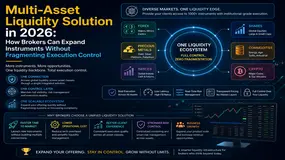
A multi-asset liquidity solution can help a broker support FX, CFDs, commodities, and indices through a more unified operating model. But adding asset classes can also create fragmented symbols, pricing, routing, margin rules, records, and client messages if controls are not designed first. This 2026 guide explains how a multi asset liquidity provider, forex CFD liquidity setup, commodity liquidity provider, and indices liquidity provider fit into a broker-owned execution service. It outlines the due-diligence questions, shared-control model, cost drivers, and 90-day implementation plan that help teams expand without making the execution chain harder to explain. The aim is not to promise deeper liquidity or better trading outcomes. It is to create evidence that a broker can supervise market access, trace order events, reconcile costs, and communicate consistently to the relevant clients when conditions are difficult.

Gold surged above $4,500 after the US Treasury expanded its purchases of longer-dated government bonds, pushing yields and the dollar lower. But this was not debt forgiveness or Federal Reserve money printing—it was a liquidity operation that exposed a much bigger fear: America may be finding it increasingly difficult to live with market-driven interest rates.
WikiFXWikiFXWikiFXWikiFXWikiFXWikiFXWikiFX