
OANDA Japan to End Browser-Based MT4 and MT5 Access in May
OANDA Japan will shut down MT4 and MT5 web terminal access at the end of May, while desktop and mobile trading remain available as the broker continues its MT4 phase-out.
Original

简体中文
繁體中文
English
Pусский
日本語
ภาษาไทย
Tiếng Việt
Bahasa Indonesia
Español
हिन्दी
Filippiiniläinen
Français
Deutsch
Português
Türkçe
한국어
العربية

Abstract:The world’s central bankers are caught up in a race to curb inflation that only the Federal Reserve can stop.
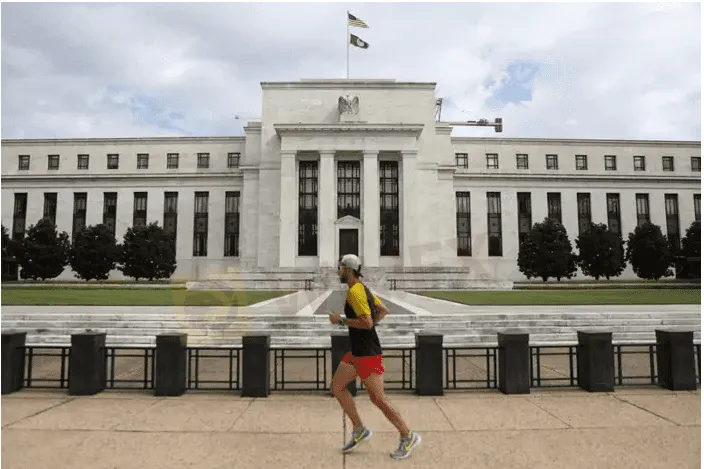
The U.S. central bank has embarked on its most aggressive policy tightening cycle for four decades, raising interest rates by 3 percentage points since January to slow runaway inflation.
That has left policymakers elsewhere with a tough choice: keep up with the Fed at the risk of hurting your own economy or watch your currency and bonds collapse as investors switch to dollars.
“There is a growing risk that central banks will err on the side of caution by overtightening,” Capital Economics economist Jennifer McKeown said. “The risk is that rate hikes beyond our expectations prompt an even deeper downturn.”
Central bankers and finance chiefs, who will meet in Washington next week, are mostly fighting inflation driven by factors including energy prices and trade supply snags.
But few economies can stomach the diet of rate hikes the Fed has adopted to cool overheated domestic demand – largely the result of massive pandemic-era U.S. stimulus that the rest of the world couldnt match.
Responses have varied, with South Korea pledging to follow the Fed, belated but robust rate hikes in the euro zone despite a looming recession, and market interventions in Japan and Britain to stem bleeding in currencies and bonds.
But they all face the same problem: there is less money to go around since the Fed turned off the taps, making investors impatient with profligate governments, stubborn central banks or lacklustre growth.
Data from the United States, the euro zone, China and Japan shows the amount of money in circulation has fallen.
That has long been a harbinger of trouble for poorer economies that rely on foreign capital, and central bankers in the Philippines and Mexico have been clear about the impact of the Feds actions on their own stances.
But it is an unwelcome throwback for central bankers in richer countries, who had thought the resilience of their economies and their own reputations as inflation fighters would cushion the effects of U.S. monetary policy.
Whats worse, worldwide rate hikes reinforce each other by depressing trade and markets, raising the risk of a global recession – as the World Bank has warned.
The damage has already become visible in financial markets, where shares and bonds have fallen sharply, leaving investors hoping the Fed will change course.
“Only the Fed can print the dollars necessary to fix the problem quickly,” Mike Wilson, chief investment officer at Morgan Stanley, said in a podcast.
“A Fed pivot is likely at some point given the trajectory of global U.S. dollar money supply. However, the timing is uncertain.”
Fed policymakers have this week restated their focus on taming inflation.
Rather than competing with each other, economist Maurice Obstfeld has suggested central bankers should team up to pursue a “gentler tightening path”.
This happened during the financial crisis, when central banks acted together to stabilise markets, and with 1985s Plaza Accord, agreed by the top five developed economies to depreciate the dollar.
But with the Fed happy for a strong dollar to bring down import prices and few signs of a political backlash against the currencys appreciation, the chances of a repeat are low.
“I think it‘s unlikely at the current juncture to a large extent because it’s not in the U.S.s interest to participate in such a move,” said Kamakshya Trivedi, head of global forex, rates and emerging market strategy at Goldman Sachs.
Fed chair Jerome Powell said recently there was no “coordination” among central banks but that he and his colleagues were “very aware of whats going on in other economies”.
Instead, governments and central banks must bear alone the cost of market interventions to support their currencies and shield their financial systems from instability.
Droves of emerging economies, including Chile, the Czech Republic and India, have intervened in the forex market, where volatility soared around 50% in two months, according to a widely watched Deutsche Bank index.
But richer countries are stepping in too.
Japan has started buying the yen for the first time since 1998 after the currency was pummelled by the central banks decision to keep rates at zero.
The Bank of England last week bought gilts to help shield pension schemes from market ire at government tax-cutting plans.
The ECB has meanwhile unveiled an emergency scheme to cap any bond yields of the euro zones 19 member countries it feels are rising too fast.
Analysts said none of these measures was likely to work unless the Fed stops raising rates, however – and for some, such actions are a sign of looming capitulation to market pressures.
“If central banks are not yet waving the white flag, it has been (unfurled),” CrossBorderCapital, a market consultancy, said in a note. “The list of policymakers using some form of yield curve control is getting longer by the day.”

Disclaimer:
The views in this article only represent the author's personal views, and do not constitute investment advice on this platform. This platform does not guarantee the accuracy, completeness and timeliness of the information in the article, and will not be liable for any loss caused by the use of or reliance on the information in the article.

OANDA Japan will shut down MT4 and MT5 web terminal access at the end of May, while desktop and mobile trading remain available as the broker continues its MT4 phase-out.

FXNX, a Saint Lucia-based forex broker, is facing numerous complaints from users regarding fund withdrawals. Some users have complained of withdrawal delays despite their account being fully verified. The exposure report for the brokerage entity has been recent, with some complaints being as latest as April 2026. As complaints piled up, we created an extensive FXNX review, focusing on user reviews, regulatory oversight, and what the trading enterprise offers to traders worldwide.

Were you denied from withdrawing funds despite a successful KYC verification by FX LIVE CAPITAL, a Saint Lucia-based forex broker? Did the brokerage firm disable your trading account in the name of false latency trading? Did you even fail to recover your initial deposit amount? This article is for you! Many traders have accused the broker of these activities on review platforms such as WikiFX. While preparing the FX LIVE CAPITAL review article, we examined user allegations while sharing a regulatory overview of the company.

BeeMarkets, a Comoros-based brokerage entity, is facing a massive backlash from users recently. They have reported about the disappearing funds, platform-related glitches and more while sharing the BeeMarkets review online. If these issues resonate with you, this is your article to read! Here, we have evaluated the user allegations against the broker, its product offerings and the regulatory supervision it is subject to.
 WikiFXWikiFXWikiFXWikiFXWikiFXWikiFXWikiFXWikiFXWikiFXWikiFX
