


FOMC Minutes Today: 3 USD and Gold Scenarios Traders Should Prepare For
The Fed releases the July FOMC minutes on 19 August 2026. Here are three USD and gold scenarios, confirmation signals, and a practical risk checklist for traders.
Original

简体中文
繁體中文
English
Pусский
日本語
ภาษาไทย
Tiếng Việt
Bahasa Indonesia
Español
हिन्दी
Filippiiniläinen
Français
Deutsch
Português
Türkçe
한국어
العربية
اردو




Abstract:Binance plans to delist 12 privacy coins, including Monero and Dash, from its platforms in Spain, France, Poland, and Italy due to regulatory pressures.
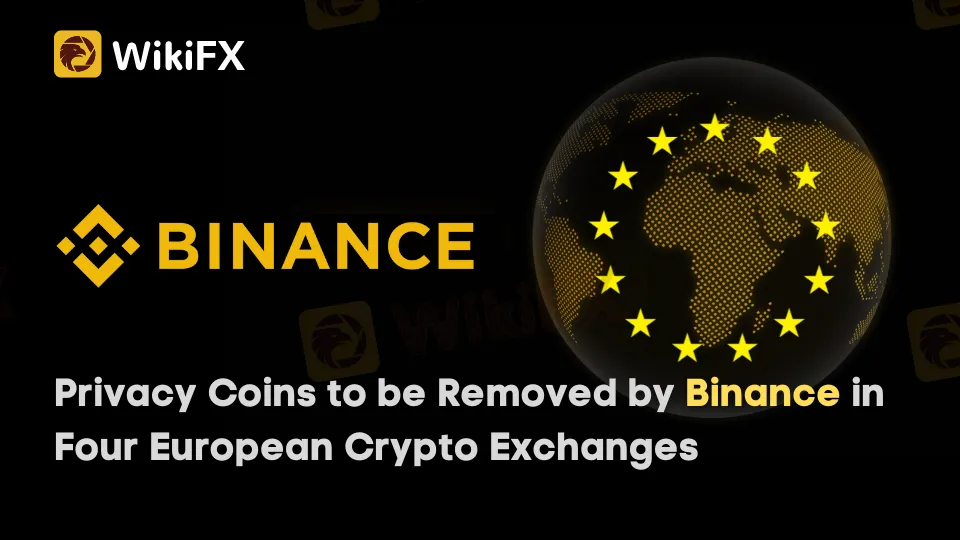
Binance, a prominent name in the realm of crypto exchanges known for its massive trade volume, recently unveiled plans to delist 12 privacy-centric digital currencies from its trading platforms in four European countries. Effective from June 26, 2023, crypto enthusiasts residing in Spain, France, Poland, and Italy will find themselves unable to buy or trade these specific privacy-oriented cryptocurrencies on the Binance platform.
The decision of Binance to exclude these privacy coins in Spain, France, Poland, and Italy was conveyed to its customers in the respective countries via emails. The list of digital currencies on the chopping block includes popular privacy coins like dash (DASH), verge (XVG), beam (BEAM), monero (XMR), navcoin (NAV), firo (FIRO), horizon (ZEN), secret (SCRT), zcash (ZEC), pivx (PIVX), decred (DCR), and mobilecoin (MOB).
In a communique to its French clientele, Binance elaborated, “Due to local regulatory obligations, we regret to inform you that Binance cannot continue offering privacy-centric digital currencies in France.” The email further read, “Starting from June 26, 2023, users located in France will not be able to buy or trade the aforementioned privacy coins via our platform.”
The fallout from this news had an immediate impact on the market.
Privacy coins recorded a 3.2% drop in value against the US dollar on Wednesday. As it stands, the aggregate market capitalization of all extant privacy coins is roughly $5.73 billion. Monero (XMR) is at the forefront of this group, despite witnessing a 2.4% dip. DASH, the second-largest privacy coin in terms of market capitalization, endured a fall of 3.5%. Notwithstanding these setbacks, the leading five privacy coins have shown a positive trend when evaluated based on the last week's metrics.
This is not the first instance of privacy coins facing delisting due to regulatory apprehensions. In 2021, major cryptocurrency exchanges in South Korea opted to eliminate several leading privacy coins from their platforms. A similar trend was observed in Japan back in 2018, which subsequently pervaded numerous other Asian nations in 2019. The recent announcement from Binance regarding its privacy coin delisting is another notch in its belt of regulatory obstacles, coming on the heels of its exit from the Canadian market and its confrontations with a local payment provider in Australia.
Ensure you're in the loop with the most recent news by downloading and setting up the WikiFX App on your mobile device. You can download the app from this link: https://social1.onelink.me/QgET/px2b7i8n

Disclaimer:
The views in this article only represent the author's personal views, and do not constitute investment advice on this platform. This platform does not guarantee the accuracy, completeness and timeliness of the information in the article, and will not be liable for any loss caused by the use of or reliance on the information in the article.
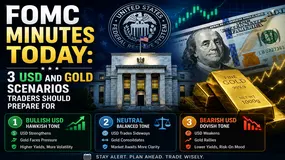
The Fed releases the July FOMC minutes on 19 August 2026. Here are three USD and gold scenarios, confirmation signals, and a practical risk checklist for traders.
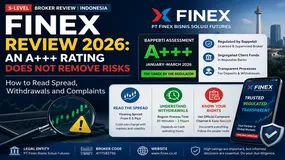
FINEX review 2026 for readers comparing an Indonesia forex broker: understand what Bappebti's A+++ rating does and does not show, then check floating spreads, withdrawals, segregated accounts and the complaint route for PT Finex Bisnis Solusi Futures.

Choosing a forex liquidity provider is not a search for the lowest displayed spread or the longest provider list. It is a broker decision about pricing integrity, depth, routing, credit, reporting, incident response, and client communication. This 2026 guide explains how a forex LP, FX liquidity provider, or liquidity provider forex arrangement fits into a broker’s execution chain; what to test before onboarding; why a “best forex liquidity provider” claim cannot replace due diligence; and how to compare cost beyond commission. Use the execution-quality scorecard, provider questions, routing scenarios, and 90-day onboarding plan to assess whether a liquidity relationship can support your actual client mix, instruments, risk model, and jurisdiction. The goal is not to make a universal ranking. It is to build evidence that your broker can explain, supervise, reconcile, and recover its execution service when market conditions are difficult.
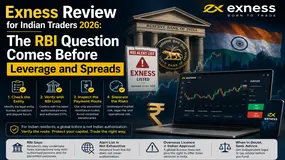
Exness review for Indian traders in 2026. This guide explains what the RBI Alert List says, what it does not say, why a global license is not Indian authorization, and how to verify permitted forex routes before funding an account.
WikiFXWikiFXWikiFXWikiFXWikiFXWikiFXWikiFXWikiFXWikiFXWikiFX