Abstract:JPMorgan admits to breaking CFTC rules, paying a $100 million fine for trade reporting lapses dating back to 2013.
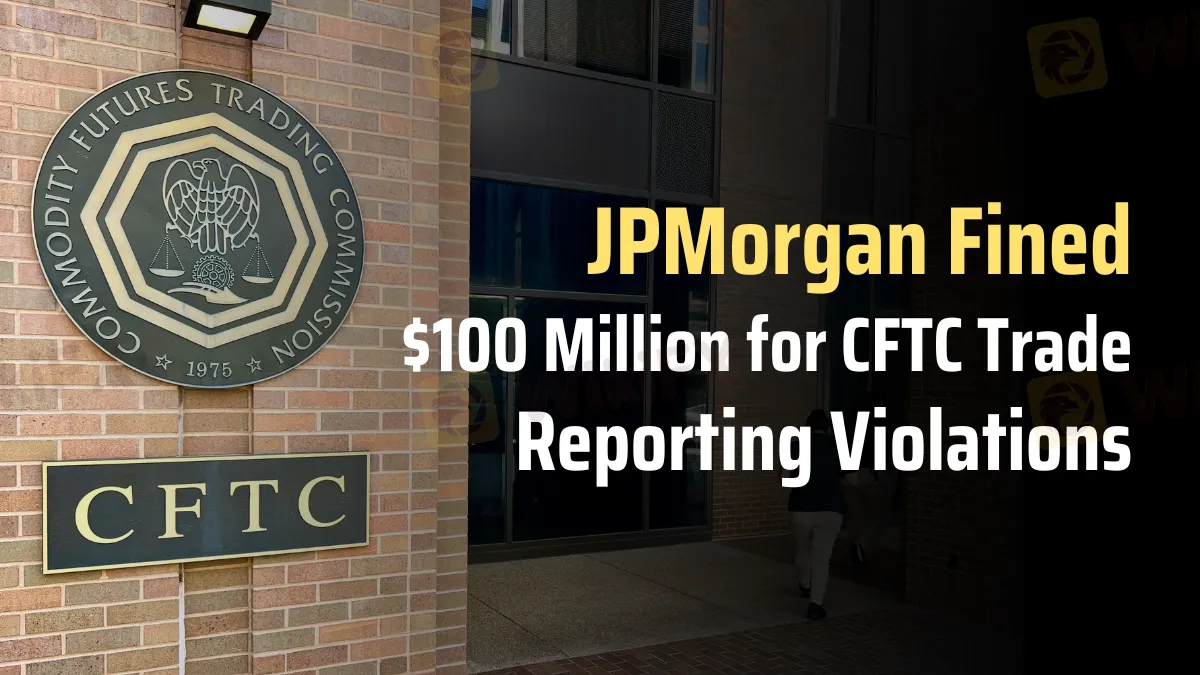
On Thursday, the U.S. Commodity Futures Trading Commission (CFTC) said that JPMorgan Chase & Co. (JPM.N.) had admitted to breaking its laws surrounding trade reporting failures and had agreed to pay $100 million as a fine.
JPMorgan discovered significant gaps in its order and trade data monitoring, some dating back to 2013, which led to the revelation of the infractions in June 2021. The regulator concluded that these disparities led to the bank's failure to comply with the CFTC-required trade data reporting standards.
A JPMorgan representative would not respond specifically, but they did refer to previous remarks in which the bank admitted to itself that it had reported the infractions. The bank found no wrongdoing and emphasized that consumers had not suffered any damage.
The CFTC has accomplished much with this settlement, which involves an acknowledgment of misconduct. Companies accused of misbehavior are discovering that the regulatory body is becoming more and more keen on confessions of guilt in settlements. This initiative aims to increase openness and accountability in the financial industry.
In both civil and criminal cases, financial corporations usually avoid making such confessions because of the extra expenses that may come from private litigation. However, the CFTC's enforcement head and the Democratic CFTC commissioners have been quite clear that these confessions are necessary to hold companies accountable.

Commissioner Kristin Johnson lamented the frequent conclusion of enforcement proceedings without addressing the underlying errors, wrongdoings, or compliance breaches in her remarks delivered on Thursday at the JPMorgan settlement. In her remarks, she emphasized how these kinds of confessions help cultivate a compliance and responsibility culture in the banking sector.
This example illustrates the challenges regulators face in guaranteeing the implementation of compliance regulations by large financial institutions. JPMorgan's blunders went undetected for years due to the difficulties of monitoring and ensuring that everyone is following the regulations when it comes to transaction reporting. The severe penalty and admission of guilt aim to convey to other businesses the importance of strict compliance and discourage them from engaging in similar activities.
The CFTC's emphasis on eliciting confessions of guilt, even when financial firms resist, reflects a change in regulatory enforcement techniques. The agency's goal in obtaining these confessions is to encourage honesty and openness in the financial markets, as well as discourage such infractions in the future.
This case's verdict could establish a standard for the treatment of trade reporting infractions and affect subsequent regulatory actions and settlements. Due to the elevated risk of public confessions of misconduct and heavy fines, financial institutions may have to reevaluate their strategy toward enforcement and compliance activities.
The CFTC's actions in the JPMorgan case underscore the continuous need for responsibility and attention as the financial industry continues to maneuver through the intricacies of regulatory compliance. The settlement not only corrects the identified infractions but also clarifies the consequences of non-compliance with regulations.
Last but not least, JPMorgan's $100 million fine and admission of breaking CFTC transaction reporting regulations demonstrate the CFTC's commitment to regulating compliance and enhancing accountability in the financial sector. The case highlights the need for strong compliance systems and the consequences that might arise from failing to conform to regulations.
You may access all related news here.