


Dufourbit Warning: FCA Says the Firm Is Unauthorised—7 Checks Before You Pay
The FCA warned about Dufourbit on 19 August 2026. Check the named domain, contact details, missing protections and seven steps before making any payment.
Original

简体中文
繁體中文
English
Pусский
日本語
ภาษาไทย
Tiếng Việt
Bahasa Indonesia
Español
हिन्दी
Filippiiniläinen
Français
Deutsch
Português
Türkçe
한국어
العربية
اردو




Abstract:Senator Gatchalian files resolution to investigate love scams and online fraud linked to banned POGOs in the Philippines, targeting cryptocurrency use.

Senator Sherwin Gatchalian has taken a stand against the rise in love scams and online fraud in the Philippines. On Sunday, he submitted Senate Resolution No. 1317, which calls for a comprehensive inquiry into these misleading schemes, many of which originate with the now-banned Philippine offshore gambling operators (POGOs). With the resolution, Gatchalian hopes to strengthen the country's defenses against such frauds and investigate the role of cryptocurrencies in supporting these illegal operations.
The senator stressed the importance of reconsidering the POGO ban and promoting a stronger policy framework. “We need to reassess how we enforce the ban on POGOs and look closely at how cryptocurrencies are being used in the Philippines,” Gatchalian noted in a recent press release. His fear derives from scammers' advanced skills, which sometimes involve hiding behind bogus online personas and influencing victims through emotive approaches.
Love scams have become a major issue in the Philippines, with the Philippine National Police Anti-Cybercrime Group (PNP-ACG) reporting eight instances in January 2025 alone, up from 72 incidences in 2024. These figures point to a larger, more alarming trend. Internationally, the impact is stark: the Australian Federal Police claimed that nearly 5,000 Australians were victims of a love scam center based in the Philippines, losing a whopping AUSD24 million. The scammers, who target="_blank" kwlink="6384064000816950219725">target males aged 35 to 80 using dating apps, demonstrate the worldwide reach of these Philippines-based fraudsters.

Gatchalian emphasized that POGOs, which are at the heart of these love frauds, require stronger regulation. “Even with the ban, we're seeing remnants of these operations evolve,” he told me. The resolution calls for more coordination between Philippine agencies and foreign partners to destroy fraud networks and bring criminals to justice, regardless of where they hide.
The use of sophisticated strategies makes these frauds very difficult to detect. Scammers create plausible online personas and use social engineering to attack weaknesses. “These are not lone actors; they are linked to organized crime,” Gatchalian stated. He emphasized how illicit online gambling operations and bitcoin transactions give a layer of secrecy, allowing cash to traverse borders unnoticed.
Love scams are difficult to prosecute because they operate across borders. Victims are spread across numerous nations, while criminals operate in a murky digital domain that is frequently out of the reach of traditional law enforcement. Cryptocurrency, with its concealability, adds an extra layer of complexity. “It's a significant challenge for regulators,” Gatchalian conceded, urging for a more in-depth investigation of how digital currencies facilitate these crimes in the Philippines and elsewhere.
The senator's proposal indicates an increasing recognition of the necessity to react to changing cyber scams. Gatchalian thinks that by addressing both the legacy of POGOs and the uncontrolled usage of cryptocurrency, he will reduce the spread of love scams that prey on the vulnerable. As the Philippines deals with this digital threat, the findings of this inquiry might establish a precedent for combating online fraud on a worldwide scale. For the time being, the nation observes as its leaders try to outwit the fraudsters who lurk in the shadows.

Disclaimer:
The views in this article only represent the author's personal views, and do not constitute investment advice on this platform. This platform does not guarantee the accuracy, completeness and timeliness of the information in the article, and will not be liable for any loss caused by the use of or reliance on the information in the article.

The FCA warned about Dufourbit on 19 August 2026. Check the named domain, contact details, missing protections and seven steps before making any payment.

Gold surged above $4,500 after the US Treasury expanded its purchases of longer-dated government bonds, pushing yields and the dollar lower. But this was not debt forgiveness or Federal Reserve money printing—it was a liquidity operation that exposed a much bigger fear: America may be finding it increasingly difficult to live with market-driven interest rates.
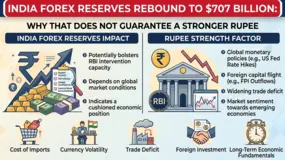
India forex reserves rose by $14.136 billion to $707.002 billion in the week ended 7 August 2026. This explainer separates RBI forex-reserve facts from rupee predictions, explains the role of foreign currency assets and gold, and gives forex-market readers a practical checklist before treating one headline as a trading signal.
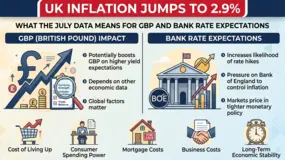
UK CPI rose to 2.9% in July 2026 from 2.6% in June. See what the data may mean for GBP, gilt yields and Bank Rate expectations without overreading one release.
WikiFXWikiFXWikiFXWikiFXWikiFXWikiFXWikiFXWikiFXWikiFXWikiFX