


Vietnam Becomes New Base for Cross Border Scam Syndicates After Cambodia Crackdown
Cross border scam syndicates are constantly adapting to evade law enforcement by moving from Cambodia to Vietnam.
Original

简体中文
繁體中文
English
Pусский
日本語
ภาษาไทย
Tiếng Việt
Bahasa Indonesia
Español
हिन्दी
Filippiiniläinen
Français
Deutsch
Português
Türkçe
한국어
العربية
اردو




Abstract:A 58-year-old Malaysian housewife lost her savings of RM412,443 after falling prey to an online investment scam between January and March this year.

Online investment fraud continues to pose a significant threat to unsuspecting individuals, with scammers employing increasingly sophisticated tactics to deceive their victims. In a recent case, a 58-year-old Malaysian housewife lost her savings of RM412,443 after falling prey to an online investment scam between January and March this year.
According to Muar district police chief ACP Raiz Mukhliz Azman Aziz, the woman was initially approached via WhatsApp by an unknown individual offering an investment opportunity. Encouraged by the potential for financial gains, she proceeded to download a dedicated investment application and made an initial deposit of RM500. Within 24 hours, the platform showed a profit of RM67, reinforcing her belief in the schemes legitimacy.
As the scam unfolded, the fraudsters provided consistent profit updates, enticing the victim to invest larger sums with the promise of higher returns. Trusting the seemingly lucrative opportunity, she made a total of 35 transactions amounting to RM412,443 across seven different accounts between 23 January and 6 March.
Suspicion arose when she encountered difficulties withdrawing her purported earnings. The scammers demanded additional payments before allowing her to access her accumulated funds. This prompted her to re-examine the investment application, where she ultimately discovered the absence of any actual profits. Realising that she had been defrauded, she promptly filed a police report.
In relation to this case, read this article to understand why scammers often allow victims to make an initial profit before ultimately taking their money: https://www.wikifx.com/en/newsdetail/202503148244401400.html

Authorities are currently investigating the case under Section 420 of the Penal Code, which pertains to cheating and dishonestly inducing the delivery of property.

To mitigate the risk of falling victim to such schemes, individuals can utilise verification tools like WikiFX, which provide comprehensive data on brokers and financial platforms. WikiFX offers insights into a brokers regulatory status, user reviews, and potential red flags, helping investors assess the legitimacy of an investment opportunity before committing their funds. It is completely free to use and can be downloaded from Google Play and the App Store, ensuring accessibility for all users.

Disclaimer:
The views in this article only represent the author's personal views, and do not constitute investment advice on this platform. This platform does not guarantee the accuracy, completeness and timeliness of the information in the article, and will not be liable for any loss caused by the use of or reliance on the information in the article.

Cross border scam syndicates are constantly adapting to evade law enforcement by moving from Cambodia to Vietnam.
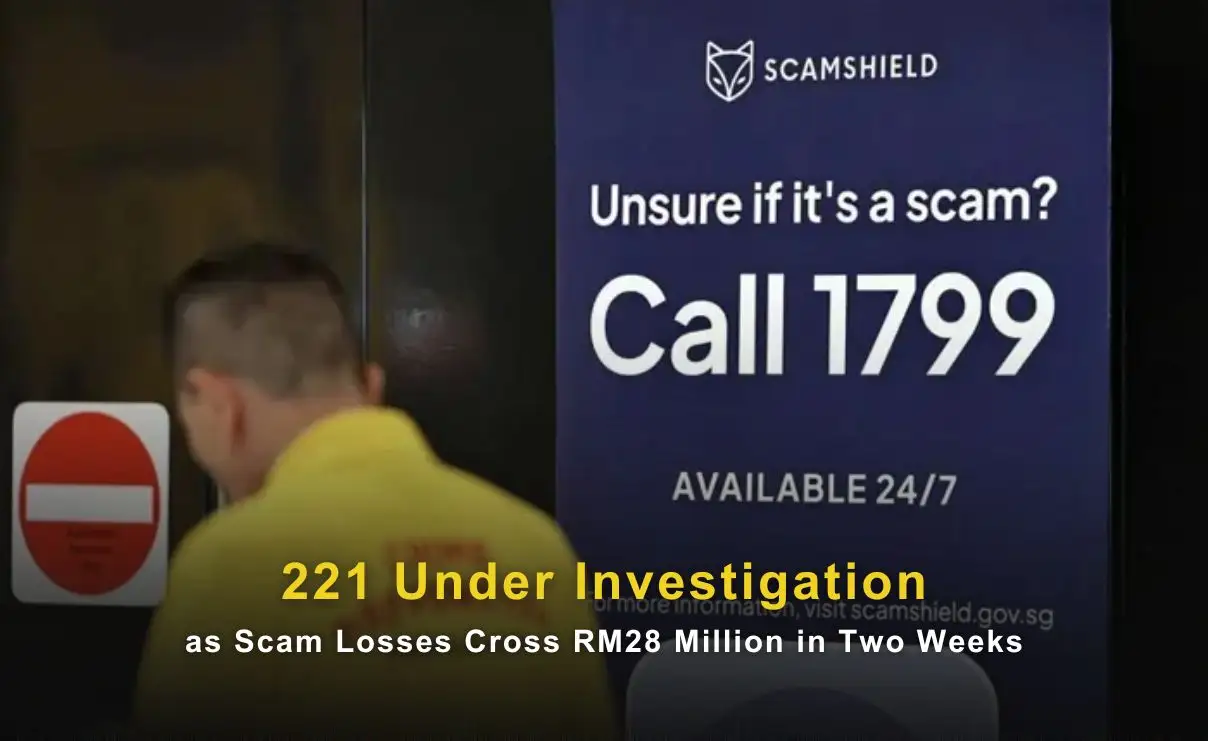
Singapore authorities have concluded a major anti-scam enforcement operation that resulted in 221 individuals being placed under investigation for their alleged roles in a wide range of fraudulent schemes.

Malaysia may be emerging as a new destination for transnational scam syndicates seeking to evade mounting pressure from international law enforcement agencies, according to a leading humanitarian organisation.

He Claimed Elite Connections. She Ended Up Losing Millions and Her Dream Car
WikiFXWikiFXWikiFXWikiFXWikiFXWikiFXWikiFXWikiFXWikiFXWikiFX