


Global Broker Regulation Inquiry App
About WikiFX
English
简体中文
繁體中文
English
Pусский
日本語
ภาษาไทย
Tiếng Việt
Bahasa Indonesia
Español
हिन्दी
Filippiiniläinen
Français
Deutsch
Português
Türkçe
한국어
العربية
اردو
Is ACM Legit or a Scam? 5 Key Questions Answered (2026)
Abstract:ACM (Anka Capitals) is a Turkey-based broker established in 2020 that currently holds a low WikiFX score of 1.50 due to a lack of valid regulation. Without a financial license, this broker poses high counterparty risk, meaning client funds are not protected by standard regulatory safeguards like segregated accounts.
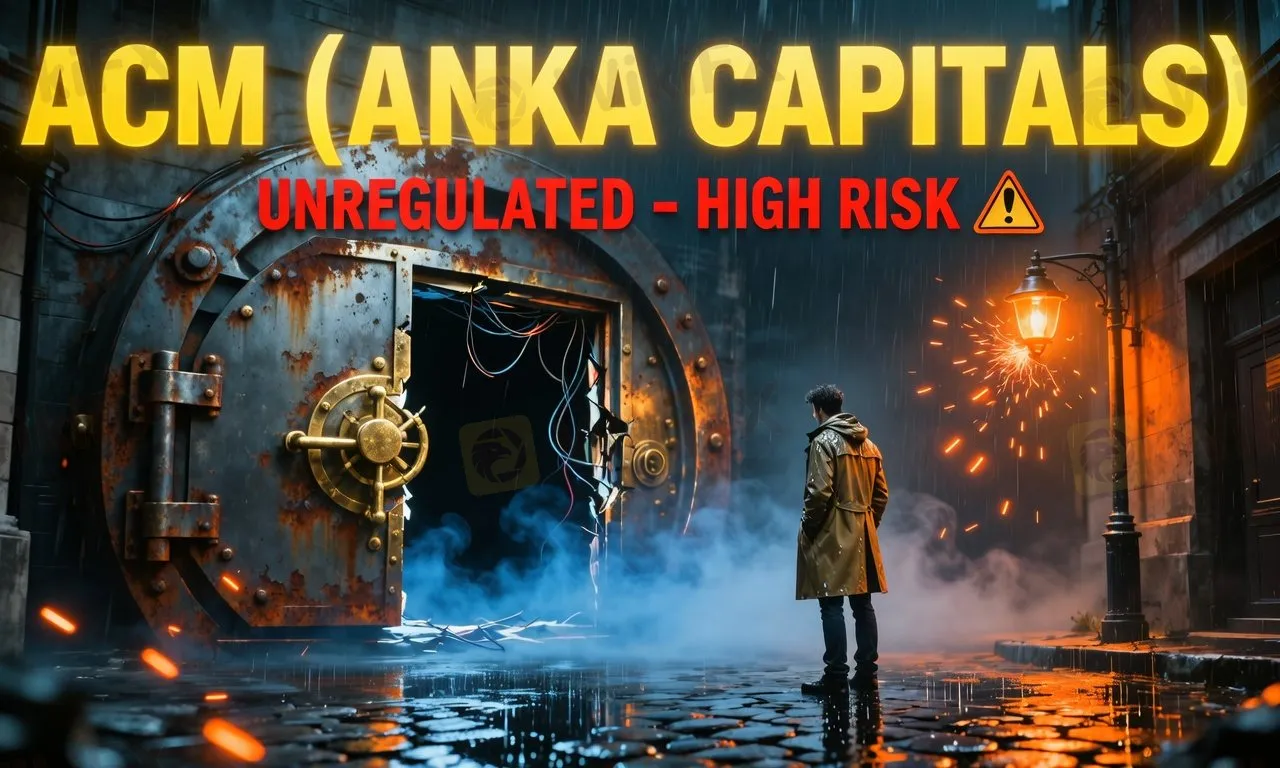
1. Executive Summary (TL;DR):ACM (Anka Capitals) is an unregulated broker with a “Low” WikiFX Score of 1.50, indicating significant risk to client funds. Established in Turkey in 2020, it lacks the legal oversight necessary to guarantee the safety of your deposit.
2. The Reality Check:
If you are reading this, you might be tempted by an ad on social media or a cold call promising high returns. It is crucial to pause and look at the data before transferring any money. Currently, ACM holds an Influence Rank of E (the lowest tier) and a generic safety score of 1.50 out of 10. This score acts as a thermometer for the broker's reliability—and right now, the reading suggests a fever.
Question 1: Is my money safe with ACM?
The short answer is: No, your money does not appear to be protected.
According to the latest regulatory database check, ACM (Anka Capitals) is not supervised by any regulatory agency. While the broker lists its headquarters in Turkey, it does not appear to hold a valid license from a major financial authority that protects international clients.
Why does a “License” matter?
You might think, “I just want to trade; I don't care about paperwork.” However, in the world of online trading, a license is the only thing standing between your wallet and total loss.
1. The Risk of Commingled Funds:
Regulated brokers (like those monitored by the FCA in the UK or ASIC in Australia) are legally required to use Segregated Accounts. This means your deposit is kept in a separate bank vault from the companys own money. If a regulated broker goes bankrupt, your money is still sitting in that separate vault, waiting to be returned to you.
- The ACM Reality: Because ACM is unregulated, they are not legally bound to segregate your funds. They could technically place your deposit into their own operating account. If they use your money to pay for their office rent, employee salaries, or marketing ads, that money is gone. If they go insolvent, your funds vanish with them.
2. Counterparty Risk:
When you trade with an unregulated broker, you are essentially betting against the house, and the house makes the rules. Without a regulator to audit their trade execution, there is no guarantee that the price you see on the screen is the real market price. This is known as Counterparty Risk—the risk that the other party (the broker) will default on their obligation to pay you your winnings.
Question 2: Why aren't there any specific complaints listed here?
In this specific report, we do not have detailed transcripts of user complaints or “exposure” stories to analyze. However, the absence of listed complaints in this section should not be interpreted as a clean bill of health.
Silence Does Not Mean Safety
When a broker like ACM has a low regulatory score (1.50) but lacks a long list of specific user stories in this report, it often points to one of two scenarios:
1. Low Market Influence (Rank E):
The broker may be too small or too new to have generated a large volume of user feedback. In the financial world, “flying under the radar” is a common tactic for smaller, unregulated platforms. They may allow a few withdrawals to build trust with early adopters before scaling up their operations.
2. The “Honeymoon” Phase:
Many unregulated entities operate smoothly for the first few years (ACM was established in 2020). Problems typically arise only when a large number of clients attempt to withdraw funds simultaneously. Just because you haven't seen a viral complaint yet doesn't mean the infrastructure is secure; it often just means the “stress test” hasn't happened yet.
Pro Tip: Never assume a broker is safe just because you can't find a blog post calling them a scam. Always look at the License first. If the license is missing, the lack of complaints is irrelevant—the risk remains maximum.
Final Verdict: Should I open an account?
Based on the data, we strongly advise against opening an account with ACM (Anka Capitals).
The combination of having no regulatory license, a low WikiFX score (1.50), and operating with an Influence Rank of E suggests that the potential rewards do not outweigh the significant risks. In the event of a dispute—such as a frozen withdrawal or a slippage issue—you would have no legal recourse and no government ombudsman to appeal to.
Better Alternatives Exists
There are hundreds of brokers that hold valid licenses from top-tier authorities (like the FCA, ASIC, or cySEC). These brokers offer the same trading instruments but come with the legal assurance that your funds are segregated and insured.
Your Next Step:
Broker statuses can change overnight. A broker might obtain a license tomorrow, or an unregulated one might disappear.
> Call to Action: Status changes daily. Before depositing, check the WikiFX App for the latest real-time certificate and to see if any new user reviews have been posted.
Disclaimer:
The views in this article only represent the author's personal views, and do not constitute investment advice on this platform. This platform does not guarantee the accuracy, completeness and timeliness of the information in the article, and will not be liable for any loss caused by the use of or reliance on the information in the article.
WikiFX Broker
Latest News
Rupee Strengthens as Oil Slides Ahead of Fed
 WikiFX
UK inflation holds steady at 2.8% in May
WikiFXEZINVEST Review 2026: Severe Withdrawal Complaints and High Risk
WikiFXIG Review 2026: Strong Regulation but Heavy Clone Risks
WikiFXIG Review 2026: Regulation Strength, Clone Warnings, and Withdrawal Complaints
WikiFXReview 2026: OROKU EDGE Regulation Warnings, Withdrawal Complaints, and High Leverage Risks
WikiFXOANDA Review: Regulation Strength Meets Broker Withdrawal Complaints
WikiFXSEVEN STAR FX Review 2026: Should You Trade with This Broker?
WikiFXTMGM Review 2026: Should You Trade with This Broker?
WikiFXMetadoro Review 2026: Should You Trade with This Broker?
WikiFXCurrency Calculator
USD

CNY
Current Rate:0
Enter amount
USD
Redeemable Amount
CNY
Calculate 