

Global Broker Regulation Inquiry App
About WikiFX
English
简体中文
繁體中文
English
Pусский
日本語
ภาษาไทย
Tiếng Việt
Bahasa Indonesia
Español
हिन्दी
Filippiiniläinen
Français
Deutsch
Português
Türkçe
한국어
العربية
اردو


Trans-Atlantic Trade War Erupts: Trump Tariff Threat Over Greenland Rattles FX Markets

WikiFX
|


Abstract:Global markets are reeling after President Trump linked tariff threats against eight European nations to his bid to purchase Greenland, sparking fears of a deepened trans-Atlantic trade war. The diplomatic row has overshadowed economic data, with analysts warning of significant GDP contractions for the UK and heightened volatility for the Dollar and Euro.
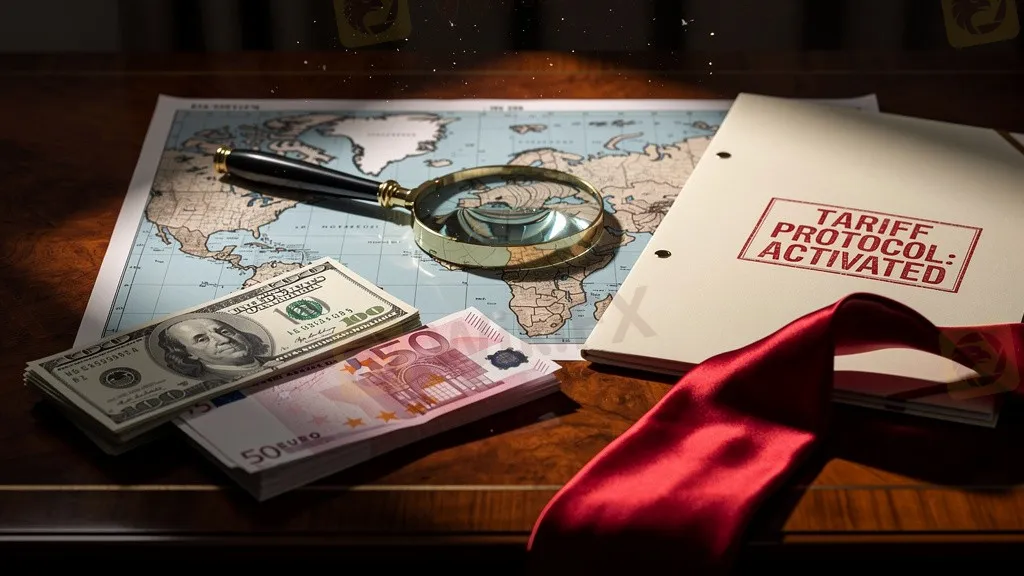
Washington/Brussels — A bizarre diplomatic spat has metastasized into a systemic global market risk. President Donald Trump has explicitly linked new trade tariffs to his administration's objective to “fully and completely” purchase Greenland, overturning traditional diplomatic norms and sending shivers through foreign exchange markets.
The “Greenland or Tariffs” Ultimatum
In a communique confirmed by Norwegian Prime Minister Jonas Gahr Støre, President Trump stated that the U.S. is no longer obligated to “purely consider peace” after being snubbed for the Nobel Peace Prize. The administration announced a 10% tariff on eight European nations—including the UK, France, Germany, and Nordic states—effective immediately, with an escalation to 25% by June 1, 2026, unless a deal for Greenland is reached.
Technicals & FX Market Reaction
- GBP/USD: Managed a modest rally to 1.3414, supported by broad dollar softness.
- EUR/USD: Edged higher as markets priced in a potential ECB hawkish response.
Economic Fallout: UK GDP at Risk
Research firm Capital Economics issued an alert projecting that the proposed tariffs could slash the United Kingdom's GDP by 0.3% to 0.75%. The automotive and pharmaceutical sectors face critical exposure.
In the EU, French President Emmanuel Macron has called for immediate retaliation despite German Chancellor Friedrich Merz's urge for caution due to German export exposure.
“Who Pays?” – The Inflationary Feedback Loop
- A study by the Kiel Institute for the World Economy indicates that 96% of the tariff burden is being shouldered by U.S. consumers and importers.
Analysts warn this self-inflicted inflationary pressure could complicate the Federal Reserve's path, potentially forcing a “higher-for-longer” rate environment that could paradoxically cap the Dollar's upside by choking domestic growth.
Disclaimer:
The views in this article only represent the author's personal views, and do not constitute investment advice on this platform. This platform does not guarantee the accuracy, completeness and timeliness of the information in the article, and will not be liable for any loss caused by the use of or reliance on the information in the article.
WikiFX Broker
Latest News
Malaysian Doctor Loses RM558,000 to Forex-Crypto Scam
WikiFXReview 2026: XORKETS FX Withdrawal Complaints and Unregulated Risk
WikiFXReview 2026: GFS Withdrawal Complaints, Regulation Gaps, and Broker Risk Signals
WikiFXSpec Capital Group Secures ASIC Licence for Wholesale CFD Services
WikiFXASIC Pulled 19,400 Scams as AI Deepfakes Target Investors
WikiFXVG Markets Review: A Real FSCA Licence, But Why Only a 4.47 Score?
WikiFXTriumphFX Review: Revoked Licence and TFX Token Losses Warrant Caution
WikiFXadmiral Review 2026: Clone Warnings, Withheld Profits, and Withdrawal Risks
WikiFXPlus500 Joins Bahamas Forex and CFD Industry Association
WikiFXTenTrade Review 2026: Complaints, Withdrawals, and Risk Signals
WikiFX