


Global Broker Regulation Inquiry App
About WikiFX
English
简体中文
繁體中文
English
Pусский
日本語
ภาษาไทย
Tiếng Việt
Bahasa Indonesia
Español
हिन्दी
Filippiiniläinen
Français
Deutsch
Português
Türkçe
한국어
العربية
اردو
The Great Decoupling: US Allies Pivot to New Trade Deals to Insulate Against Tariff Risks
Abstract:US allies are quietly accelerating efforts to diversify trade away from Washington, striking new deals to insulate their economies from looming protectionist tariffs.
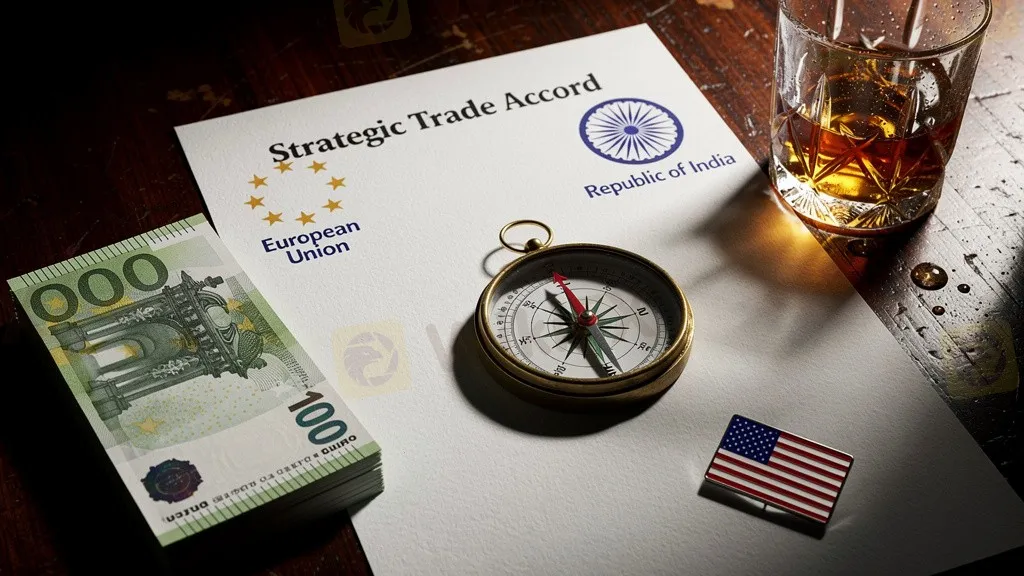
While the United States doubles down on protectionist rhetoric, a quiet revolution is reshaping global trade flows. Major US allies, wary of the unpredictability of Washington's tariff policies, are accelerating efforts to “de-risk” their economies by forging new alliances that bypass the American consumer.
Diversification Over Decoupling
The new strategy is not to sever ties with the US, but to build resilient alternatives. This pragmatic “hedging” was highlighted this week by the conclusion of a specialized Free Trade Agreement (FTA) between the European Union and India.
Alexander George, a geopolitical director at the Tony Blair Institute, notes that US trade threats have acted as a catalyst. “Trade is perhaps one of the areas where middle powers have the most room for autonomous choice,” he stated. The EU has also recently moved to finalize the long-stalled deal with the Latin American Mercosur bloc.
- Deal Secured: European Union and India finalize specialized FTA.
- Pending Moves: EU moving to close deal with Mercosur bloc.
- Catalyst: US trade threats driving middle power autonomy.
The Cost of 'America First'
For global businesses, this shift is operational, not just political. The Irish Whiskey Association, for example, welcomed the India deal as a critical offset to the potential damage from US tariffs.
However, risks remain. Analysts warn that while diversification cushions the blow of aggressive US trade policy, replacing the sheer consumptive power of the American market is nearly impossible in the short term. Furthermore, Washington may view these independent moves as geostrategic defiance, potentially opening new rifts between the US and its traditional partners in Europe and Asia.
Disclaimer:
The views in this article only represent the author's personal views, and do not constitute investment advice on this platform. This platform does not guarantee the accuracy, completeness and timeliness of the information in the article, and will not be liable for any loss caused by the use of or reliance on the information in the article.
WikiFX Broker
Latest News
Over 100 Malaysian Retirees Gather to Expose How Investment Scams Wiped Out Their Life Savings
 WikiFX
SquaredFinancial Review 2026: Heavy Complaints, Withdrawal Delays, and Profit Deletions
WikiFXUbuntu Invest Review 2026: Is This Forex Broker Safe?
WikiFXMaking Sense of Central Bank News: How Revaluation, Interest Rates, and Reserves Move Currencies
WikiFXFive Chinese Fined RM4,000 Each for Promoting Cryptocurrency Investment Scheme in Malaysia
WikiFXFBS Review 2026: Is This Forex Broker Safe?
WikiFXWhy Employment Data Releases Destroy Short-Term Forex Trades
WikiFXRoboForex Review 2026: Are Traders Losing Sleep Over Missing Funds? Details Inside!
WikiFXIndian Stocks Rally, but the Rupee Breaks a Six-Day Winning Streak—What's Behind the Sudden Reversal
WikiFXVonway Forex Review 2026: Withdrawal Complaints, Regulation Warnings, and Account Risks
WikiFXCurrency Calculator
USD

CNY
Current Rate:0
Enter amount
USD
Redeemable Amount
CNY
Calculate 