

Global Broker Regulation Inquiry App
About WikiFX
English
简体中文
繁體中文
English
Pусский
日本語
ภาษาไทย
Tiếng Việt
Bahasa Indonesia
Español
हिन्दी
Filippiiniläinen
Français
Deutsch
Português
Türkçe
한국어
العربية
اردو



Investment Scams That Could Be Targeting Malaysians Right Now

WikiFX
|


Abstract:Understanding how these commonly seen investment scams operate could help Malaysian investors protect their savings.
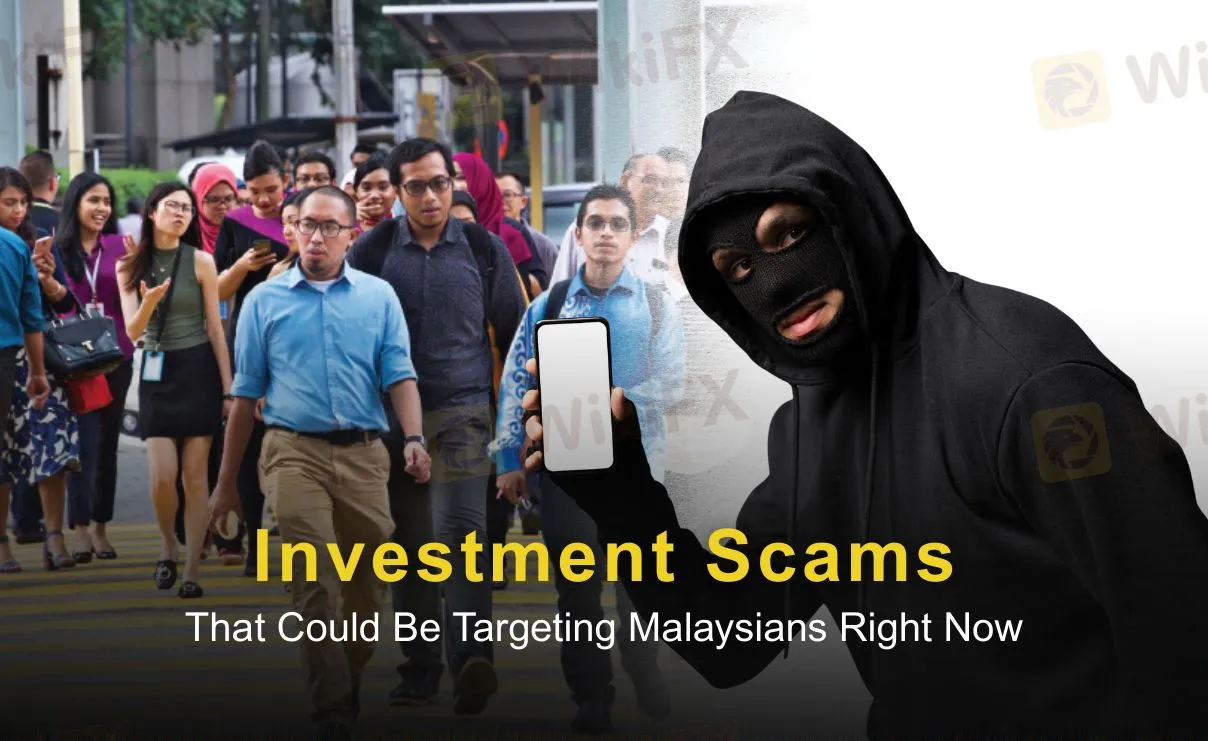
While each scheme operates differently, most follow a familiar script. They promise attractive returns, minimise perceived risk and create a sense of urgency. By the time doubts emerge, the money may already be gone. Understanding how these scams operate could help Malaysian investors protect their savings.
Below are eight common investment scams and the warning signs that may signal trouble.
Romance Scams Disguised as Investment Opportunities
Romance scams often begin on social media platforms or dating applications. The fraudster builds a personal relationship over weeks or even months. Trust is established before money is ever mentioned.
Once confidence has been gained, the conversation may shift towards investing. The individual may claim to have insider knowledge of a profitable opportunity, often involving foreign exchange trading, commodities or digital assets. Victims are persuaded that they are being offered exclusive access.
In many reported cases, the person avoids meeting in real life. Excuses are given for why video calls cannot take place or why travel to Malaysia is not possible. Financial authorities have consistently warned that requests for money from someone never met in person are a strong red flag.
Investors are advised to slow down such interactions, seek the opinion of family members and refuse to transfer funds to individuals whose identities cannot be independently verified.
Crypto Related Fraud
Digital assets have become increasingly popular among Malaysian investors. However, the same features that make cryptocurrencies attractive such as speed and cross border transfers also make them appealing to fraudsters.
Scammers may promote crypto trading platforms that appear legitimate but are not regulated. Victims might initially see profits reflected in an online account. However, when they attempt to withdraw funds, they are told that additional deposits are required for processing fees or tax payments.
Pressure tactics are common. Investors may be told that they must act immediately to secure returns. Offers that seem unusually profitable, especially when combined with demands for further payments before withdrawals, could indicate fraud.
Malaysian investors should verify whether a platform or individual is registered with the relevant authorities before transferring funds.
Affinity Fraud Within Communities
Affinity fraud targets groups that share common ties such as religious communities, professional networks or social clubs. In Malaysia, where community bonds are strong, this tactic can be particularly effective.
The fraudster presents himself as a trusted member of the group. After establishing credibility, he introduces an investment opportunity that is described as exclusive to fellow members.
These schemes are often structured like Ponzi operations. Early participants may receive returns, which encourages others to join. In reality, payments are typically funded by new investors rather than genuine profits. When recruitment slows, the scheme collapses.
Trust within a community should not replace proper verification. Investors should independently confirm the credentials of anyone offering financial products, regardless of personal familiarity.
Pump and Dump Schemes
Pump and dump schemes usually involve low priced shares. Fraudsters promote these stocks aggressively through messaging apps and social media groups, sometimes claiming to represent an investment club.
As more people buy the shares, the price rises sharply. The organisers then sell their holdings at the inflated price. Once they exit, the share value falls dramatically, leaving other investors with heavy losses.
In some cases, scammers may refer to well known companies at first before shifting attention to obscure counters. Unsolicited investment advice and pressure to buy immediately should be treated with caution.
Checking whether the individual is licensed to provide investment services in Malaysia is a crucial step before committing funds.
Boiler Room Operations
Boiler room scams involve teams operating from temporary offices. They may create professional looking websites, provide local telephone numbers and list impressive business addresses to appear credible.
Despite this appearance, the company may not exist in any legitimate form. Websites can be fabricated and office addresses may simply be mail forwarding services. Once funds are collected, the operation can close quickly and resurface under a different name.
Malaysian investors are encouraged to confirm company registration through official channels and to be wary of unsolicited calls promoting high return opportunities.
Artificial Intelligence Voice Scams
Advances in artificial intelligence have introduced a new method of deception. Technology can now replicate voices and images with convincing accuracy.
Fraudsters have reportedly used such tools to impersonate public figures or even family members. Victims may receive calls or video messages appearing to show a well known personality endorsing an investment scheme and urging immediate participation.
Experts recommend pausing before responding to such messages. Verification through trusted contact details is essential. Families may consider establishing a simple code word to confirm identity during unexpected calls.
Misuse of Exempt Securities
Under certain regulatory frameworks, some securities may be offered without a full prospectus if specific conditions are met. These products are usually restricted to accredited investors who meet income or asset requirements.
While such exemptions are legitimate, scammers may misuse the concept. Investors could receive unsolicited offers claiming that a promising company is about to go public and that access is limited to wealthy individuals. They may be told that an exception can be made for them.
In some instances, individuals are asked to sign documents that overstate their income or net worth. Any request to misrepresent financial information should be regarded as a serious warning sign.
Advance Fee Schemes
Advance fee fraud typically targets those who have already suffered investment losses. The fraudster contacts the victim and claims that lost funds can be recovered or exchanged for a profitable opportunity.
However, a fee must be paid upfront, supposedly refundable or required for administrative purposes. Once the payment is made, communication often stops. Further requests for money may follow.
Legitimate recovery services do not guarantee outcomes in exchange for upfront payments tied to promised profits.
Common Warning Signs Across All Scams
Although tactics differ, several warning signs appear repeatedly:
Pressure to act immediately.
Promises of high returns with low risk.
Claims of exclusive or insider information.
Individuals who are not licensed or registered to offer investments.
Fraudsters often exploit emotion such as fear of missing out or the desire to recover losses. Taking time to verify information, seeking a second opinion and checking registration with the relevant Malaysian authorities could significantly reduce risk.
In an environment where investment opportunities are increasingly accessible, caution remains essential. Before committing another ringgit, Malaysian investors would be wise to pause, verify and question. The cost of acting too quickly could be far greater than the opportunity that is being promised.
Disclaimer:
The views in this article only represent the author's personal views, and do not constitute investment advice on this platform. This platform does not guarantee the accuracy, completeness and timeliness of the information in the article, and will not be liable for any loss caused by the use of or reliance on the information in the article.
WikiFX Broker
Latest News
LOYAL PRIMUS Review: FSCA-Regulated Broker Faces Mounting Withdrawal Complaints
WikiFXGFS Review 2026: Withdrawal Complaints, MT5 Access, and Regulation Gaps
WikiFXHow Trading Costs Quietly Drain Your Account: Spreads, Swaps, and Pip Values
WikiFXWhy MetaTrader 4 Remains the Top Choice for Testing Automated Trading Robots
WikiFXDollar Firms as Geopolitics Pressures Asian Currencies
WikiFXWhy Most Retail Traders Fail: What the Numbers Reveal
WikiFXThings About HTFX Broker That You Don't Know About
WikiFX22K Trader Review 2026: Ongoing User Allegations Raise Fresh Questions About Trust
WikiFXeFishery Founder Jailed Nine Years as KWAP Defends RM163 Million Loss
WikiFXKASPER CAPITAL MARKETS Review 2026: Regulation, Safety, and User Feedback
WikiFX