

Global Broker Regulation Inquiry App
About WikiFX
English
简体中文
繁體中文
English
Pусский
日本語
ภาษาไทย
Tiếng Việt
Bahasa Indonesia
Español
हिन्दी
Filippiiniläinen
Français
Deutsch
Português
Türkçe
한국어
العربية
اردو


Markets Roiled: USD Surges, Wall Street Bleeds as Middle East Tensions Escalate

WikiFX
|


Abstract:Global markets face a sharp sell-off as escalating Middle East tensions drive a flight to the US Dollar, crushing equities and sending Gold plunging over 4% amid rising yields.
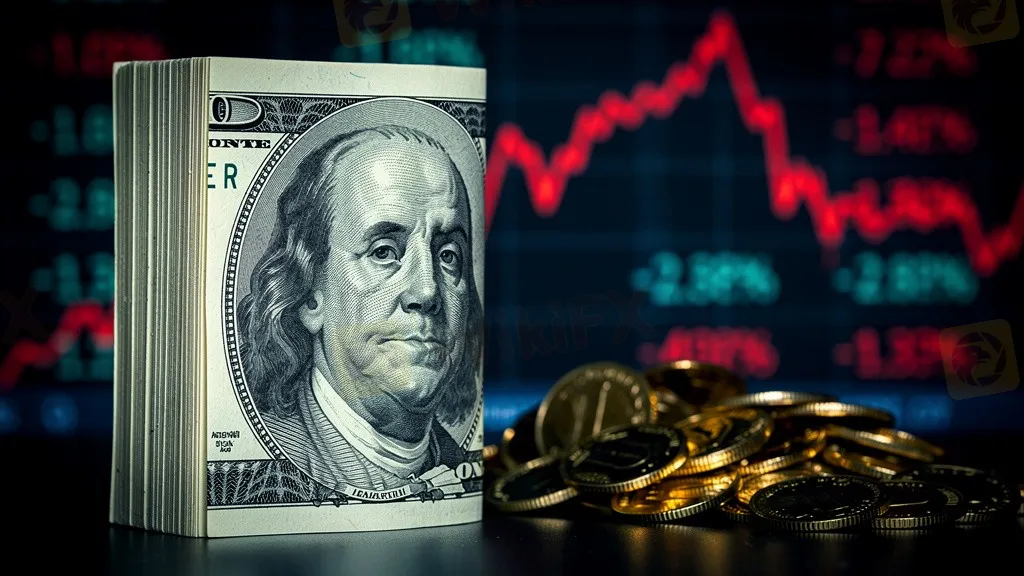
Global financial markets are in the grip of severe risk aversion on Tuesday as fears of an escalating “Iran war” ripple through asset classes. The geopolitical shockwave has triggered a decisive flight to safety in the US Dollar (USD), while simultaneously prompting a massive sell-off in equities and, counter-intuitively, precious metals.
Severe Equity Rout & USD Dominance
Wall Street opened to a sea of red, with the Dow Jones Industrial Average plummeting approximately 850 points (-1.7%) to trade near 48,000. Tech-heavy indices fared no better, with the Nasdaq Composite shedding 1.72% and the S&P 500 falling 1.62%.
In the currency markets, cash is king, and the Greenback is the preferred asset. The US Dollar Index (DXY) has surged, wrecking havoc on high-beta peers:
- AUD/USD has collapsed through the psychological 0.7000 support, trading down 1.36% at 0.6990—multi-week lows.
- USD/JPY has ignored typical safe-haven flows into the Yen, rising to 157.77, its highest level since late January, driven by the widening yield differential and pure USD demand.
The Gold Anomaly & Yield Spike
Perhaps the most striking move of the session is in the commodities space. Despite its traditional status as a geopolitical hedge, Gold (XAU/USD) has slumped over 4%.
This divergence is largely attributed to a sharp spike in US Treasury yields, which increases the opportunity cost of holding non-yielding bullion. Investors appear to be liquidating positions to cover margin elsewhere or flocking strictly to the liquidity of the US Dollar and Treasuries rather than metals.
Fed Watch: Kashkari Weighs In
Amid the chaos, Minneapolis Fed President Neel Kashkari offered a cautious take at the Bloomberg Invest Conference. While acknowledging the conflict could impact monetary policy, Kashkari stated it is “too soon to know” how the situation will affect inflation dynamics. His comments suggest the Fed remains in a data-dependent “wait and see” mode, even as supply chain risks loom.
Disclaimer:
The views in this article only represent the author's personal views, and do not constitute investment advice on this platform. This platform does not guarantee the accuracy, completeness and timeliness of the information in the article, and will not be liable for any loss caused by the use of or reliance on the information in the article.
WikiFX Broker
Latest News
Managing False Breakouts: How to Spot and Trade the Liquidity Sweep Trap
WikiFXRoboForex Review 2026: Regulatory Warnings and Withdrawal Red Flags
WikiFXLONG ASIA Review 2026: Unverified Regulation and Withdrawal Risks
WikiFXYen Drops Past 163 On Oil
WikiFXUS Charges Two Over Alleged $43M Laundering Network
WikiFXSix Arrested in ₹2.68Cr Dubai-Linked Scam on Ex-IAF Officer
WikiFXHow to Tell if a Market Reversal at Support is Real
WikiFXBeirman Capital Review 2026: Unregulated Status and Key Risk Signals
WikiFXWhy the rupee keeps sliding despite RBI's $675bn arsenal
WikiFXSix Arrested in ₹20 Million Dubai-Linked Investment Scam
WikiFX