

Global Broker Regulation Inquiry App
About WikiFX
English
简体中文
繁體中文
English
Pусский
日本語
ภาษาไทย
Tiếng Việt
Bahasa Indonesia
Español
हिन्दी
Filippiiniläinen
Français
Deutsch
Português
Türkçe
한국어
العربية
اردو


Phyntex Markets Review: Regulation, Licences and WikiScore Analysis

WikiFX
|


Abstract:This Phyntex Markets review provides an in-depth look at the broker’s regulatory standing, WikiScore rating, and user feedback based on data available on WikiFX.
This Phyntex Markets review provides an in depth look at the brokers regulatory standing, WikiScore rating, and user feedback based on data available on WikiFX. As a global broker regulatory query platform, WikiFX assesses brokers using indicators such as licensing, transparency, and exposure reports submitted by users.
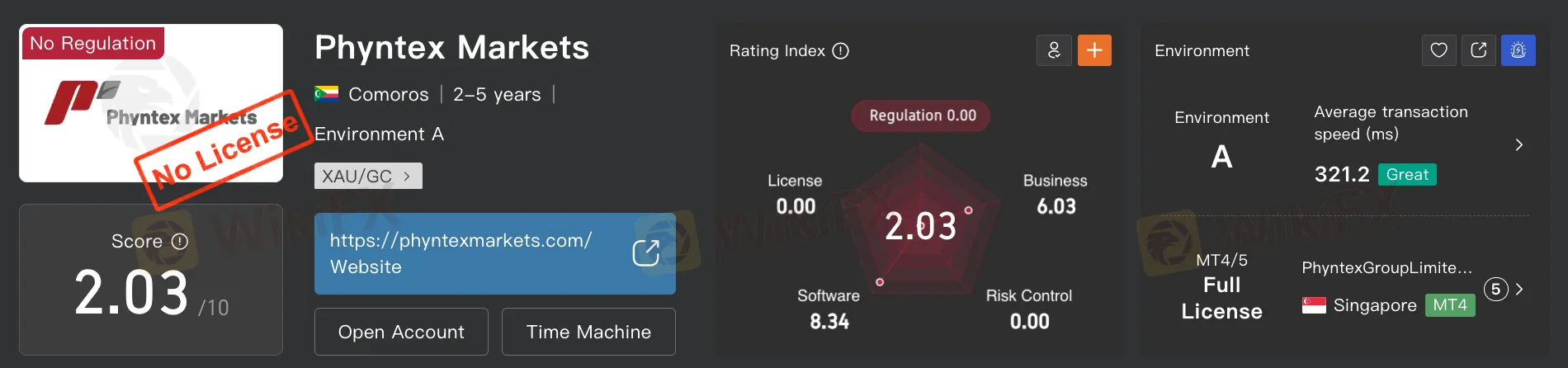
According to WikiFX, the Phyntex Markets broker holds a WikiScore of 2.03 out of 10, placing it within a very low tier compared with other brokers listed on the platform. This score reflects significant concerns, particularly in relation to its regulatory status and overall risk profile.
View WikiFX's full review on Phyntex Markets here: https://www.wikifx.com/en/dealer/1066503310.html
Field Survey Findings in Malaysia
An on site inspection conducted in Malaysia adds further context to the Phyntex Markets broker. The inspection team visited the publicly listed address at Unit C 20 3A, Level 20, KL Trillion, 338 Jalan Tun Razak, Kuala Lumpur. While the building itself is a legitimate commercial property, no signage or company information related to Phyntex Markets was found either outside or within the premises.
Inspectors were able to enter the building lobby after obtaining permission from security personnel. However, there were no directory listings or visible indications of the brokers presence. Without prior appointment access, the team was unable to reach the stated office level or verify operations internally. As a result, the inspection concluded that there is no clear evidence that Phyntex Markets operates from the declared address.
This finding raises further concerns in a Phyntex Markets review, as a verifiable physical presence is often considered an important indicator of operational transparency.
Full field survey report here: https://www.wikifx.com/en/survey/25831082df.html
Regulatory Status of Phyntex Markets
A key point in this review Phyntex Markets is that the broker currently does not hold any recognised regulatory licence. Unlike many established brokers that operate under the supervision of financial authorities, Phyntex Markets appears to function without oversight from any major regulatory body.
From a Phyntex Markets regulation perspective, the absence of a licence means that the broker is not subject to formal requirements regarding capital adequacy, operational transparency, or client fund protection. This lack of regulatory oversight is a critical factor for traders to consider.
Financial regulators typically enforce rules designed to protect investors, including segregation of client funds, regular reporting, and dispute resolution mechanisms. Without such supervision, there is no assurance that these protections are in place.
Risks of Trading with an Unregulated Broker
Choosing a broker without regulatory authorisation can expose traders to a range of risks. One of the primary concerns is the absence of accountability. Regulated brokers are required to comply with strict standards and may face penalties or sanctions if they fail to meet them. Unregulated brokers, however, operate outside these frameworks.
For Malaysian traders, this distinction is particularly important. A broker without regulation does not fall under the jurisdiction of local authorities, meaning that in the event of a dispute, there may be limited or no avenues for recourse. This can make it difficult for traders to recover funds or resolve issues.
Another key risk is the handling of client funds. Regulated brokers are often required to keep client funds separate from company funds, reducing the risk of misuse. In contrast, with an unregulated broker such as the Phyntex Markets broker, there is no guarantee that such safeguards are implemented.
Benefits of Regulated Brokers
In contrast, brokers that operate under recognised financial authorities are generally required to adhere to established industry standards. These may include maintaining sufficient capital reserves, providing transparent pricing, and offering clear dispute resolution processes.
Regulated brokers are also subject to ongoing supervision, which can enhance trust and accountability. For traders conducting a Phyntex Markets review, this comparison highlights the importance of regulatory oversight when selecting a broker.
While regulation does not eliminate all risks, it provides a framework that supports investor protection and operational transparency. This is particularly relevant for traders in Malaysia, where dealing with an overseas unregulated entity can complicate legal recourse.
User Complaints and Exposure Reports
In addition to its regulatory status, WikiFX also compiles user exposure reports that provide insight into real trading experiences. These reports contribute to a broader review Phyntex Markets by highlighting potential issues encountered by users.
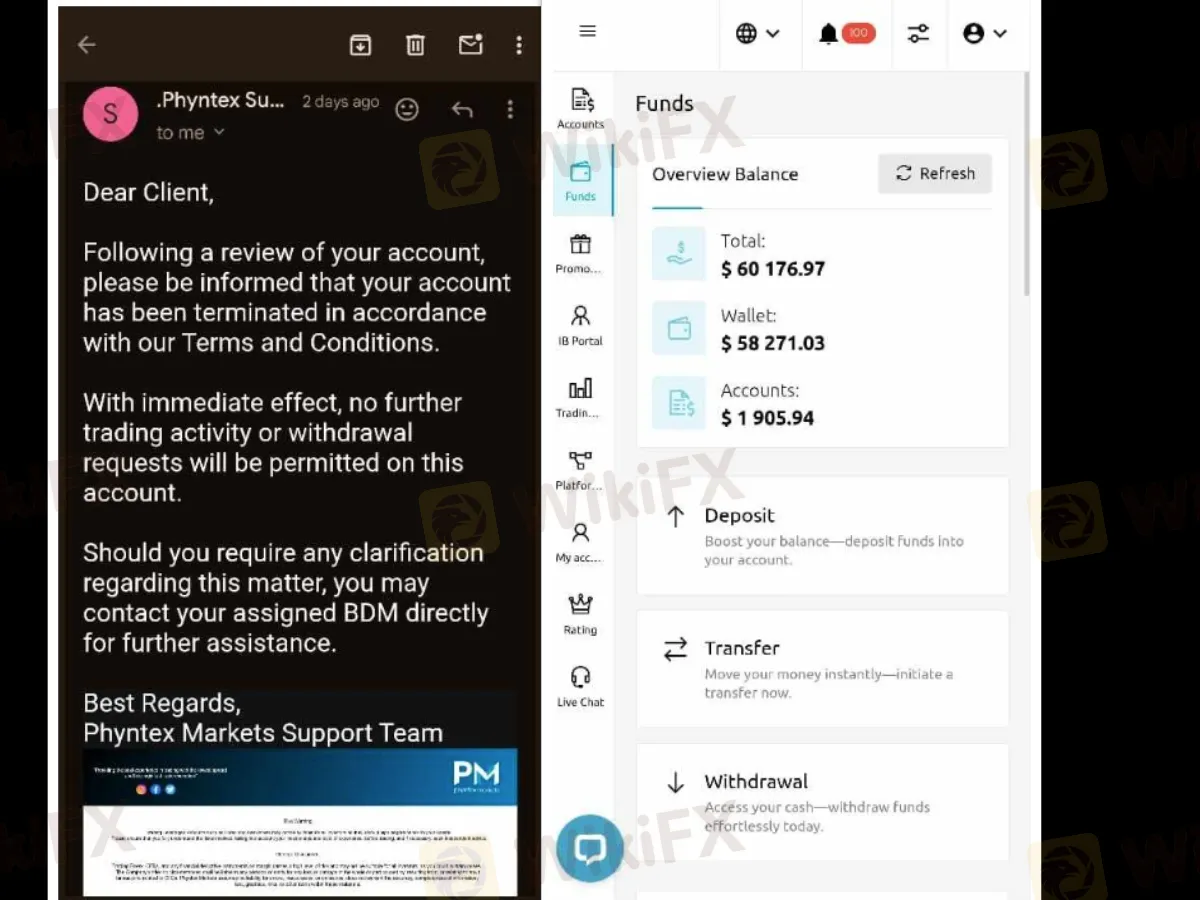
One user reported that after successfully withdrawing fifty thousand United States dollars, the broker subsequently blocked access to the remaining funds amounting to over $58,000 United States dollars. The user stated that a formal demand was issued, but no response or supporting documentation was provided by the broker. The platform reportedly attributed the issue to so called toxic trading, without further clarification.
Another complaint described an account closure followed by an inability to withdraw funds. The user indicated that attempts to contact customer support were unsuccessful, with no response received.
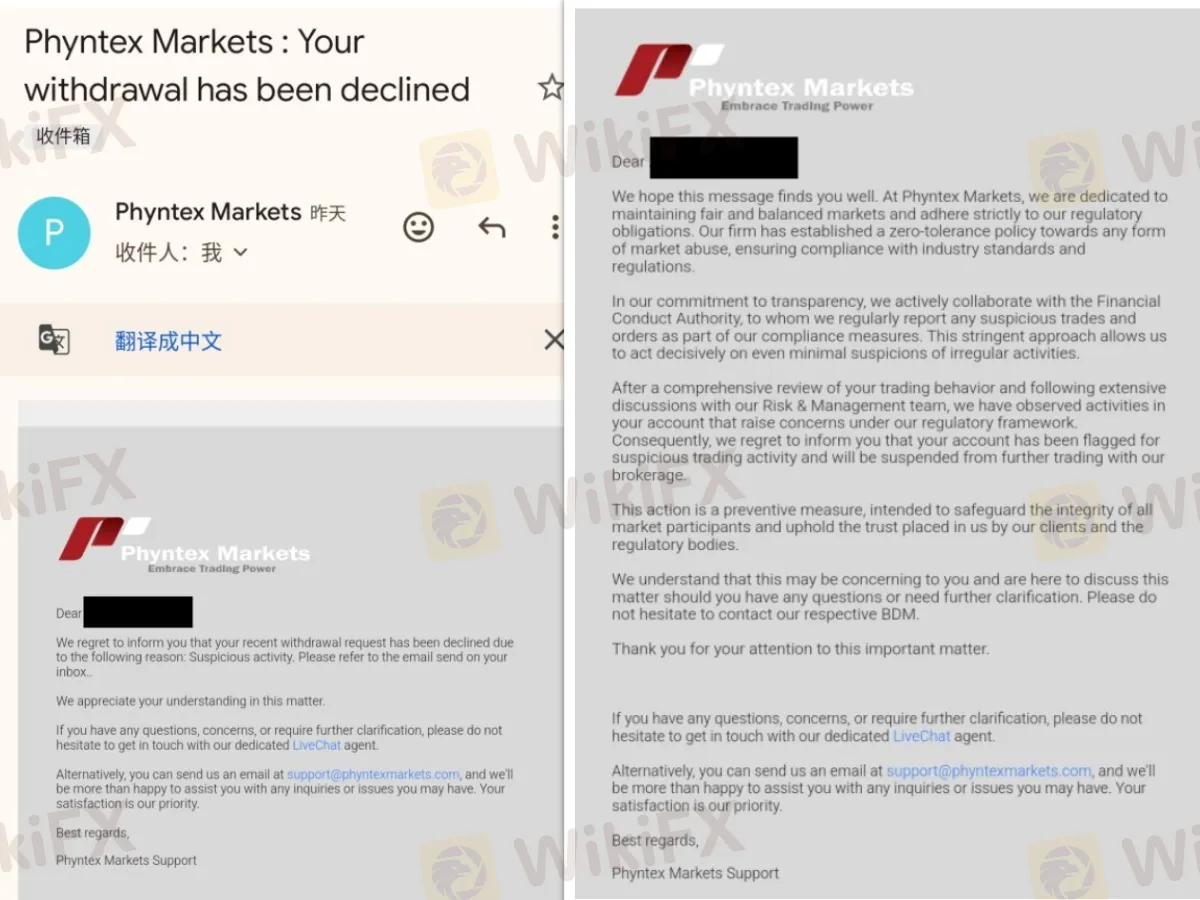
These reports point to concerns related to fund access, account management, and customer support responsiveness. While individual cases may vary, such feedback forms an important part of evaluating the Phyntex Markets broker.
Conclusion
This Phyntex Markets review outlines a broker with a very low WikiScore of 2.03 out of 10 and no recognised regulatory licence. The absence of oversight places it outside established financial regulatory frameworks, which may increase the level of risk for traders.
For Malaysian investors, the lack of local jurisdiction and limited avenues for dispute resolution further emphasise the importance of caution. In addition, user complaints regarding withdrawal restrictions and account handling provide further context that traders should consider.
Evaluating both Phyntex Markets regulation and real user experiences can help traders make more informed decisions. In the absence of regulatory protection, careful consideration becomes essential when assessing whether a broker meets acceptable standards of safety and transparency.
Disclaimer:
The views in this article only represent the author's personal views, and do not constitute investment advice on this platform. This platform does not guarantee the accuracy, completeness and timeliness of the information in the article, and will not be liable for any loss caused by the use of or reliance on the information in the article.
WikiFX Broker
Latest News
Malaysian Doctor Loses RM558,000 to Forex-Crypto Scam
WikiFXVG Markets Review: A Real FSCA Licence, But Why Only a 4.47 Score?
WikiFXGold Climbs Toward $4,400 as September Fed Hike Odds Tumble
WikiFXValbury Review 2026: An A+++ Rating Is a Starting Point - Not a Reason to Skip the Money-Path Check
WikiFXReview 2026: GFS Withdrawal Complaints, Regulation Gaps, and Broker Risk Signals
WikiFXTriumphFX Review: Revoked Licence and TFX Token Losses Warrant Caution
WikiFXTenTrade Review 2026: Complaints, Withdrawals, and Risk Signals
WikiFXReview 2026: XORKETS FX Withdrawal Complaints and Unregulated Risk
WikiFXRinggit jumps 225 pips as US data cools Fed hike bets
WikiFXadmiral Review 2026: Clone Warnings, Withheld Profits, and Withdrawal Risks
WikiFX