

Global Broker Regulation Inquiry App
About WikiFX
English
简体中文
繁體中文
English
Pусский
日本語
ภาษาไทย
Tiếng Việt
Bahasa Indonesia
Español
हिन्दी
Filippiiniläinen
Français
Deutsch
Português
Türkçe
한국어
العربية
Harmovest Capital | Daily Report: Will Hormuz Risks Push Gold Higher?
Abstract:14 April 2026Key HighlightsGeopolitical tensions remain elevatedSafe-haven demand continues to riseThe U.S. Dollar Index remains under pressureMarket ReviewU.S. Threat to Block the Strait of Hormuz Sp
14 April 2026
Key Highlights
Geopolitical tensions remain elevated
Safe-haven demand continues to rise
The U.S. Dollar Index remains under pressure
Market Review
U.S. Threat to Block the Strait of Hormuz Sparks a New Dangerous Standoff
U.S. President Donald Trump announced that the U.S. military would move to block the Strait of Hormuz, a move that could trigger a dangerous new confrontation. Such an action may draw U.S. forces into a prolonged struggle to control a critical strategic chokepoint while intensifying global economic losses resulting from the conflict.
Following the collapse of peace negotiations between the United States and Iran in Pakistan, President Trump stated that naval forces would begin intercepting vessels paying Iran to pass through the strait and initiate mine-clearing operations. He added that any Iranian forces firing upon U.S. military or commercial vessels would face decisive retaliation.
According to the United States Central Command, the blockade was scheduled to begin at 10:00 a.m. Eastern Time on Monday. Earlier, Vice President JD Vance concluded 21 hours of talks in Islamabad without reaching an agreement, accusing Tehran of rejecting U.S. conditions related to its nuclear program.
Although the U.S. military possesses the resources and capability to enforce such a blockade, current and former officials warn that maintaining long-term control of the waterway could prove significantly more challenging.
This move marks a new and unstable phase in the six-week conflict, shifting from targeted military strikes to sustained maritime security operations. The prospect of a blockade raises the risk of a high-stakes confrontation, testing which side can withstand greater economic and strategic pressure,Tehran or the global market.
The narrow waterway remains vulnerable to mines, drones, and fast-attack vessels operating along Iran‘s coastline. Despite repeated claims of heavy damage to Iran’s naval forces, the paramilitary Islamic Revolutionary Guard Corps continues to maintain a substantial fleet of agile patrol boats capable of exerting control over the strait.
While President Trump indicated that multiple countries would assist in enforcing the blockade, the structure of such a coalition remains unclear. Several European and Gulf officials have previously expressed support for multinational efforts to restore freedom of navigation, though major nations emphasize that sustained ceasefire conditions and international authorization would be required.
The resulting oil supply disruption has already spread across Asia, forcing factories to limit production to conserve energy, while some fuel stations have introduced rationing measures. Aviation fuel shortages have begun to emerge in parts of Asia and Europe, with inventory levels potentially requiring months to recover. For Gulf nations, the economic losses could be the most severe in decades.
Affected Financial Instruments
U.S. Dollar
Gold
S&P 500
Summary
As geopolitical instability remains elevated, market risk aversion continues to increase. This has significantly limited the downside potential in precious metals and gradually strengthened bullish momentum in gold.
Today's Key Event
U.S. Producer Price Index (PPI)
Market attention will focus on the upcoming U.S. Producer Price Index data. Historical data indicates that inflation in the United States remains persistently elevated, leading markets to anticipate that the reading may come in above expectations.
Affected Assets
U.S. Dollar
Precious Metals (Gold, Silver, Platinum)
U.S. Equity Indices
Today's Trading Strategy
Bias: Long on Precious Metals
Market Sentiment Analysis
Fear & Greed Index
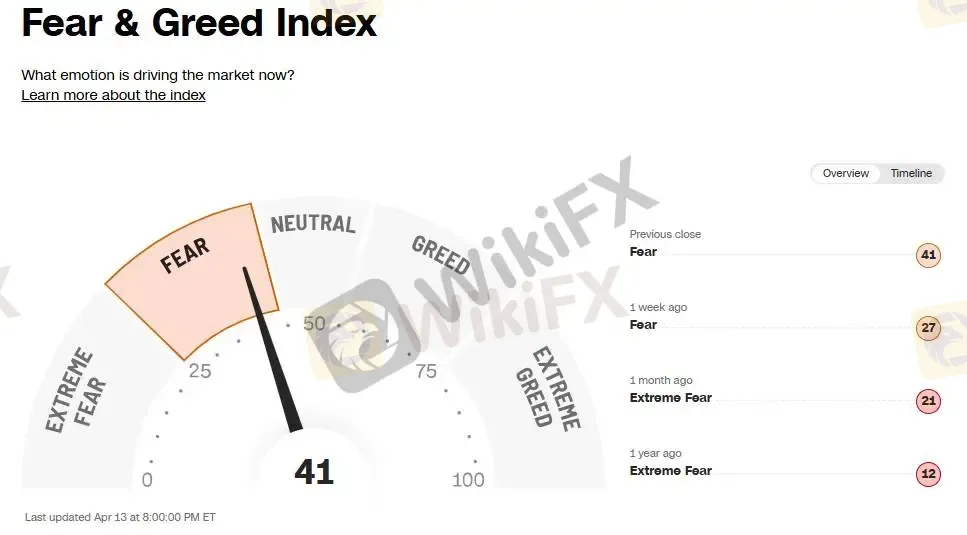
The Fear & Greed Index is a key gauge of investor sentiment, reflecting whether market participants are driven by fear or greed. The latest reading stands at 41 (Fear), compared with the previous level of 31, indicating that risk-off sentiment remains elevated.
The ongoing conflict involving Iran has significantly driven up energy prices, raising concerns about persistent inflation and encouraging central banks to maintain higher interest rates. Additionally, tariff pressures on the U.S. economy have further increased demand for safe-haven assets, including gold and silver.
As risk aversion continues to rise, investors may consider positioning in:
Gold
Silver
U.S. Treasuries
Technical Analysis
XAUUSD (Gold)
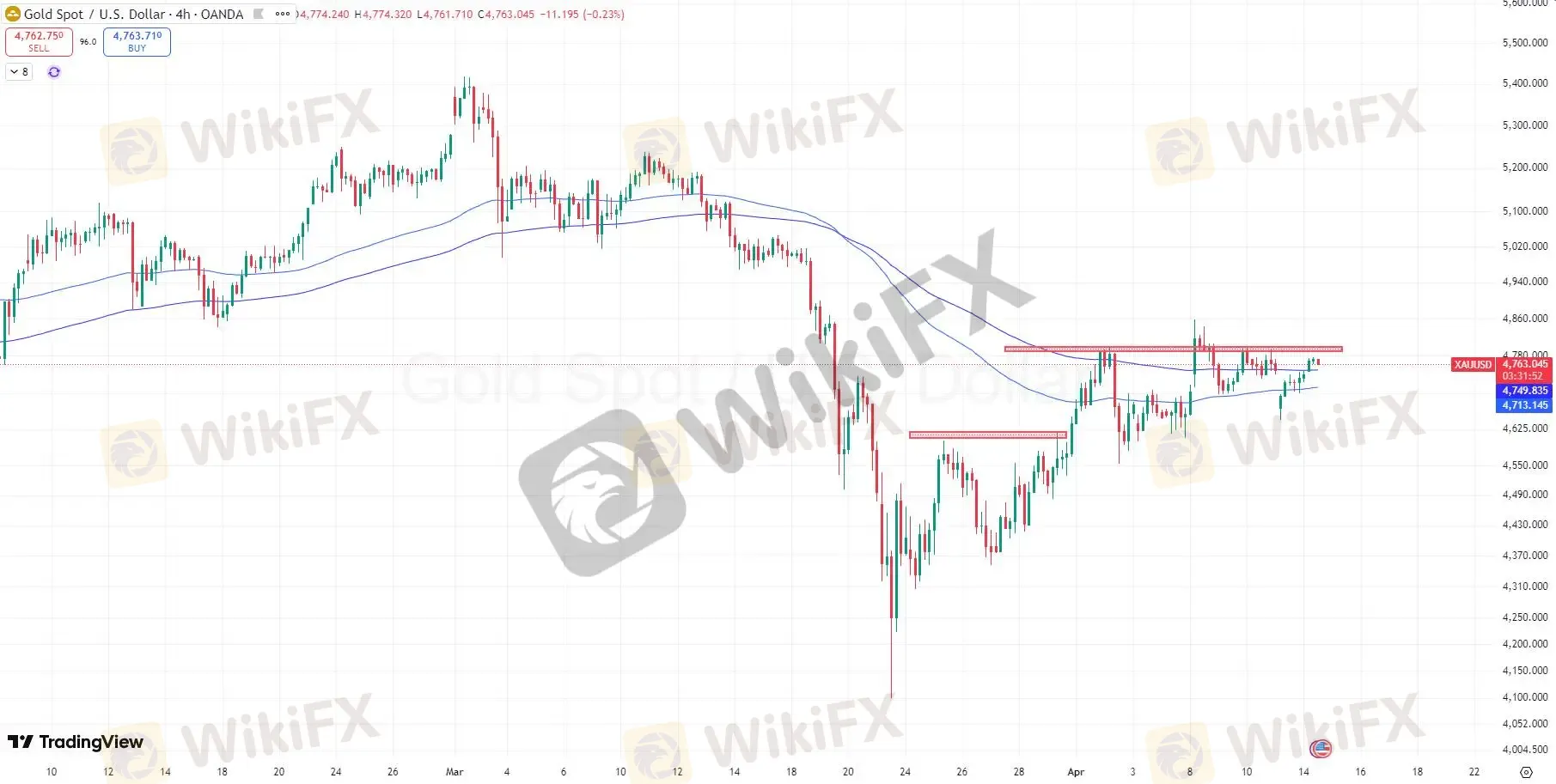
Following President Trump's announcement of a two-week ceasefire with Iran, market risk sentiment cooled significantly, leading to a decline in the 10-year U.S. Treasury yield and indirectly supporting further upside potential in gold.
From a technical perspective, gold has successfully broken above the 4787 resistance level, signaling continued bullish momentum in the near term. Investors are advised to maintain long positions, with key support levels to monitor around 4700.
Disclaimer:
The views in this article only represent the author's personal views, and do not constitute investment advice on this platform. This platform does not guarantee the accuracy, completeness and timeliness of the information in the article, and will not be liable for any loss caused by the use of or reliance on the information in the article.
WikiFX Broker
Latest News
FXORO Review 2026: Is this Forex Broker Legit or a Scam?
 WikiFX
You Know What to Do. So Why Aren't You Doing It?
WikiFXQuotex Review 2026: Is this Forex Broker Legit or a Scam?
WikiFXFIBOGROUP Review 2026: Is this Forex Broker Legit or a Scam?
WikiFXItaly Blocks 12 More Unauthorized Investment Websites
WikiFXCrude Shock Drives Dollar Higher
WikiFXPhysical Crude Decouples From Futures
WikiFXHerofx Regulation & License Status: A 2026 Deep Dive into the Risks
WikiFXHormuz blockade could deepen worlds worst energy crisis — and risk a dangerous misstep
WikiFXIs The 5%ers a Safe Forex Broker? WikiFX Review
WikiFXCurrency Calculator
USD

CNY
Current Rate:0
Enter amount
USD
Redeemable Amount
CNY
Calculate 