Abstract:Dubai’s growing role in forex is being shaped by regulatory reform, faster payment systems, and a broader financial ecosystem built around cross-border activity.
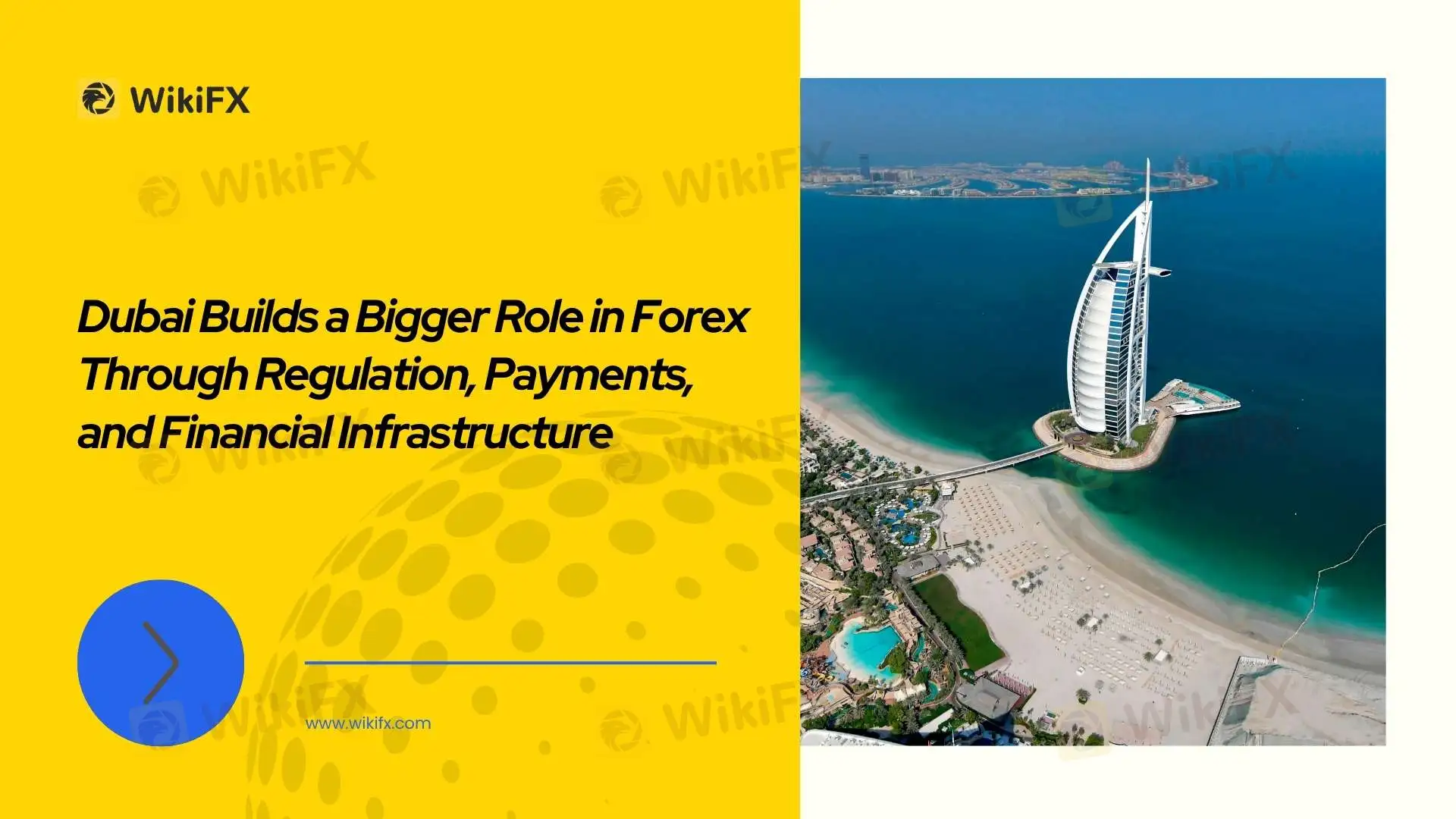
Dubais position in the forex sector is expanding through a combination of regulatory reform, financial infrastructure upgrades, and a broader concentration of market participants. Over the past several years, the city has moved further beyond its traditional role as a regional business center and become a more established base for brokers, payment firms, trading companies, and financial technology providers.
This shift is tied not only to trading demand, but also to the framework supporting it. Licensing structures, open-finance rules, payment modernization, and the growth of financial networks have all contributed to making Dubai a more active center for cross-border financial activity.
Regulation has become a practical driver of market activity
A major part of Dubais rise in this area has come from the way the UAE has been updating its financial rules.
Recent regulatory initiatives have focused on improving how licensed institutions, fintech firms, and service providers interact inside the financial system. These changes include open-finance standards, innovation environments, and licensing pathways designed to support newer business models in payments, trading, and financial services.
For forex-related businesses, these adjustments matter because they affect how firms connect with banks, move money, build technology, and serve clients. In practical terms, that can support smoother onboarding, faster transaction flows, and better links between execution systems and payment infrastructure.
Dubais regulatory environment has also benefited from the role of financial zones and controlled testing structures that give firms room to launch and expand within a supervised framework.
More firms and professionals are gathering in the same market
Dubais development in forex has also been supported by the growth of its wider finance community.
A larger number of brokers, fintech firms, allocators, trading professionals, and payment providers now operate within the same ecosystem. That has gradually strengthened the citys role as a place where financial businesses can build regional operations, form partnerships, and expand into surrounding markets.
The increase in financial conferences, trading events, and fintech gatherings across the UAE reflects that wider change. Compared with the period before 2020, the number of industry events has grown noticeably, reinforcing Dubais position as a meeting point for regional and international finance.
This concentration of firms and market talent has helped turn the city into more than just a representative office location. It is increasingly being used as an operating center connected to licensing, business development, payments, and cross-border activity.
Payment infrastructure is becoming a bigger part of the story
Another important factor behind Dubais growing relevance in forex is the development of payment systems.
As cross-border transaction volumes rise, the UAE has continued upgrading the way payments move through domestic and international channels. Instant-payments infrastructure, open-finance connectivity, and settlement modernization are all part of that process.
These changes affect forex businesses directly. Faster payments and stronger settlement systems can improve treasury operations, liquidity handling, and day-to-day transaction management for firms working across currencies.
Regional payment cooperation has also added to that momentum. Efforts across the Gulf to improve real-time interoperability, along with bilateral arrangements on major trade corridors, are helping shorten settlement times and support more integrated financial flows.
Dubais participation in wholesale digital-currency experiments has added another layer to its role in cross-border finance, particularly in discussions around shared settlement infrastructure and multi-currency payment systems.
Dubai‘s forex role is becoming broader
What stands out now is that Dubai’s role in forex is no longer limited to simple market access or regional representation.
The city is increasingly connected to several parts of the financial chain at once: regulation, payments, trading infrastructure, settlement, and business formation. That combination has made it more useful not only for firms serving the Gulf, but also for companies looking at Africa, South Asia, and other adjacent markets from a single base.
The result is a market that is being shaped by more than turnover alone. Regulatory adjustments, payment upgrades, and the growth of a larger finance network are all working together to deepen Dubais place in the forex and cross-border finance landscape.
About WikiFX
WikiFX is a global broker information platform that tracks broker profiles, licence records, regulatory actions, and industry developments across multiple jurisdictions. It is widely used by traders and market participants to follow broker background information and changes affecting the financial services sector.