

Global Broker Regulation Inquiry App
About WikiFX
English
简体中文
繁體中文
English
Pусский
日本語
ภาษาไทย
Tiếng Việt
Bahasa Indonesia
Español
हिन्दी
Filippiiniläinen
Français
Deutsch
Português
Türkçe
한국어
العربية
اردو
FBS Review: Regulation Warning Around a Broker Facing Withdrawal and Slippage Complaints
Abstract:FBS carries active regulation records with CySEC and ASIC, but our investigation also found a Malaysia Securities Commission investor alert naming FBS-related sites as unauthorized for securities and derivatives activity. At the same time, user complaints describe withdrawals rejected, profits removed through “Balance Fixed,” severe slippage, and blocked account access.
A trader says a profit of 44,827 dollars vanished after FBS applied a “Balance Fixed” adjustment. Another says a 2,618-dollar balance was wiped, followed by account deactivation and deleted trading and transaction history.
This is not a quiet review of a normal service delay. Our investigation reveals a pattern of traders describing funds withheld, profit removals, forced take-profit changes, stop-loss slippage, and account access blocks after they became profitable.
FBS presents itself as an established Forex broker with a WikiFX score of 7.59, an A influence rank, and an A trading environment rank. It also lists regulation under the Cyprus Securities and Exchange Commission and the Australian Securities and Investments Commission.
But the surface rating does not erase the pressure points. WikiFX records also show 172 complaints received in the past three months. For retail traders, that volume matters.
 Contents
FBS Regulation Reality Audit: Licensed Records and an Investor Alert
Regulation is not just a logo on a website. It must be checked against the exact entity, country, license, and regulator disclosure.
Our investigation found two “regulated” records and one regulatory disclosure from Malaysias Securities Commission. The Malaysian notice listed FBS Malaysia / fx trade pro and multiple FBS-related URLs in an investor alert category for unauthorized activity involving securities and derivatives.
| Regulator | License Type | REAL STATUS |
|---|---|---|
| Cyprus Securities and Exchange Commission (CySEC) | License No. 331/17, Tradestone Ltd | Regulated |
| Australian Securities and Investments Commission (ASIC) | License No. 426359, Intelligent Financial Markets Pty Ltd | Regulated |
| Malaysia Securities Commission (SCM) | Investor Alert / Unauthorized capital market activity disclosure | Unauthorized |
This is the central contradiction in the FBS regulation picture. The broker has regulated records in Cyprus and Australia, yet a separate regulator disclosure warns that named FBS-related sites were not authorized for securities and derivatives activities.
For a trader, this means one thing: do not treat “regulated” as a blanket safety guarantee. Check the entity you are using. Check the website. Check whether your country is covered.
FBS Broker Complaints: When Withdrawals Turn Into a Wall
The most repeated complaint is not about a single bad trade. It is about traders trying to get money out.
One user said withdrawals became impossible after growth, while deposits were rejected and the response was that a manager rejected the deposit.

Another said a 2,000+ USD profit could not be withdrawn even through the same method used for deposit, and emails received no response.
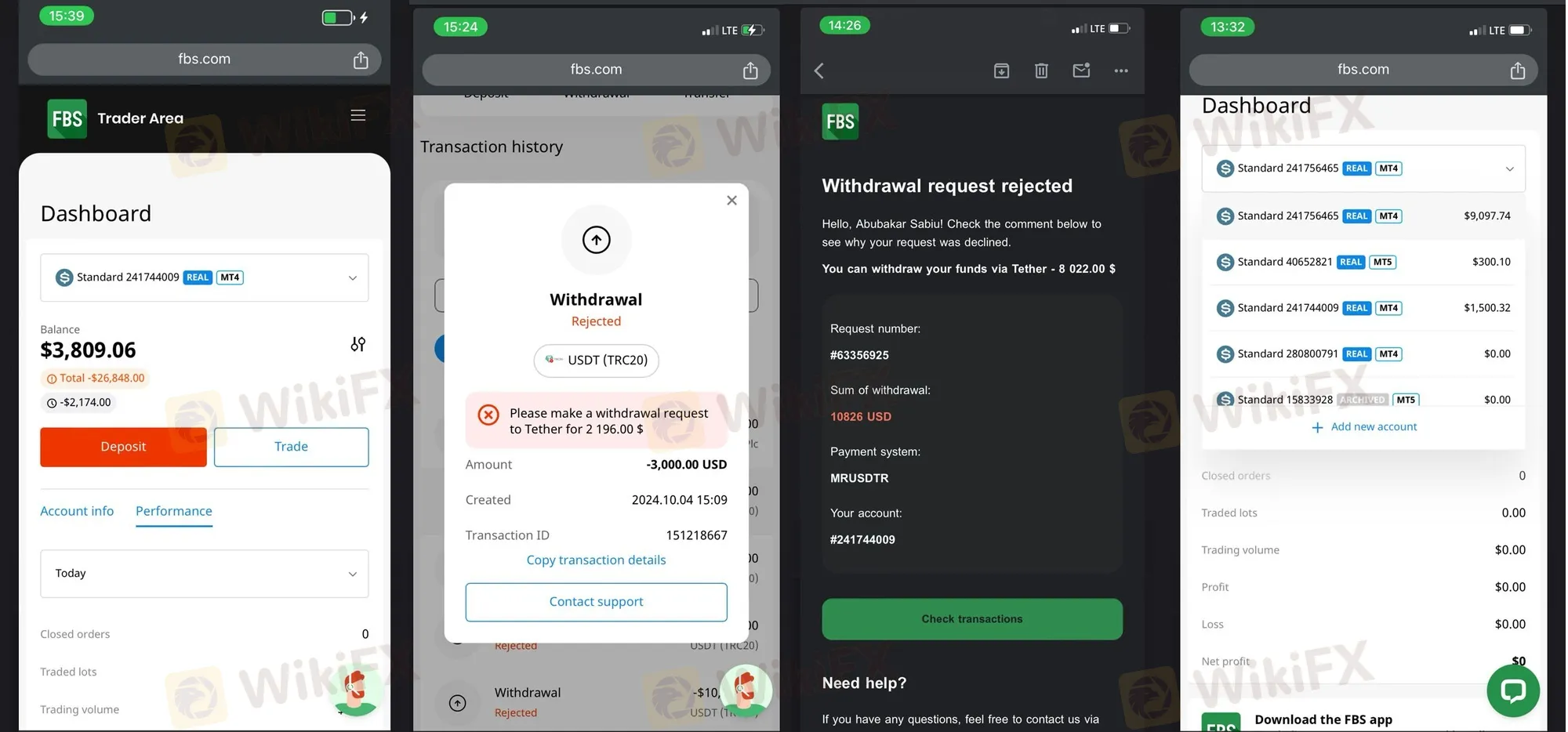
A South African complainant said FBS sent a message saying a withdrawal amount was approved, but nothing appeared in the account. A UK-based user said a withdrawal showed successful on the dashboard, but the money did not arrive. Another said they waited more than two weeks and still did not receive funds in a bank account.
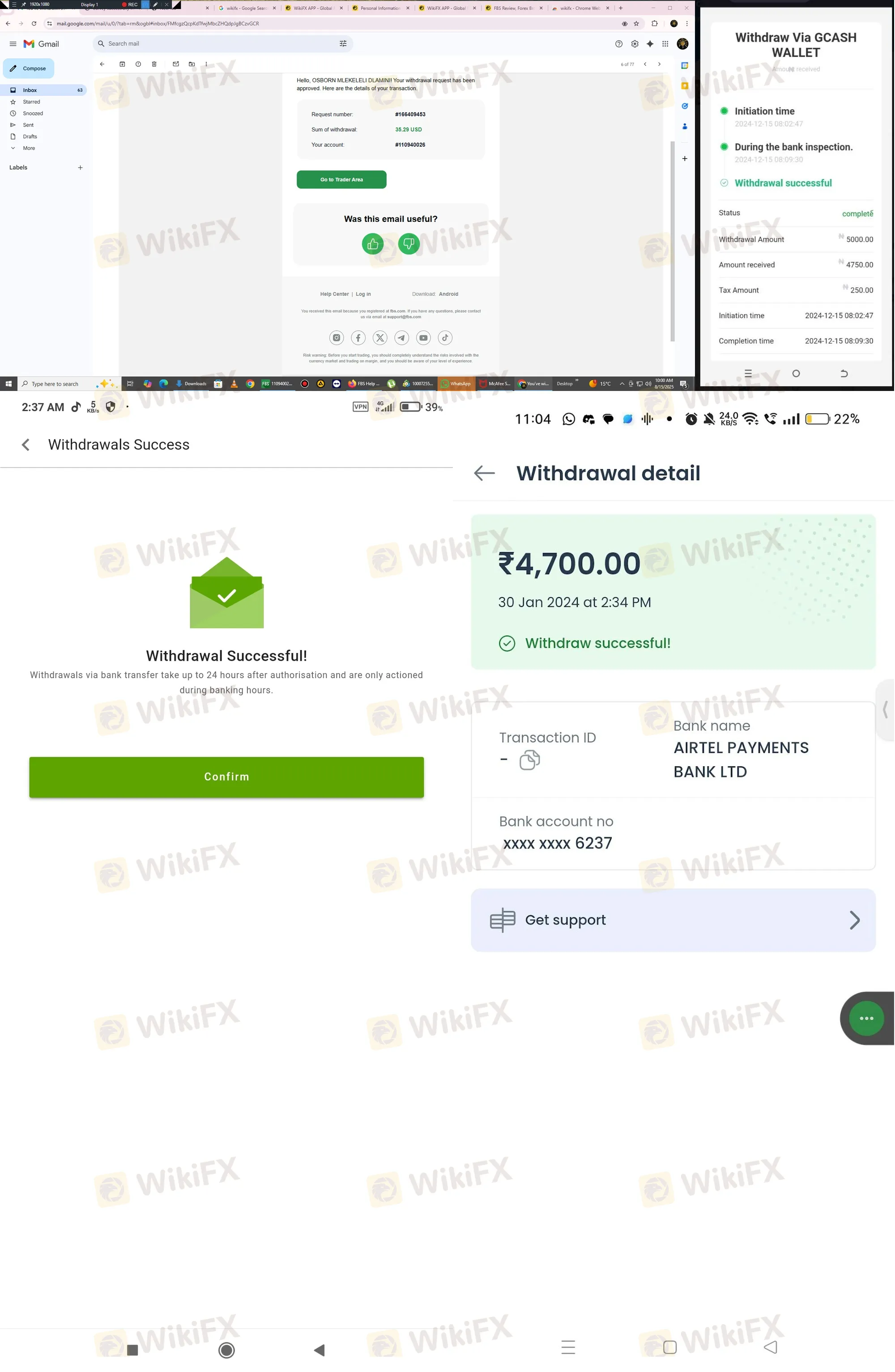
The language changes across countries. The pain does not.
India, France, the UK, China, Hong Kong, Brazil, Indonesia, Thailand, and other regions appear in complaints involving rejected withdrawals, delayed withdrawals, missing deposits, and additional document demands. Several users said they deposited quickly but faced repeated obstacles when trying to withdraw.
FBS Login and Account Access Red Flags: Verification After Profit
Access complaints are especially serious because they go beyond slow processing. They suggest traders may lose control over their account at the exact moment they need transparency.
One user said FBS disabled the account after successful withdrawals, first citing verification, then raising broader accusations.
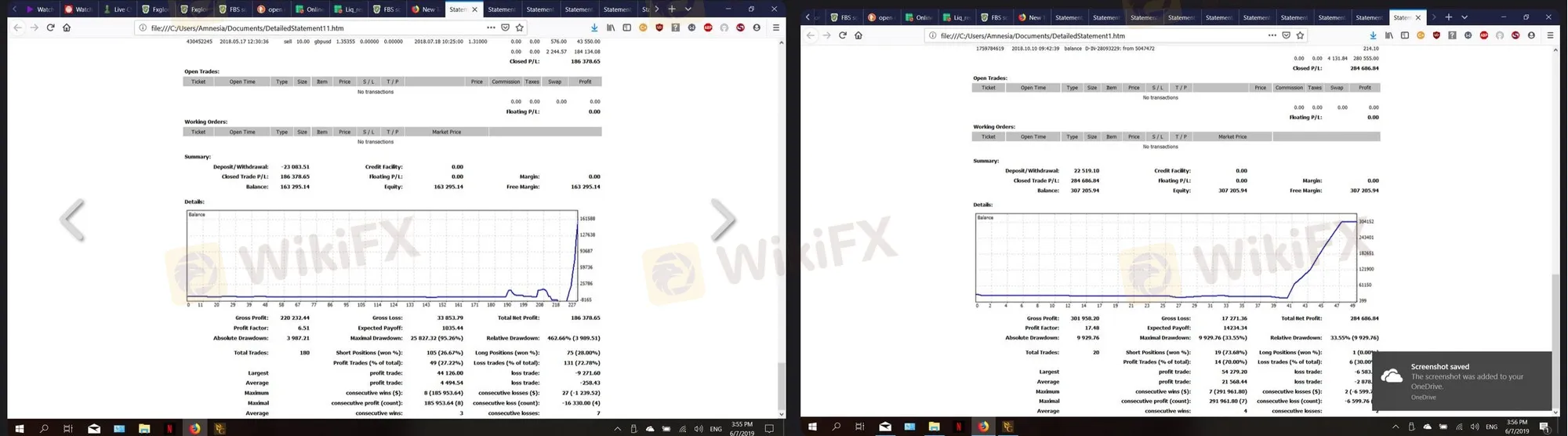
Another said that after depositing about 248 dollars and making profit, the account was blocked under an AML check. The user claimed documents were submitted, including ID video selfie, residence proof, transaction screenshots, payroll, bank statements, and crypto purchase proof.
Then came the hard turn. The same user said approximately 1,099.65 dollars in profit was removed through “Balance Fixed.”
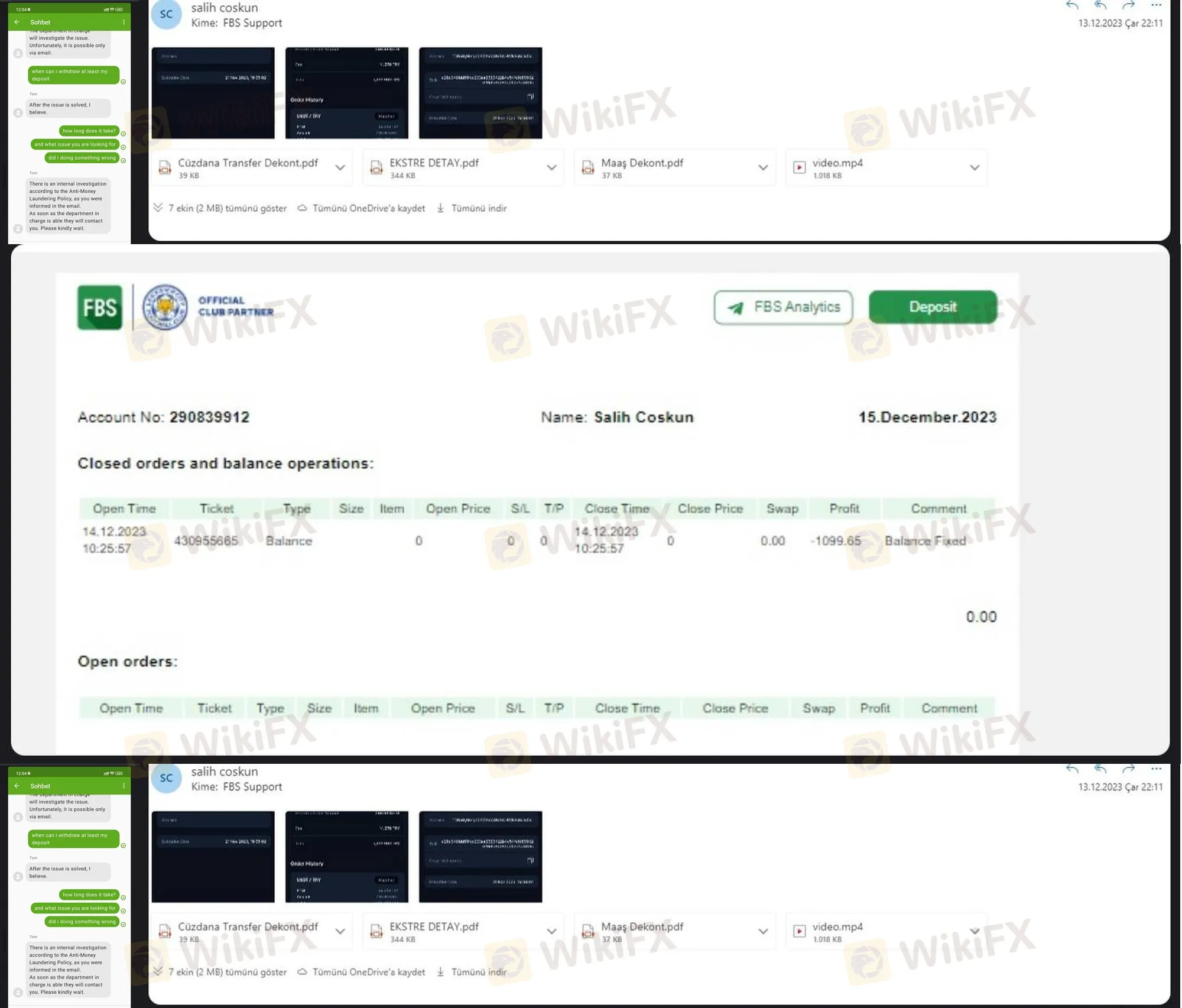
Another complaint says withdrawal requests through crypto and local bank were declined, then the whole balance of 2,618 dollars was wiped, and later the account was deactivated with trading and transaction history deleted. If accurate, this is a major account-access risk for any Forex trader relying on platform records to defend a claim.
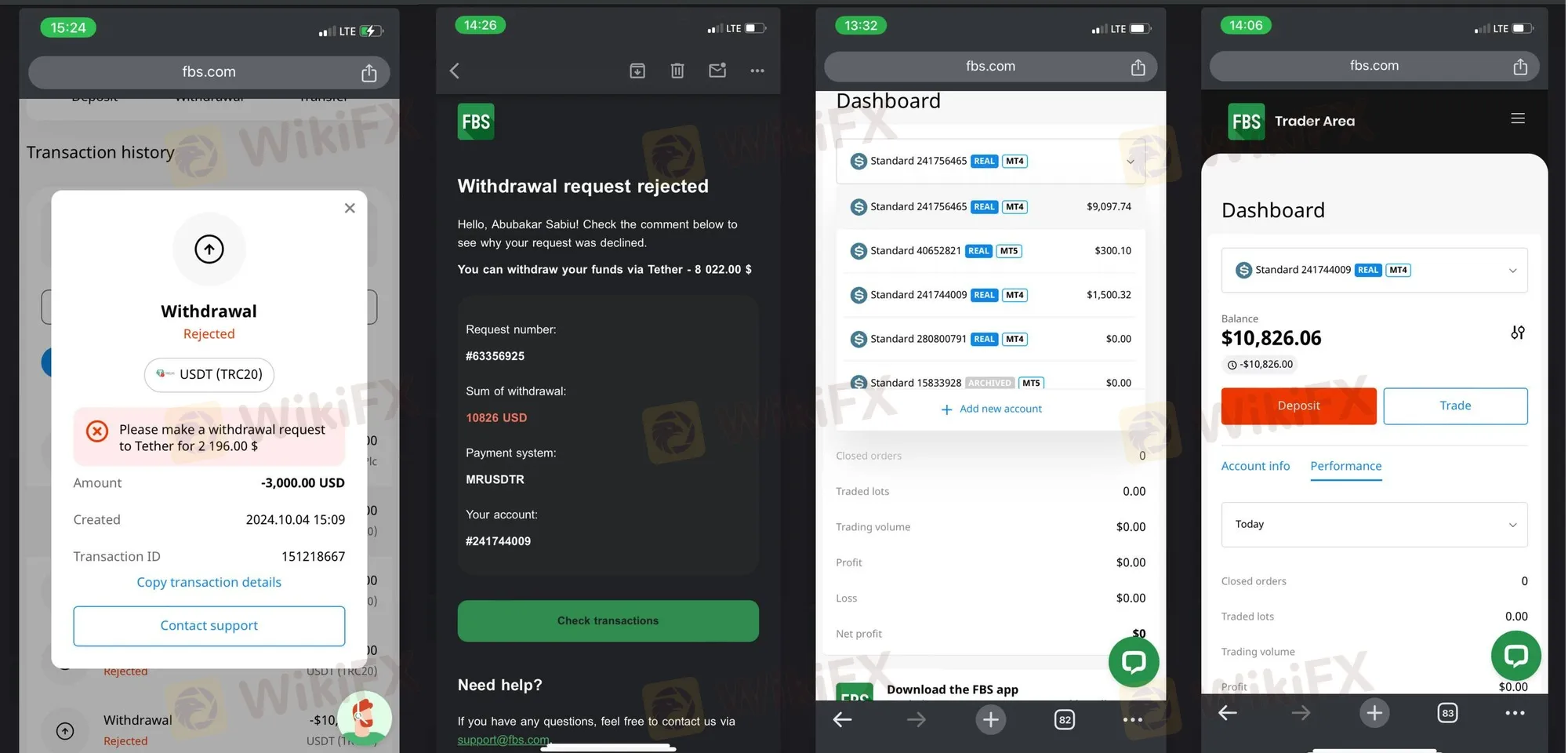
Visual Evidence From 2026: Stop-Loss Slip and Crypto Withdrawal Pressure
The current-year complaints continue the same pattern.
A 2026 Vietnam complaint says a crypto deposit was followed by AML issues and no withdrawal, while the user also alleged slippage after profit and a 10% bank deposit fee. An Indonesia complaint in 2026 describes a stop-loss gap: the user said a planned 200-dollar stop loss repeatedly slipped to 250–350 dollars.
A third 2026 complaint says a withdrawal process took too long and the funds were not returned. These are not isolated themes. They match the 2025 and 2024 record of withdrawal disputes, slippage complaints, and profit-adjustment allegations.
Price Feed, Slippage, and Forced Take Profit: The Trading-Risk Pattern
Many complaints point to execution. Traders describe stop losses being hit when market prices allegedly did not reach the level, hidden spread, severe slippage, and platform prices that did not match other sources.
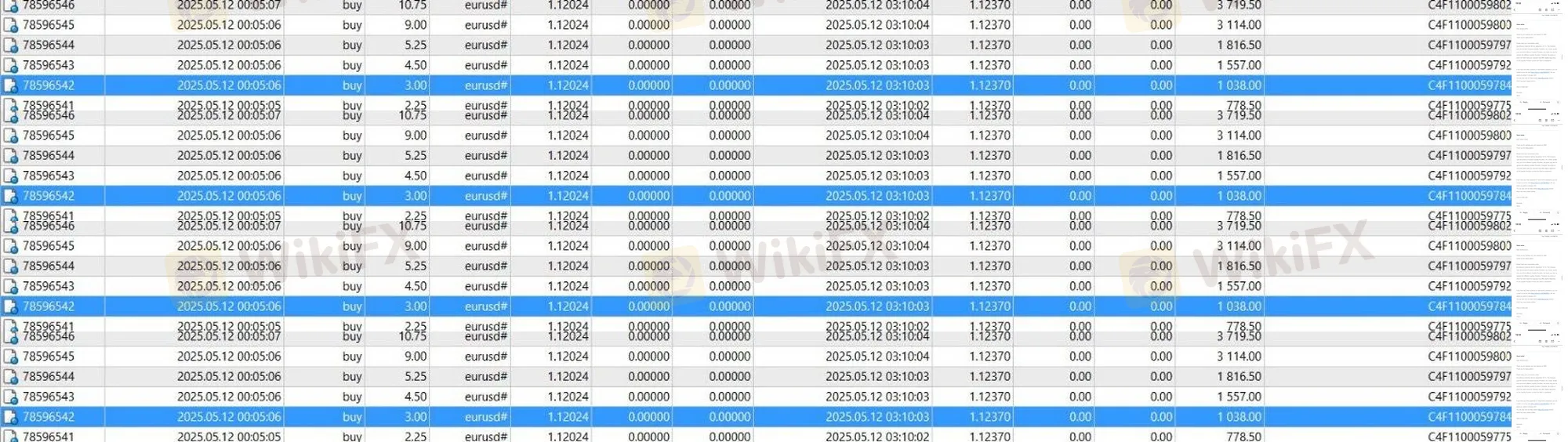
One German complainant said three pending EUR/USD orders totaling 30 lots were activated at 1.1240, while the user claimed the market opening price was 1.11850 and executable orders were 1.1202. The alleged difference was described as nearly 30,000 dollars. FBS reportedly answered that different liquidity providers were used.
A Thailand complaint alleged that FBS set a take-profit level without consent after market close, causing an alleged loss of 17,600 USD. A Malaysia complaint said a take profit was set at 0.01 on an AMD stock position, and the user questioned whether the system could change pricing after market close.
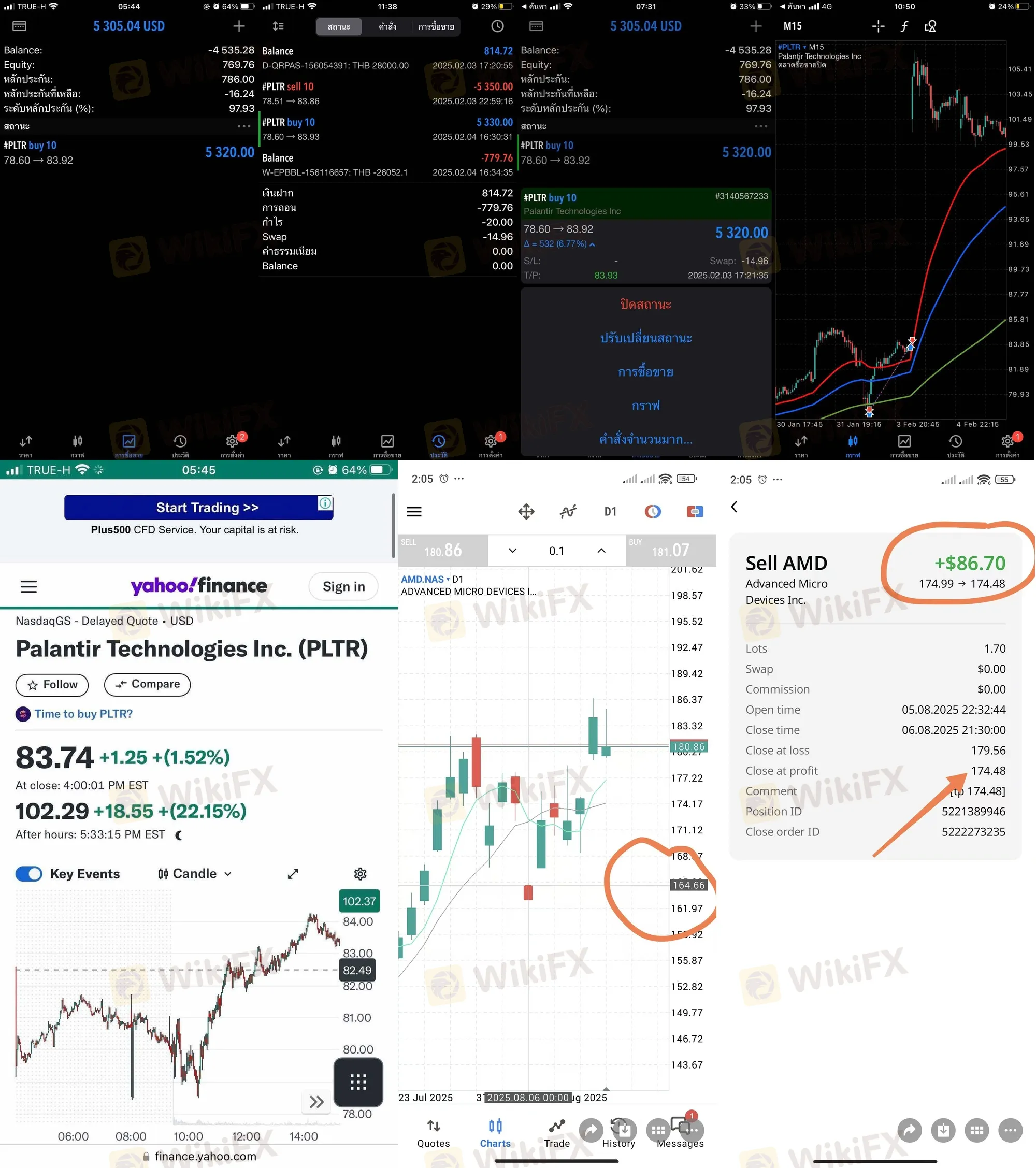
Other complaints mention XAUUSD, XAGUSD, USD/TRY, US100, and stock CFDs. The instruments vary. The allegation stays consistent: price movement or order execution on FBS allegedly did not match what traders expected from broader market conditions.
FBS trading environment testing shows an A grade overall, with good speed and slippage grades. But the same testing record also shows worst-speed readings near 1985 ms, maximum slippage of 29.0, and “Poor” labels on slow speed and maximum negative slippage details. That does not prove every complaint. It does show why execution quality deserves careful monitoring.
Key Red Flags in This FBS Review
- Malaysia Securities Commission disclosure listed FBS-related sites in an unauthorized investor alert for securities and derivatives activity.
- WikiFX received 172 user complaints about FBS in the past three months.
- Multiple traders report rejected, delayed, or missing withdrawals after profits.
- Complaints repeatedly allege “Balance Fixed” profit removals, severe slippage, forced take-profit settings, and account access restrictions.
Is FBS Broker Safe for Retail Forex Traders?
FBS is not a simple case. It has regulated records, MT4/MT5 support, mobile platforms, two account types, and a listed maximum leverage of 1:30. It also has a large global footprint and strong search visibility.
But safety is not decided by branding. It is decided when a trader tries to withdraw, challenge an execution, or recover account access.
The complaint trail raises hard questions. Why do so many profitable traders say withdrawals became harder after gains? Why do several users describe AML checks, document requests, and then profit removals? Why do execution complaints repeat across different instruments and regions?
Our verdict is cautious and firm: FBS may show regulated records, but the complaint density and Malaysia investor alert create a high-risk profile for retail traders. Before depositing, verify the exact entity and website, test withdrawals with a small amount, save all platform records, and do not ignore any sign that profits, withdrawals, or account access are being restricted.

Disclaimer:
The views in this article only represent the author's personal views, and do not constitute investment advice on this platform. This platform does not guarantee the accuracy, completeness and timeliness of the information in the article, and will not be liable for any loss caused by the use of or reliance on the information in the article.
WikiFX Broker
Latest News
trading.com Review 2026: Regulation, MT5 Access, and Complaint Signals
 WikiFX
Behind The Screenshots: The Forex Success You See Online May Not Be Real
WikiFXThe NFP Gap Slippage: Why Your 1.1000 Stop Executed at 1.0950
WikiFXFBS Review 2026: Complaints, Withdrawals, and Risk Signals
WikiFXDollar Gains While Yen Finds Support
WikiFXDollar Advances on Middle East Conflict
WikiFXThe 3-Bullet Rule: How a Paper Card Stops Overtrading
WikiFXVALUTRADES Review 2026: Slippage Complaints, Regulation, and Safety Risks
WikiFXQuotex Review 2026: Official Warnings, Blocked Accounts, and High Risk
WikiFXAxim Trade Review: Withdrawal Alarms, Weak Regulation, and a Broker Risk Traders Cannot Ignore
WikiFX