

Global Broker Regulation Inquiry App
About WikiFX
English
简体中文
繁體中文
English
Pусский
日本語
ภาษาไทย
Tiếng Việt
Bahasa Indonesia
Español
हिन्दी
Filippiiniläinen
Français
Deutsch
Português
Türkçe
한국어
العربية
اردو


Asian markets fall as tensions in the Middle East escalate again, oil prices jump


Abstract:Asian technology stocks fell sharply on Monday as investor sentiment toward AI-related companies weakened following a major sell-off in U.S. technology stocks, as the Nasdaq lost more than 4.5% last w
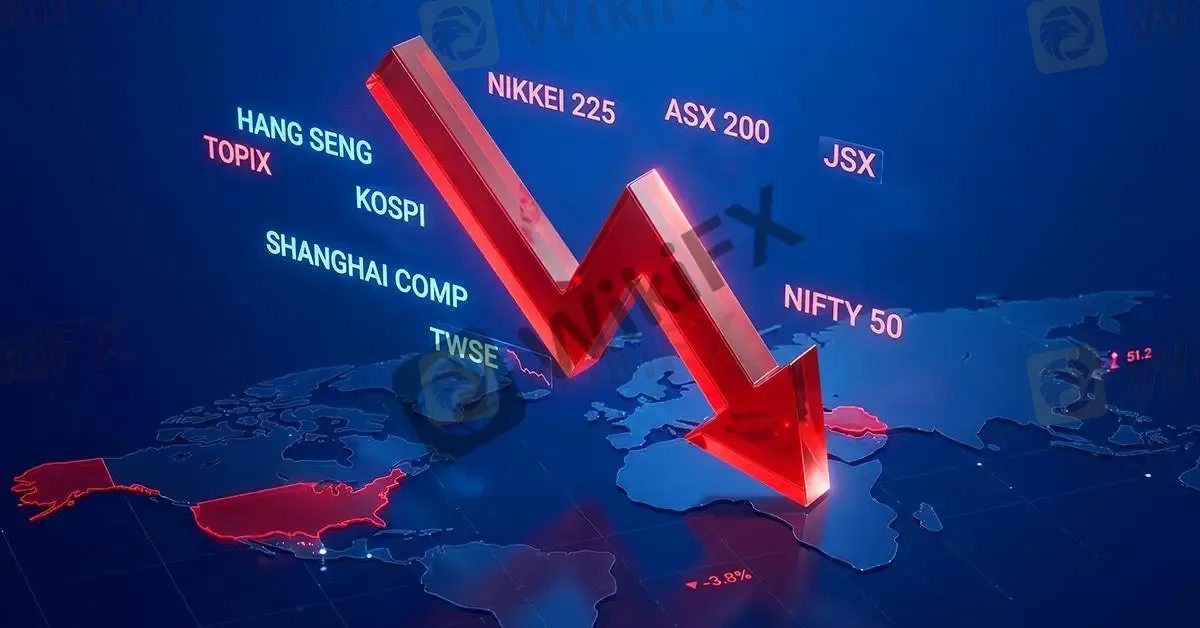
Asian technology stocks fell sharply on Monday as investor sentiment toward AI-related companies weakened following a major sell-off in U.S. technology stocks, as the Nasdaq lost more than 4.5% last week.
The sell-off last week was triggered by disappointing revenue guidance from Broadcom, which raised concerns that AI-related spending may be slowing. Broader Asian markets also came under pressure due to escalating tensions involving Iran, adding to global risk aversion.
On Friday, the Nasdaq suffered its biggest one day drop since April 2025 after a stronger than expected U.S. jobs report increased expectations that interest rates could remain elevated for longer. Higher borrowing costs are seen as a potential challenge for companies investing heavily in AI and growth initiatives.
Oil prices jumped more than 4% in early trading today as renewed tensions in the Middle East increased fears that the conflict could escalate despite an existing ceasefire. Brent crude rose above $97 per barrel, and WTI crude reached $94.40 per barrel.
Despite the geopolitical risks supporting prices, gains were partially limited by an agreement from OPEC+ to increase oil production targets by 188,000 barrels per day starting in July, marking the fourth consecutive output increase since the closure of the Strait of Hormuz. The higher supply could help offset some of the upward pressure on oil prices caused by the conflict.
Gold prices recovered modestly on Monday, rising toward $4,345 per ounce, but gains remain limited as investors balance geopolitical risks against expectations of higher U.S. interest rates.
However, golds upside is being capped by strong U.S. economic data. The latest U.S. Nonfarm Payrolls report showed 172,000 jobs were added in May, significantly above expectations of 85,000, while the unemployment rate remained steady at 4.3%. The stronger-than-expected labor market has reduced expectations for near-term Federal Reserve rate cuts. Investors are now focused on two inflation metrics from the US (CPI and PPI), which could shape expectations for future Federal Reserve policy.
Disclaimer:
The views in this article only represent the author's personal views, and do not constitute investment advice on this platform. This platform does not guarantee the accuracy, completeness and timeliness of the information in the article, and will not be liable for any loss caused by the use of or reliance on the information in the article.
WikiFX Broker
Latest News
Winvest Review: What Traders Should Know Before Depositing
 WikiFX
Trade Nation Review: What Traders Should Know Before Depositing
WikiFX