

Global Broker Regulation Inquiry App
About WikiFX
English
简体中文
繁體中文
English
Pусский
日本語
ภาษาไทย
Tiếng Việt
Bahasa Indonesia
Español
हिन्दी
Filippiiniläinen
Français
Deutsch
Português
Türkçe
한국어
العربية
اردو


Rupee Holds Ground as Fed Bets Fade and RBI Steps In

WikiFX
|


Abstract:The Indian rupee opened near 95.14 to 95.16 against the dollar on August 10, 2026, supported by fading US rate hike bets after a surprise drop in American payrolls and by the RBI's repeated currency market interventions. Brent crude rose to $84.50 but remained well below its $100 peak, as Iran-Oman talks on reopening the Strait of Hormuz reached a final drafting stage.
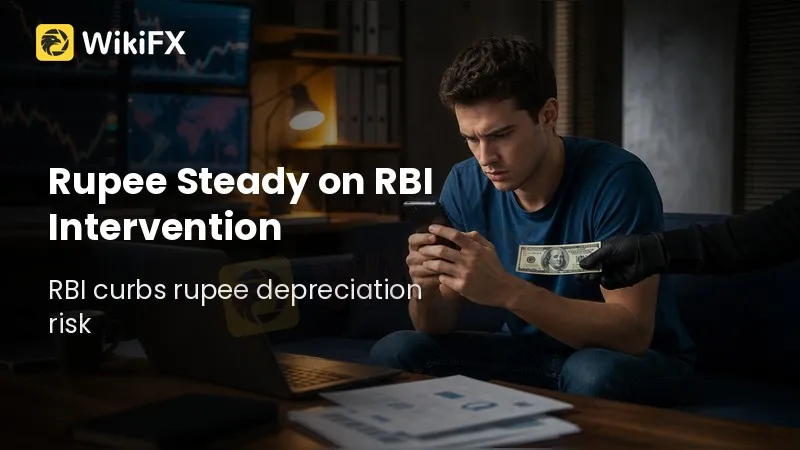
The Indian rupee is set to open in a narrow band of 95.14 to 95.16 against the US dollar on Monday, extending a recovery underpinned by fading Federal Reserve rate hike bets and regular Reserve Bank of India intervention.
The currency settled at 95.2075 on Friday. Traders say the RBI has made its stance clear: oil-price uncertainty will not translate into unchecked depreciation.
 Contents
A Jobs Shock That Cooled Rate Hike Bets
US employers unexpectedly shed 23,000 jobs in July, blindsiding markets. Economists polled by Reuters had forecast an addition of 80,000.
The miss forced a rapid repricing. Fed funds futures now imply a 44 percent probability of a rate hike at the September meeting, down from 55 percent before the data. Investors pared bets quickly, easing dollar pressure and giving the rupee breathing room.
RBI Draws a Line in the Sand
The RBI reinforced that room on Friday, stepping into the market at the open. A currency trader at a bank said the central bank's willingness to intervene at current levels signals it wants to push dollar-rupee lower. How much further downside is possible depends on oil and genuine appetite to sell dollars.
The rupee has been in recovery mode for two weeks, with regular RBI intervention as a backstop.
Hormuz Talks Inch Forward But Stay Fragile
Oil prices rose Monday as the Strait of Hormuz reopening remained uncertain. Iran said on August 5 it is in the “final stage” of drafting an agreement with Oman, and US President Donald Trump said a deal could be announced that week.
Foreign Ministry spokesperson Esmail Baghaei confirmed the final drafting stage, adding a joint statement would follow “if certain parties do not obstruct this process,” an apparent reference to Washington. Two regional officials told the Associated Press that negotiators had finalised the draft and awaited final approval from Supreme Leader Ayatollah Mojtaba Khamenei.
Under the proposed deal, ships would enter the Persian Gulf via an Iranian-controlled route and exit via an Omani-controlled route, with service fees for security and maritime preservation. On August 5, Brent crude was around 80 dollars per barrel, well below levels at the conflict's height.
The strait, through which a fifth of the world's traded oil and natural gas once passed, has driven up fuel and basic goods prices, roiling the global economy.
Oil Below Panic Levels, for Now
Brent crude quoted at 84.50 dollars on Monday, up but well below its recent 100-dollar peak. Iran said the Oman agreement was close to completion, while Washington still needs to meet other conditions. With Brent roughly 15 percent below its high, pressure on oil-importing nations like India has eased.
What Holds the Rupee Together
The rupee's stability reflects a confluence: a weakening US labour market, a central bank prepared to act, and oil that has not returned to panic highs. Whether that holds depends on the Hormuz negotiations and the Fed's next read of incoming data.
Disclaimer:
The views in this article only represent the author's personal views, and do not constitute investment advice on this platform. This platform does not guarantee the accuracy, completeness and timeliness of the information in the article, and will not be liable for any loss caused by the use of or reliance on the information in the article.
WikiFX Broker
Latest News
iFX Brokers Review: Is Your Deposit Safe?
WikiFXONE ROYAL Faces SCM Malaysia Warning , What Traders Should Verify Before Funding an Account
WikiFXASIC Crackdown Hits 5-Year High: 150 Rogue Operators Banned
WikiFXMoneycorp Review: Is This Broker’s License Really Telling the Truth?
WikiFXBYBIT Review: Unregulated Broker Warning After Withdrawal Complaints and Forex Profit Disputes
WikiFXSECP Refers Blink Capital to FIA Over Rs446.6m Alleged Fraud
WikiFXHow to Start a Forex Broker in 2026: Build the Operating Model Before You Buy the Platform
WikiFXEMAR MARKETS Review 2026: Severe Withdrawal Complaints and Risk Signals
WikiFXTrader's Way Review: Trades Vanished Overnight , And There's No Regulator to Call
WikiFXLockwood Review: AMF-Blacklisted Broker with Users Reporting Blocked Withdrawals
WikiFX