World Cup Fever Is Here! Choose your broker like you choose your team
Join WikiFX and investors worldwide in celebrating the excitement of the 2026 FIFA World Cup!
Original

简体中文
繁體中文
English
Pусский
日本語
ภาษาไทย
Tiếng Việt
Bahasa Indonesia
Español
हिन्दी
Filippiiniläinen
Français
Deutsch
Português
Türkçe
한국어
العربية
اردو

Abstract:Asian shares inched higher on Monday following a much-needed bounce on Wall Street, but nerves are stretched ahead of a near-certain rate hike in Europe and another round of corporate earnings reports.
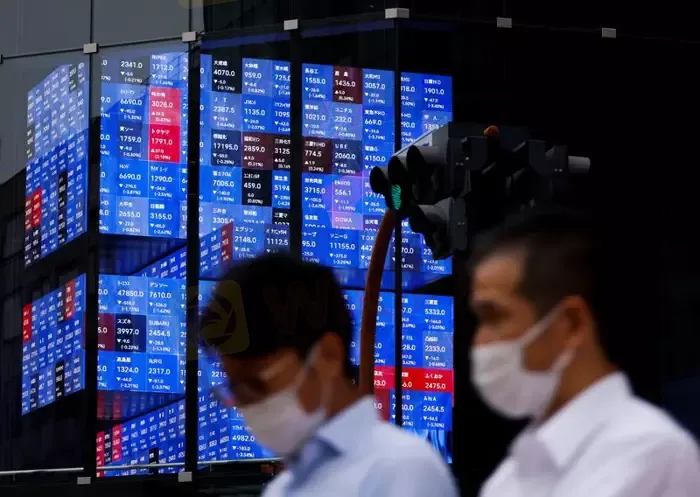
It is shaping up to be a fraught week for Europe as it waits anxiously to see if Russia resumes the flow of gas through the Nord Stream 1 pipeline on July 21, while Italy teeters on the brink of political turmoil should Prime Minister Mario Draghi go ahead and resign.
“If gas flows do not resume meaningfully, European gas prices will surge, prompting Germany and others to enact gas and power rationing with a deep recession all but guaranteed if this were to occur,” said Taylor Nugent, an economist at NAB.
“Our base case is that gas flows resume.”
The uncertainty will haunt the European Central Bank as it holds a policy meeting where it is likely to kick off a tightening cycle with a rise of 25 basis points.
Markets are also hanging on details of an anti-fragmentation tool intended to ease pressure on borrowing costs for the Unions most indebted members.
Investors found some relief in Friday‘s rally on Wall Street and MSCI’s broadest index of Asia-Pacific shares outside Japan added 0.7%, having shed 3.5% last week.
Japans Nikkei was closed for a holiday, but futures traded at 27,040 compared to a cash close of 26,788, while South Korea gained 1.4%.
Chinese blue chips added 0.4%, though Shanghai announced more districtwide coronavirus testing.
S&P 500 futures edged up 0.2%, while Nasdaq futures firmed 0.4%. EUROSTOXX 50 futures rose 0.1% and FTSE futures were flat.
A whos who of corporates report earnings will be on show this week including Goldman Sachs Group Inc, Bank of America Corp, International Business Corp, Netflix Inc, Tesla Inc and Twitter Inc.
Of the 35 companies in the S&P 500 having reported, 80% have beaten Street expectations, according to Refinitiv. Analysts now expect aggregate year-on-year second-quarter profit growth of 5.6%, down from 6.8% at the beginning of the quarter.
Investors have also been encouraged that the Federal Reserve is likely to hike by “only” 75 basis points next week, in part thanks to an easing in consumer fears of inflation.
“This softening of inflation expectations is one reason why we expect the FOMC will not accelerate the near-term hiking pace and will deliver a 75bp hike at the July FOMC meeting,” said analysts at Goldman Sachs in a note.
It is a lighter week for U.S. data, though the first round of flash surveys on global manufacturing will provide a timely reading on how industries are faring this month.
The Bank of Japan holds its policy meeting amid concerns the breakneck drop in the yen is adding to the cost of imported commodities and widening the countrys trade deficit.
Yet markets assume the central bank will stick with it ultra-easy policies, making it an outlier among the majors not to be raising rates.
The dollar was a shade softer at 138.15 yen, having climbed 1.8% last week to a 24-year peak of 139.38. Against a basket of currencies, it was holding at 107.730, off last weeks top of 109.290.
The euro was a little firmer at $1.0107, after bouncing from a two-decade trough of $0.9952 last week.
“The Russia-Europe natural gas pipeline that is currently closed for maintenance is scheduled to be turned back on Thursday,” noted CBA economist Joseph Capurso. “However, if the gas flow does not resume EUR/USD could drop by at least 2%.”
Rising interest rates and a firm dollar have been a major drag for non-yielding gold which was stuck at $1,713 an ounce after shedding 2% last week. [GOL/]
Oil prices drifted lower as President Joe Biden continued his trip to the Middle East hoping to get agreement on an increase in output. [O/R]
Saudi Arabias foreign minister said a U.S.-Arab summit on Saturday did not discuss oil and that OPEC+ would continue to assess market conditions and do what is necessary.
Brent dipped 13 cents to $101.03, while U.S. crude eased 51 cents to $97.08 per barrel.

Disclaimer:
The views in this article only represent the author's personal views, and do not constitute investment advice on this platform. This platform does not guarantee the accuracy, completeness and timeliness of the information in the article, and will not be liable for any loss caused by the use of or reliance on the information in the article.

Join WikiFX and investors worldwide in celebrating the excitement of the 2026 FIFA World Cup!

Have you experienced issues with Pepperstone deposit & withdrawal processing? From your experience, do you feel that the Australia-based forex broker causes losses to its clients? Did the brokerage entity freeze your account and give you a margin call? All these trading allegations have been rampant on broker review platforms such as WikiFX. This Pepperstone review article takes a close look at the user complaints, especially in 2026. Additionally, we have given an overview of the regulatory framework under which the brokerage entity operates.

Some broker comparisons end with a confident "go with this one." This is not one of them — and that honesty is exactly what makes it worth reading. Wundersys and tradgrip are two young, offshore-registered brokers that keep popping up in front of beginner traders, often through aggressive online marketing. Both promise the usual buffet: tight spreads, generous leverage, multiple account tiers. And both, according to WikiFX, sit near the very bottom of the safety scale. So instead of crowning a champion, this comparison is really about something more useful: learning to read the warning signs, understanding the small differences that still matter, and knowing why "the better of two risky options" is still a conversation about risk.
If you trade forex from India, Pakistan, Bangladesh, Sri Lanka, or Nepal, you already know the quiet truth that eats into every trader's results: it is not just the market that decides whether you profit — it is the cost of getting in and out of each trade. Shave a couple of dollars off your commission on every lot, multiply it across hundreds of trades a year, and you are looking at the difference between a strategy that works and one that bleeds out slowly. South Asian traders are some of the most cost-conscious in the world, and rightly so. So we pulled the data on the brokers most often recommended for the region, cross-checked every name on WikiFX, and ranked them by the one number that matters most here: what they actually charge you to trade. Before the list, one quick lesson that will make this whole ranking click.
 WikiFXWikiFXWikiFXWikiFXWikiFXWikiFXWikiFXWikiFXWikiFXWikiFX
