World Cup Fever Is Here! Choose your broker like you choose your team
Join WikiFX and investors worldwide in celebrating the excitement of the 2026 FIFA World Cup!
Original

简体中文
繁體中文
English
Pусский
日本語
ภาษาไทย
Tiếng Việt
Bahasa Indonesia
Español
हिन्दी
Filippiiniläinen
Français
Deutsch
Português
Türkçe
한국어
العربية
اردو

Abstract:Interest rates are determined by the Federal Reserve or by Treasury note yields, which are determined by financial market conditions.
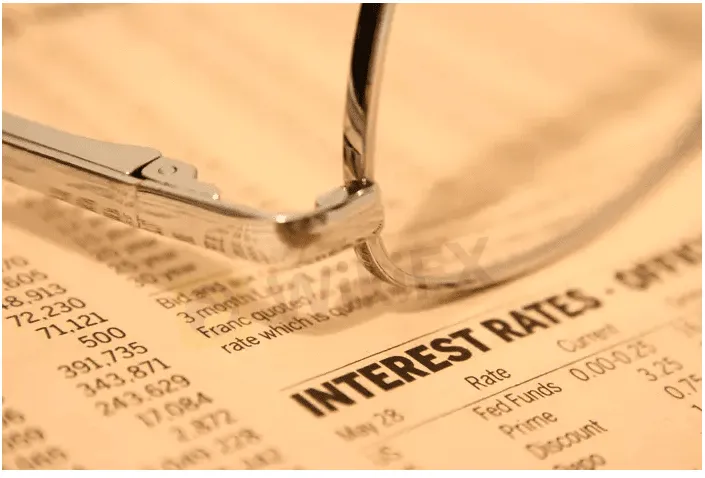
In simple terms, an interest rate is the percentage of principal charged by the lender for the use of its money. The principal is the amount of money loaned.
Interest rates affect the cost of loans. As a result, they can speed up or slow down the economy. The Federal Reserve manages interest rates to achieve ideal economic growth.
Banks and other institutions charge interest rates so they can run a profitable business. They borrow money at a lower rate than the rate that they charge. This generates a profit.
Credit card companies charge interest on the goods and services that you purchase. Mortgage companies charge interest on the money borrowed to buy a house.
Banks and the U.S. Treasury also pay interest to investors who put money into savings accounts, CDs, Treasury bills, notes and bonds. In these cases, the investors lends the money to the bank or Treasury.
An interest rate is either the cost of borrowing money or the reward for saving it. It is calculated as a percentage of the amount borrowed or saved. The interest rate on a loan is typically noted on an annual basis known as the annual percentage rate (APR).
The annual percentage rate (APR) is the total cost of the loan. It includes interest rates plus other costs. The biggest cost is usually one-time fees, called “points.” The bank calculates them as a percentage point of the total loan. The APR also includes other charges such as broker fees and closing costs.
Both the interest rate and the APR describe loan costs. The interest rate will tell you what you pay each month. The APR tells you the total cost over the life of the loan.
Interest is essentially a charge to the borrower for the use of an asset. Assets borrowed can include cash, consumer goods, vehicles, and property, according to Investopedia.
Home buyers borrow money from banks when they take out a mortgage. Other loans can be used for buying a car, an appliance, or paying for college.
Banks also become borrowers when an investor deposits money into a savings account. They pay the investor interest on the money deposited. They then use the deposited money to fund loans that they charge a higher rate to borrow. The difference between what a bank pays and what a bank receives is their profit.
When an individual borrows money from a bank, it applies the interest rate to the total unpaid portion of his loan or credit card balance, and he must pay at least the interest in each compounding period. If not, the outstanding debt will increase even though the individual is making payments.
Bank interest rates are very competitive, and their lending and savings rates arent the same. A bank will charge higher interest rates if it thinks the borrower is a credit risk. For that reason, it assigns a higher rate to revolving loans such as credit cards. The interest rate a bank pays a savings account holder is usually determined by market conditions usually set by the Federal Reserve.
Lending institutions charge fixed rates or variable rates on their loans. Fixed rates remain the same throughout the life of the loan. At first, your payments consist mostly of interest rate payments. As time passes, the borrower pays a higher and higher percentage of the debt principal. An example of a fixed-rate loan is a conventional mortgage.
Variable rates change with the prime rate. This is the interest rate an institution charges to its best borrowers. The prime rate is based on the Fed funds rate. This is the interest rate the Fed charges to its best banking customers.
Interest rates are determined by the Federal Reserve, or the Fed funds rate, or by Treasury note yields, which are determined by the financial market conditions.
The Federal Reserve sets the Federal Funds rate as the benchmark for short-term interest rates. The Fed funds rate is what banks charge each other for overnight loans. The banks consider other banks their best customers.
Treasury note yields are determined by the financial markets demand for U.S. Treasurys, which are sold at auction. Under certain economic conditions, demand for Treasurys will be high. When investors are willing to pay more for Treasurys, interest rates move lower. There are certain conditions like an economic recovery when interest rates increase, this drives down U.S. Treasurys.
High interest rates have a negative effect on the economy because they make loans more expensive. When interest rates are high, few consumers and businesses can afford to borrow. This slows down economic growth. At the same time, it encourages people to save because they get paid more for their savings deposits. This takes money out of the economy and slows down growth.
Low-interest rates have the opposite effect on the economy. Low mortgage rates, for example, increases home buyer demand. This tends to drive up home prices. Savings rates fall and investors move money into assets that pay higher yields like the stock market. Basically, low rates increase liquidity that helps the economy expand.
Consumers and investors often ask, “If low-interest rates provide so many benefits, why wouldnt the Federal Reserve keep rates low all the time?”
It is generally accepted that the U.S. government, the Federal Reserve, some businesses and consumers prefer low-interest rates.
The U.S. government likes low interest rates because it borrows tremendous amounts of money to run the country. Capital intensive companies like technology firms prefer lower rates as well as consumers who want to buy houses, cars, appliances and clothes on credit. Banks, however, prefer higher rates because they tend to increase profits due to the high rates of interest they can charge on loans.
But low-interest rates can cause interest rate. If there is too much liquidity, then the demand outstrips supply and prices rise. Some inflation is good for the economy because it shows growth, but runaway inflation tends to be detrimental to the economy.

Disclaimer:
The views in this article only represent the author's personal views, and do not constitute investment advice on this platform. This platform does not guarantee the accuracy, completeness and timeliness of the information in the article, and will not be liable for any loss caused by the use of or reliance on the information in the article.

Join WikiFX and investors worldwide in celebrating the excitement of the 2026 FIFA World Cup!

Have you experienced issues with Pepperstone deposit & withdrawal processing? From your experience, do you feel that the Australia-based forex broker causes losses to its clients? Did the brokerage entity freeze your account and give you a margin call? All these trading allegations have been rampant on broker review platforms such as WikiFX. This Pepperstone review article takes a close look at the user complaints, especially in 2026. Additionally, we have given an overview of the regulatory framework under which the brokerage entity operates.

Some broker comparisons end with a confident "go with this one." This is not one of them — and that honesty is exactly what makes it worth reading. Wundersys and tradgrip are two young, offshore-registered brokers that keep popping up in front of beginner traders, often through aggressive online marketing. Both promise the usual buffet: tight spreads, generous leverage, multiple account tiers. And both, according to WikiFX, sit near the very bottom of the safety scale. So instead of crowning a champion, this comparison is really about something more useful: learning to read the warning signs, understanding the small differences that still matter, and knowing why "the better of two risky options" is still a conversation about risk.

If you trade forex from India, Pakistan, Bangladesh, Sri Lanka, or Nepal, you already know the quiet truth that eats into every trader's results: it is not just the market that decides whether you profit — it is the cost of getting in and out of each trade. Shave a couple of dollars off your commission on every lot, multiply it across hundreds of trades a year, and you are looking at the difference between a strategy that works and one that bleeds out slowly. South Asian traders are some of the most cost-conscious in the world, and rightly so. So we pulled the data on the brokers most often recommended for the region, cross-checked every name on WikiFX, and ranked them by the one number that matters most here: what they actually charge you to trade. Before the list, one quick lesson that will make this whole ranking click.
 WikiFXWikiFXWikiFXWikiFXWikiFXWikiFXWikiFXWikiFXWikiFXWikiFX
