World Cup Fever Is Here! Choose your broker like you choose your team
Join WikiFX and investors worldwide in celebrating the excitement of the 2026 FIFA World Cup!
Original

简体中文
繁體中文
English
Pусский
日本語
ภาษาไทย
Tiếng Việt
Bahasa Indonesia
Español
हिन्दी
Filippiiniläinen
Français
Deutsch
Português
Türkçe
한국어
العربية
اردو

Abstract:The simple definition is a general rise in prices. The classic definition is ‘too much money chasing too few goods.’
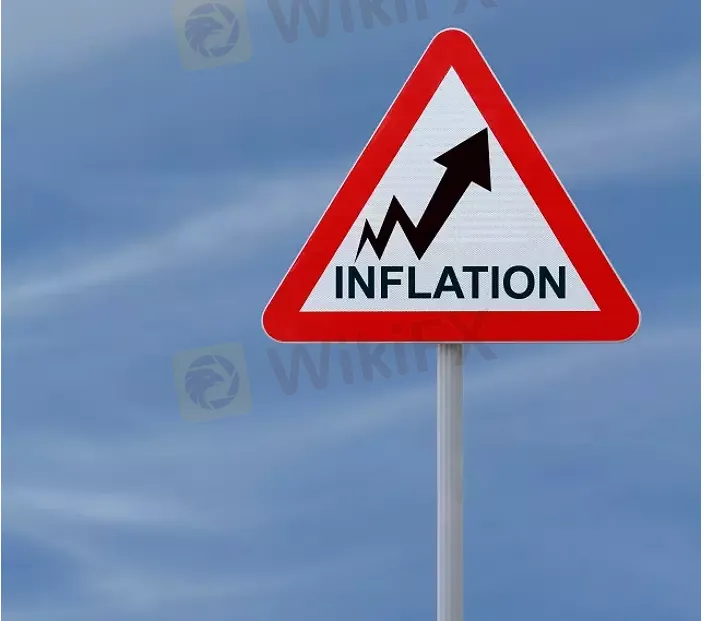
Inflation news has been dominating the headlines for several months as the global economy begins to slowly reopen following the more than year-long pandemic. The rapid rise in prices has become a top concern as central bankers, consumers and investors fret about the rising cost of groceries, housing, gasoline, and other living expenses. The most immediate way inflation is felt by consumers is the negative effect on purchasing power and quality of life.
The simple definition is a general rise in prices. The classic definition is “too much money chasing too few goods.” The price of individual items fluctuates all the time so it takes a collection of items rising at the same time to drive the inflation meter higher.
Probably the best-known measure of inflation in the U.S. is the Consumer Price Index (CPI), which measures the average change in prices paid by urban consumers for things like food, clothes, housing, and transportation. The Federal Reserve measures inflation by the personal consumption expenditure (PCE) price index. While CPI looks at what people are buying, PCE looks at what businesses are selling.
Core inflation is another term that is tossed around quite often. It takes into consideration all inflation minus food and energy, which tend to be volatile. They can be influenced by oil supply and weather, and since the events can be deemed as short-term, their numbers are stripped out of the total inflation picture.
Cost-push inflation is not that common. It starts with a decrease in total supply or an increase in the cost of that supply. Suppliers raise prices because they know consumers will pay it.
Demand-pull inflation exists when aggregate demand for a good or service outstrips aggregate supply. It begins with an increase in consumer demand. Sellers meet such an increase with more supply. But when additional supply is unavailable, sellers raise their prices. (Learn more about cost-push and demand-pull inflation here.)
It‘s the Fed’s job to calm people‘s nerves over inflation. Generally speaking, consumers don’t worry about inflation being too low.
Throughout April and May 2020 at the start of the pandemic when prices were plunging, consumers werent fretting over low food and gasoline prices. They were focused on avoiding coronavirus. While quarantined, and with the economy on lockdown, fewer people were driving and gasoline and crude oil prices fell sharply.
Now that most of the lockdowns have ended, more people are working and individuals are driving and flying. This is driving up gasoline and crude oil prices. In other words, prices are reflating from extremely low levels in early 2020 to higher prices in the Spring/Summer of 2021.
Historically low-interest rates are also helping to drive inflation higher. When the economy was stable in early 2020 before the pandemic, mortgage rates were relatively stable but higher than they are at this time. When the Fed slashed its benchmark rates, mortgage rates fell sharply. Low mortgage rates are one of the factors driving up demand for housing.
Demand for housing is increasing, but the supply of available homes to buy is low so people are building new houses. After a sluggish 2020 drove down demand for building materials such as copper and lumber, the current surge in home building is driving up demand for these materials. The increase in prices is another contributing factor to a rapid rise in inflation.
The Fed sees the rise in gasoline, copper, and lumber prices as a temporary reaction to the reopening of the economy. They dont see the rise in prices as here to stay. Policymakers can explain away the jump in prices as economic growth. They feel they have the measures to combat inflation, but they also run the risk of stopping growth too fast.

Disclaimer:
The views in this article only represent the author's personal views, and do not constitute investment advice on this platform. This platform does not guarantee the accuracy, completeness and timeliness of the information in the article, and will not be liable for any loss caused by the use of or reliance on the information in the article.

Join WikiFX and investors worldwide in celebrating the excitement of the 2026 FIFA World Cup!

Have you experienced issues with Pepperstone deposit & withdrawal processing? From your experience, do you feel that the Australia-based forex broker causes losses to its clients? Did the brokerage entity freeze your account and give you a margin call? All these trading allegations have been rampant on broker review platforms such as WikiFX. This Pepperstone review article takes a close look at the user complaints, especially in 2026. Additionally, we have given an overview of the regulatory framework under which the brokerage entity operates.

Some broker comparisons end with a confident "go with this one." This is not one of them — and that honesty is exactly what makes it worth reading. Wundersys and tradgrip are two young, offshore-registered brokers that keep popping up in front of beginner traders, often through aggressive online marketing. Both promise the usual buffet: tight spreads, generous leverage, multiple account tiers. And both, according to WikiFX, sit near the very bottom of the safety scale. So instead of crowning a champion, this comparison is really about something more useful: learning to read the warning signs, understanding the small differences that still matter, and knowing why "the better of two risky options" is still a conversation about risk.
If you trade forex from India, Pakistan, Bangladesh, Sri Lanka, or Nepal, you already know the quiet truth that eats into every trader's results: it is not just the market that decides whether you profit — it is the cost of getting in and out of each trade. Shave a couple of dollars off your commission on every lot, multiply it across hundreds of trades a year, and you are looking at the difference between a strategy that works and one that bleeds out slowly. South Asian traders are some of the most cost-conscious in the world, and rightly so. So we pulled the data on the brokers most often recommended for the region, cross-checked every name on WikiFX, and ranked them by the one number that matters most here: what they actually charge you to trade. Before the list, one quick lesson that will make this whole ranking click.
 WikiFXWikiFXWikiFXWikiFXWikiFXWikiFXWikiFXWikiFXWikiFXWikiFX
