


FOMC Minutes Today: 3 USD and Gold Scenarios Traders Should Prepare For
The Fed releases the July FOMC minutes on 19 August 2026. Here are three USD and gold scenarios, confirmation signals, and a practical risk checklist for traders.
Original

简体中文
繁體中文
English
Pусский
日本語
ภาษาไทย
Tiếng Việt
Bahasa Indonesia
Español
हिन्दी
Filippiiniläinen
Français
Deutsch
Português
Türkçe
한국어
العربية
اردو




Abstract:Hong Kong SFC sets Feb 29 deadline for crypto exchange licenses, signaling tighter digital currency regulation. Only OSL Digital Securities and HashKey Exchange are licensed so far.
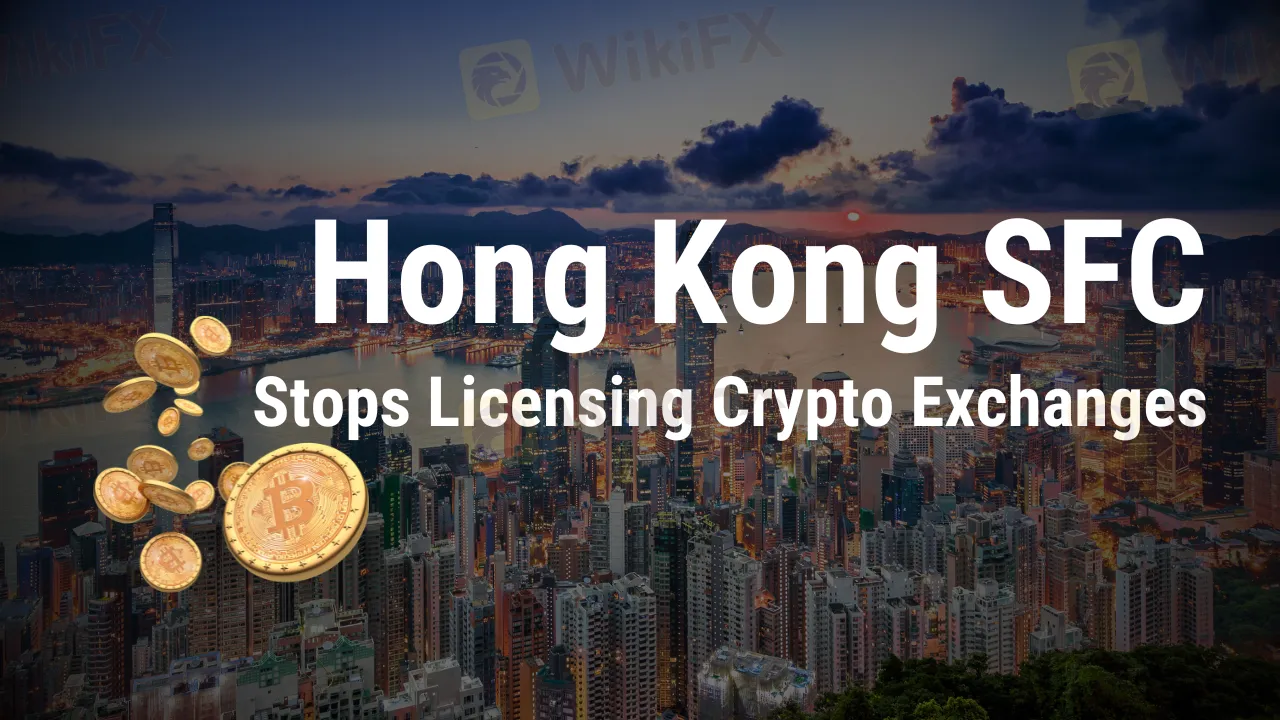
The deadline for submitting licensing applications to operate Bitcoin exchanges is February 29 in Hong Kong. The Securities and Futures Commission's (SFC) move indicates a more stringent approach to the region's regulation of digital currencies.
All cryptocurrency trading platforms that are operating in Hong Kong without a license have until May 31, 2024, according to the SFC, to stop doing business. This directive constitutes an element of a broader initiative to regulate the cryptocurrency market and protect investors from potential risks.
The SFC has only officially licensed two businesses so far: OSL Digital Securities and HashKey Exchange, which received approval on December 15, 2020, and November 9, 2022, respectively. Should additional applications be approved, only these two platforms will have the legal capacity to operate until May 20, 2024.
Four of the 22 cryptocurrency trading sites that submitted applications to be granted operating licenses under the new rules—Huobi HK, Meex, BitHarbour, and Ammbr—either withdrew their applications or had the SFC reject them. As a result of the authority's rigorous vetting process, this implies that only compliant platforms are permitted to function.
The SFC intends to make public a list of unlicensed platforms that must be closed to protect investor interests and advance transparency. This lawsuit seeks to warn against trading on unauthorized platforms. These platforms will be subject to operating limitations, such as a prohibition on selling inside Hong Kong, during the wind-down period before the May 31 deadline.

SFC will list licensed exchanges as of June 1, 2024, after May 31. Applicants must understand that license approval is not guaranteed. The SFC's investigation will determine whether or not the approved platforms can subsequently onboard regular investors for trading in popular cryptocurrencies like Bitcoin and Ether, as well as maybe other altcoins and stablecoins.
The Hong Kong bitcoin exchange BitForex abruptly fell after $57 million disappeared from its hot wallets, prompting this regulatory step. Blockchain expert ZachXBT brought up this issue, pointing out that BitForex stopped processing withdrawal requests and that its staff had stopped responding.
BitForex's website currently displays a banned warning. Crypto exchanges worldwide face regulatory issues like these. Japanese officials issued a warning to BitForex for operating without registration. Other exchanges, including Bitget, MEXC Global, and Bybit, were warned. Chainalysis also questioned BitForex's overstated trade volumes in 2019.
The Hong Kong crackdown reflects worldwide Bitcoin scrutiny and regulation. As digital currencies grow more popular, governments and regulatory agencies are working harder to monitor and regulate these platforms to safeguard investors, eliminate fraud, and maintain financial system integrity.
The SFC's decision to stop accepting new license applications and tighten platform restrictions demonstrates that Hong Kong prioritizes a transparent and regulated cryptocurrency trading environment. This decision may significantly affect bitcoin trading in the region and other countries' regulatory policies.
Investors in Hong Kong's virtual asset trading platforms should move to licensed or applicable firms. Cryptocurrency market operators and investors must obey the latest laws as the legal environment evolves.

Disclaimer:
The views in this article only represent the author's personal views, and do not constitute investment advice on this platform. This platform does not guarantee the accuracy, completeness and timeliness of the information in the article, and will not be liable for any loss caused by the use of or reliance on the information in the article.
The Fed releases the July FOMC minutes on 19 August 2026. Here are three USD and gold scenarios, confirmation signals, and a practical risk checklist for traders.
India's rupee is expected to open near 95.14-95.16 per US dollar after closing at 95.2075 on Friday, while Brent crude was quoted at $84.50 and RBI market presence supported the currency. This report separates a reported market intervention from a fixed exchange-rate target, explains why oil, US employment data and Federal Reserve expectations matter, and gives a practical risk checklist for forex trading India. It also explains why volatility is not a reason to trust unverified online forex trading platforms.
The Reserve Bank of India has appointed Monisha Chakraborty as Executive Director with effect from 3 August 2026; she will oversee the Foreign Exchange Department and the Financial Markets Regulation Department. Chakraborty is a career central banker with over three decades of experience in Supervision, Foreign Exchange, and Government and Bank Accounts, and previously served as Banking Ombudsman. This report explains the significance of the new RBI Executive Director appointment for forex regulation India, the scope of the Foreign Exchange Department and the Financial Markets Regulation Department, and what authorised persons, banks, and forex market participants should monitor as the new ED takes charge.
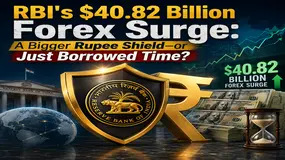
RBI's concessional forex swap facility had mobilised $40.82 billion by 31 July 2026, with FCNR(B) deposits providing $36.725 billion of the total. This India-focused analysis separates confirmed inflows from the $80–85 billion SBI Research projection, compares the 2026 programme with the 2013 FCNR(B) window, and explains what the numbers can—and cannot—do for the Indian rupee. It also shows how banks, NRI depositors, importers, exporters and institutional investors may be affected, while highlighting the oil, dollar, maturity and hedging risks that still matter for USD/INR and forex trading in India.
WikiFXWikiFXWikiFXWikiFXWikiFXWikiFXWikiFXWikiFXWikiFXWikiFX