Abstract:As equity markets plummet, some are turning their attention to the forex market, intrigued by its potential as a more resilient alternative. But is forex truly a safer bet in turbulent times, or is it just another risky endeavour?
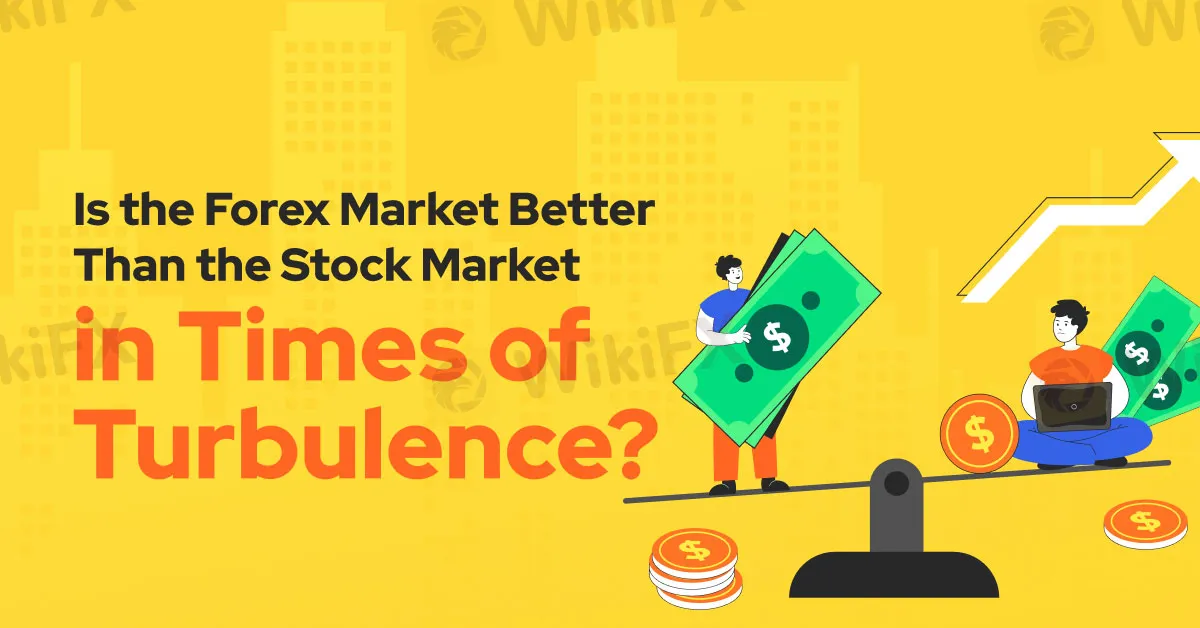
The recent stock market crash has left many investors reeling, prompting a re-evaluation of traditional investment strategies. As equity markets plummet, some are turning their attention to the forex market, intrigued by its potential as a more resilient alternative. But is forex truly a safer bet in turbulent times, or is it just another risky endeavour? This question has sparked a heated debate among traders and financial analysts alike.

One of the most compelling arguments for the forex market is its unparalleled liquidity. With a daily trading volume exceeding $6 trillion, forex markets boast the highest liquidity of any financial market. This liquidity ensures that trades can be executed swiftly, even in volatile conditions, without significantly impacting prices. Moreover, the forex market operates 24 hours a day, five days a week, providing traders with continuous access to trading opportunities.
Forex markets attract a diverse range of participants, including central banks, financial institutions, corporations, and individual investors. This broad participation can help stabilize prices and reduce the impact of any single entity's actions on the overall market, potentially offering a buffer against the extreme volatility seen in stock markets during a crash.
Additionally, forex markets provide numerous opportunities for hedging, allowing traders to protect their portfolios against adverse movements in currency prices. By using various financial instruments like options, futures, and swaps, investors can mitigate risks and secure more stable returns, even when other markets are in turmoil.

While the forex market's leverage can amplify profits, it can also magnify losses. The use of high leverage is a double-edged sword, capable of wiping out investments swiftly if trades move against the trader. This inherent risk makes forex trading particularly perilous for inexperienced investors.
Forex trading demands a deep understanding of global economics, geopolitical events, and technical analysis. The interconnectivity of world currencies means that a seemingly unrelated event in one country can dramatically impact currency prices elsewhere. This complexity can be daunting for newcomers and may result in significant losses if not managed properly.
Despite its size, the forex market is not immune to manipulation. Large financial institutions and hedge funds can influence currency prices through substantial trades, potentially disadvantaging smaller investors. This potential for manipulation raises concerns about the fairness and transparency of the forex market compared to the more regulated stock exchanges.

Stock markets benefit from rigorous regulation and oversight by entities like the Securities and Exchange Commission (SEC). These regulatory bodies work to maintain market integrity, protect investors, and enforce transparency. Such oversight is generally less stringent in the forex market, which can lead to an increased risk of fraud and malfeasance.
Stocks offer the potential for dividend income, providing a steady stream of revenue even during market downturns. This income can act as a cushion against capital losses, a feature absent in the forex market, where profits are solely dependent on price movements.
Historically, stock markets have demonstrated a robust capacity for long-term growth. Companies with strong fundamentals and growth prospects can provide substantial returns over time. In contrast, the forex market is often viewed as more suitable for short-term trading strategies, with less emphasis on long-term investment potential.
So, is the forex market better than the stock market in times of turbulence? The answer is not clear-cut. Each market has its own set of advantages and drawbacks, and the suitability of one over the other depends largely on an individuals risk tolerance, investment goals, and level of expertise.
For those who thrive in fast-paced, high-risk environments and possess a deep understanding of global financial systems, the forex market may offer lucrative opportunities. However, for investors seeking stability, regulatory protection, and long-term growth, the stock market remains a compelling choice, even amidst volatility.
In the end, diversification might be the key. By balancing investments across both markets, traders can leverage the strengths of each while mitigating their respective weaknesses. As the debate continues, one thing remains certain: the landscape of global finance is ever-evolving, and staying informed is the best strategy for navigating its complexities.