Abstract:Market crashes are the ultimate test for traders. When the charts turn red and asset values plummet, a fundamental question arises: do traders react out of fear or greed?
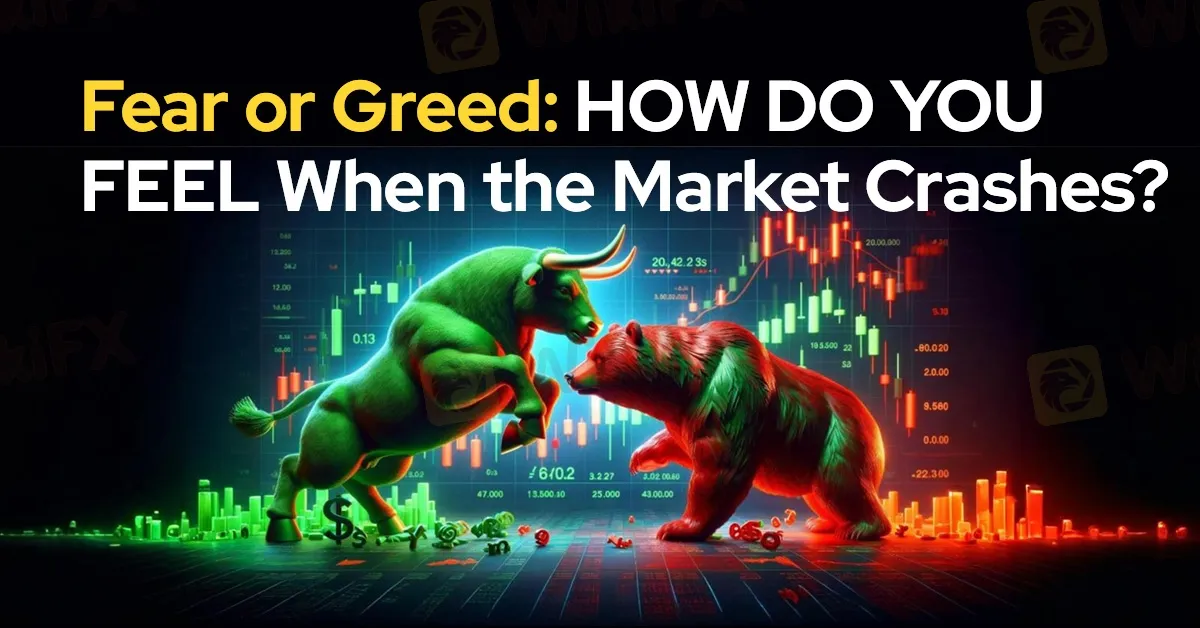
Market crashes are the ultimate test for traders. When the charts turn red and asset values plummet, a fundamental question arises: do traders react out of fear or greed? This psychological battle is at the heart of market behaviour, and understanding it can offer profound insights into the world of trading.
The psychology of fear profoundly impacts financial markets, particularly evident during periods of market instability. Panic selling is a common reaction when markets crash, as investors hastily offload assets to mitigate perceived future losses, often exacerbating the market's decline. This behaviour raises the question of whether such fear-driven actions are rational or merely emotional overreactions. Loss aversion, a well-documented psychological phenomenon, highlights that the pain of losing outweighs the pleasure of gaining, prompting traders to make impulsive decisions aimed at avoiding losses rather than evaluating potential opportunities. This instinctual response can be both a protective mechanism and a hindrance, depending on its influence on long-term strategies. Moreover, market sentiment, heavily influenced by negative news and social media, can lead to a herd mentality where fear becomes contagious. While many traders succumb to this collective anxiety, astute investors recognize the potential for buying opportunities amidst the panic. The critical question remains: are you influenced by the crowd, or do you maintain a disciplined approach in the face of market turmoil?

1. Buying the Dip: On the flip side, crashes present a golden opportunity for those driven by greed. “Buying the dip” is a popular strategy where traders purchase assets at lower prices, anticipating a rebound. This approach requires a cool head and a strong belief in market recovery. But does greed blind traders to the risks of further declines?
2. Risk-Taking Behaviour: Greedy traders often exhibit higher risk tolerance, willing to gamble on high-reward scenarios. They see market crashes as a chance to accumulate wealth quickly. While this approach can lead to substantial gains, it also carries the risk of significant losses. How do you balance the thrill of potential profits with the danger of steep losses?
3. Contrarian Thinking: Greed can foster contrarian thinking—going against the prevailing market sentiment. Contrarians thrive on identifying value where others see despair. By betting against the majority, they often reap substantial rewards. Are you bold enough to defy the crowd and seize opportunities amid the chaos?

1. Rational Decision-Making: At its core, the debate between fear and greed boils down to rational decision-making. Traders must navigate the fine line between emotional reactions and calculated strategies. In times of market turmoil, do you trust your instincts or rely on systematic analysis?
2. Long-Term Perspective: The perspective one adopts—short-term vs. long-term—greatly influences the fear vs. greed dynamic. Short-term traders may be more susceptible to emotional swings, while long-term investors might view crashes as temporary setbacks. Which perspective do you embrace, and how does it shape your trading strategy?
3. Personal Risk Tolerance: Every trader has a unique risk tolerance level. Understanding your own appetite for risk can help determine whether fear or greed dominates your trading behaviour. Are you more inclined to protect your capital at all costs, or are you willing to take bold risks for the chance of greater rewards?
As markets crash and recover, the interplay of fear and greed continues to shape the financial landscape. Reflecting on your own reactions during turbulent times can provide valuable insights into your trading psyche. Are you driven by fear, retreating at the first sign of trouble? Or does greed propel you forward, seizing opportunities amid the chaos?
Ultimately, there is no right or wrong answer. Both fear and greed have their roles in trading, and successful traders learn to harness these emotions to their advantage. The key lies in self-awareness and a balanced approach, recognizing when to heed caution and when to embrace risk.