Abstract:The dollar is losing its dominance? The forex market is witnessing a rapid shift toward de-dollarization, sparking serious investor attention.
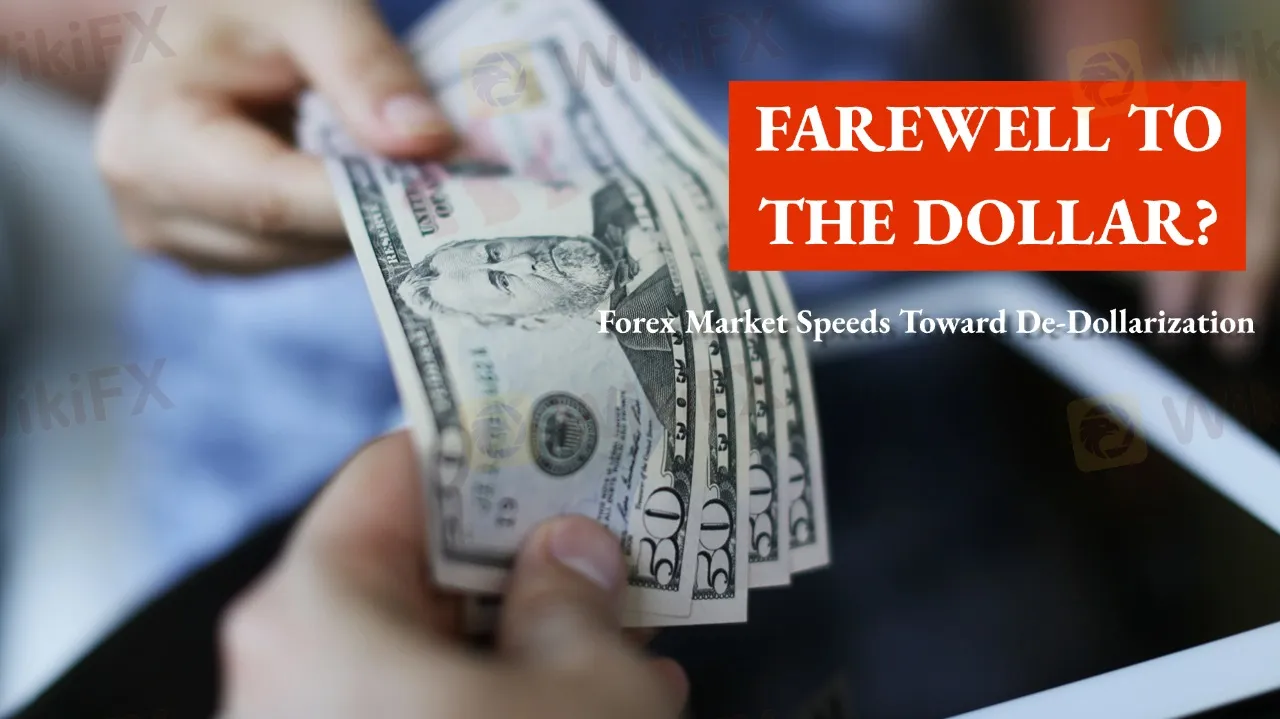
Recently, the U.S. dollar has been under significant selling pressure in the forex market. Not only has it weakened against major currencies, but U.S. assets across the board—stocks, bonds, and the dollar itself—are facing simultaneous outflows.
Unlike typical crises where investors rush to hold dollars and U.S. Treasuries, the current trend shows them actively avoiding U.S. assets. This signals a potential erosion of long-held confidence in the dollar as a safe haven.
Mounting Challenges Push De-Dollarization into High Gear
Analysts from Deutsche Bank point out that the dollar is facing an unprecedented trust issue. On one hand, global demand for dollar-denominated assets is shrinking.
On the other, rising trade tensions with major economies have brought currency issues into the spotlight, further undermining market confidence.
What's more, concerns about the political use of dollar liquidity are prompting central banks and investors worldwide to reduce their reliance on the dollar. This de-dollarization trend is no longer theoretical—its accelerating in real time.
Official institutions are considering cutting back on U.S. Treasuries, and global contracts are increasingly shifting away from being dollar-denominated.
In this shifting environment, forex investors need to sharpen their risk radar. Diversifying away from dollar exposure is becoming a prudent strategy. Currencies like the euro, yen, and even the yuan are gaining attention as potential alternatives.
At the same time, traditional safe-haven assets like gold may see renewed demand, especially as concerns over global liquidity risks intensify.
Investors should also prepare for heightened volatility. Short-term trading strategies must be more sensitive to event-driven movements and policy signals. In the long term, it remains to be seen whether the dollar will lose its global dominance—but the current momentum toward de-dollarization is undeniable, and investors cant afford to ignore it.