


FOMC Minutes Today: 3 USD and Gold Scenarios Traders Should Prepare For
The Fed releases the July FOMC minutes on 19 August 2026. Here are three USD and gold scenarios, confirmation signals, and a practical risk checklist for traders.
Original

简体中文
繁體中文
English
Pусский
日本語
ภาษาไทย
Tiếng Việt
Bahasa Indonesia
Español
हिन्दी
Filippiiniläinen
Français
Deutsch
Português
Türkçe
한국어
العربية
اردو




Abstract:UN report reveals Asian scam operations expanding globally, targeting Africa, Latin America with cyberfraud, generating billions amid crackdowns.
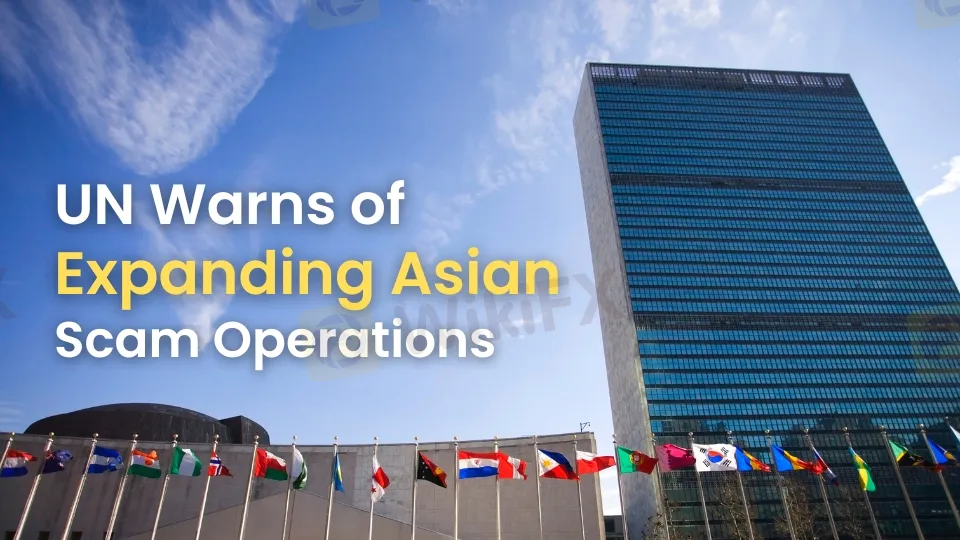
A new report from the United Nations shows that crime groups from East and Southeast Asia are spreading fast around the world. These groups run big scam centers and are moving to new places because police are cracking down harder in their home areas. The report came out on Monday from the UN Office on Drugs and Crime (UNODC). It explains how these Asian scam businesses are changing and growing, even with more efforts to stop them.
In the past, these scam centers stayed near borders in countries like Cambodia, Laos, Myanmar, and the Philippines. They often moved around to avoid getting caught. These places trick people all over the world, taking billions of dollars with fake love stories, pretend investments and illegal betting sites. The UNODC says these huge Asian scam groups make about $40 billion every year, showing how much money they affect.
The report, called “Inflection Point: Global Implications of Scam Centers, Underground Banking and Illicit Online Marketplaces in Southeast Asia,” points out a big change. As police get tougher in Southeast Asia, these crime groups are set up in areas with less control, like Africa, Latin America, the Middle East, South Asia, and the Pacific islands. “This shows theyre growing and finding new spots to work, but also protecting themselves if trouble keeps growing in Southeast Asia,” said Benedikt Hofmann, a UNODC leader for Southeast Asia and the Pacific.

In Africa, places like Nigeria are becoming main targets. In late 2024 and early 2025, police caught people from East and Southeast Asia tied to money scams and fake romance tricks. Zambia and Angola also broke up Asian-run online fraud groups. In Latin America, Brazil is dealing with more online fraud, betting, and money-washing linked to Southeast Asian criminals. In Peru, in late 2023, over 40 Malaysians were saved from a Taiwan group called Red Dragon, which made them commit online fraud after bringing them there.
The Middle East and some Pacific islands have also seen action against these Asian scam groups. The report says these criminals are now working with other crime groups from different places, making the problem bigger. They use tools like artificial intelligence, fake videos, harmful software, and stolen information to grow what the UNODC calls “crime as a service.” These things help them do bad activities online and adjust quickly when police try to stop them.
Money-washing, human trafficking, and hiring networks for these scams have popped up in Europe, North America, and South America, proving this is a worldwide issue. Hofmann stressed how serious this is: “The way these groups are speeding up, getting better, and moving to new areas means the problem is stronger now. Governments need to be ready to fight back.”
These Asian scam groups keep going because they find places with weak rules and use the latest technology. As they reach new markets, their tricks get smarter, making it hard for countries to work together and set rules. The UNODC report is a loud call for help, pushing governments everywhere to build stronger walls against this growing danger.
With billions of dollars involved and victims on every continent, the worldwide growth of Asian scam groups is a key turning point. As of April 25, 2025, stopping these criminals needs fast, teamwork efforts to break their systems and block their tech advantages.

Disclaimer:
The views in this article only represent the author's personal views, and do not constitute investment advice on this platform. This platform does not guarantee the accuracy, completeness and timeliness of the information in the article, and will not be liable for any loss caused by the use of or reliance on the information in the article.

The Fed releases the July FOMC minutes on 19 August 2026. Here are three USD and gold scenarios, confirmation signals, and a practical risk checklist for traders.
Angel One, an India-based brokerage entity, constantly receives allegations from users online. Users are complaining about withheld funds, poor customer support service, undesired trade execution orders, etc. In this Angel One review, let’s quickly go through these complaints, understand its regulatory framework and pay attention to the product portfolio.

AuroraEx, a United States-based multi-asset brokerage entity, is facing serious user allegations over how it handles deposited funds. Many users have accused the broker of failing to meet its payment obligations. Some have questioned the broker over possible trade-related foul play, while others have alleged that it scammed them through a Ponzi operation. This AuroraEx review examines these user-reported allegations and provides an overview of the broker’s regulatory status.
FINEX review 2026 for readers comparing an Indonesia forex broker: understand what Bappebti's A+++ rating does and does not show, then check floating spreads, withdrawals, segregated accounts and the complaint route for PT Finex Bisnis Solusi Futures.
WikiFXWikiFXWikiFXWikiFXWikiFXWikiFXWikiFXWikiFXWikiFXWikiFX