


FOMC Minutes Today: 3 USD and Gold Scenarios Traders Should Prepare For
The Fed releases the July FOMC minutes on 19 August 2026. Here are three USD and gold scenarios, confirmation signals, and a practical risk checklist for traders.
Original

简体中文
繁體中文
English
Pусский
日本語
ภาษาไทย
Tiếng Việt
Bahasa Indonesia
Español
हिन्दी
Filippiiniläinen
Français
Deutsch
Português
Türkçe
한국어
العربية
اردو




Abstract:Discover why regulated brokers offer safety for your capital with oversight, security, and transparency, plus the risks of unregulated options. Invest with confidence.
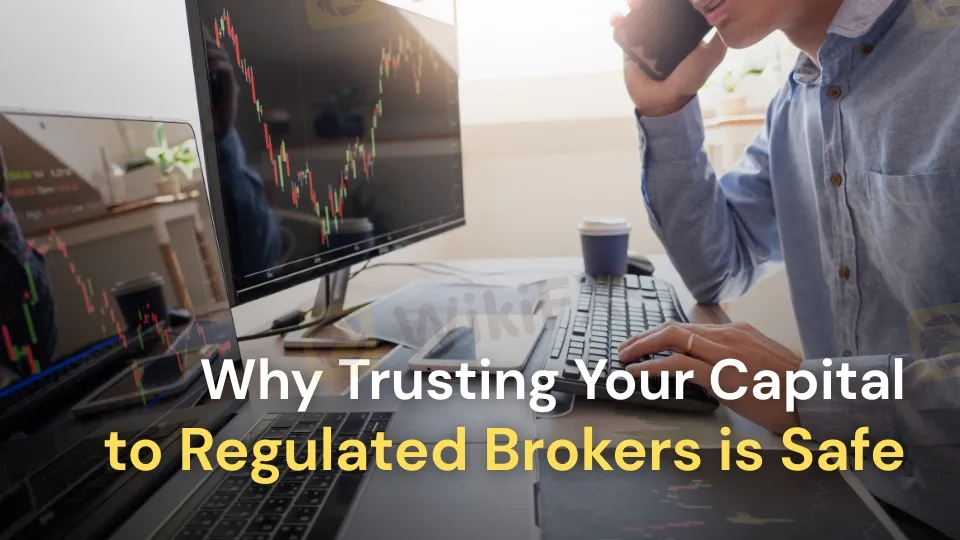
Investing your hard-earned money can feel like stepping onto a tightrope— exhilarating, but with a nagging fear of falling. The financial world is vast and complex, and the idea of handing over your capital to someone else to manage can stir up all kinds of doubts. What if they disappear with it? What if the market crashes and there‘s no one to hold accountable? These are valid concerns, but here’s the good news: regulated brokers exist to steady that tightrope, offering a safety harness built on oversight, security, and trust. Let‘s unpack why entrusting your capital to a regulated broker isn’t just a smart move—its a decision that can put your mind at ease.
How Regulatory Bodies Safeguard Your Investments
Picture this: a bustling marketplace where everyone‘s shouting promises of riches, but no one’s checking the scales. That‘s what trading might look like without regulatory bodies. These organizations—think of the SEC in the United States, FCA in the UK, or ASIC in Australia—act like the market’s referees. They set the rules, blow the whistle on foul play, and make sure everyones playing fair.
Regulatory bodies impose strict standards on brokers who want their stamp of approval. This isn‘t a rubber-stamp process either; brokers have to prove they’ve got the financial backbone to operate, maintain segregated accounts (keeping your money separate from their own), and submit to regular audits. If something goes fishy—like a broker dipping into client funds for their own use—these watchdogs have the power to investigate, fine, or shut them down entirely. For you, the investor, this means your capital isn‘t floating in some wild-west free-for-all. It’s tethered to a system designed to protect it.
Take the 2008 financial crisis as a case in point. While plenty of unregulated outfits collapsed or vanished with client money, regulated brokers under tight oversight weathered the storm better—not because they were immune to losses, but because they had to follow rules that prioritized client safety. Regulation doesnt eliminate risk (nothing can), but it builds a sturdy fence around your investments, keeping the wolves at bay.
Regulated Brokers and Their Robust Security Measures
Beyond the oversight of regulators, regulated brokers themselves roll up their sleeves to lock down your capital. Think of them as the guardians of a high-tech vault. Theyre not just relying on a padlock and a prayer—these firms deploy cutting-edge tools to shield your money from threats like cyberattacks, fraud, or internal slip-ups.

For starters, most regulated brokers use encryption that‘s on par with what banks employ—128-bit or 256-bit SSL, the kind of stuff that turns your data into an uncrackable code. When you log in to trade or check your balance, that information zips through a secure tunnel, safe from prying eyes. Two-factor authentication (2FA) is often mandatory too, adding an extra layer of “prove it’s you” before anyone can touch your account.
Then there‘s the way they handle your funds. By law, regulated brokers keep client money in segregated accounts at reputable banks. This isn’t optional—it‘s a hard rule. If the broker hits rough waters and goes bankrupt, your money isn’t tangled up in their mess; it‘s sitting safely on the sidelines, ready to be returned to you. Add in regular stress tests and risk management protocols, and you’ve got a fortress of security that unregulated players can‘t match. It’s not just about protecting your cash—it‘s about giving you confidence that it’s there when you need it.
Investor Protection Schemes: A Safety Net Explained
What happens if the worst-case scenario hits? Say a regulated broker goes under despite all the rules and safeguards. This is where investor protection schemes swoop in like a financial superhero. These programs—such as the FDIC for bank deposits or the UKs FSCS—are often tied to regulatory frameworks and act as a backstop for your capital.
Here‘s how it works: in many countries, regulated brokers contribute to compensation funds that cover clients if the firm fails. In the UK, for instance, the Financial Services Compensation Scheme (FSCS) can reimburse up to £85,000 per person if a broker collapses. In the US, the SIPC steps in with up to $500,000 of protection, including $250,000 for cash. These aren’t vague promises—theyre legal guarantees baked into the system.
Now, these schemes aren‘t a free pass to ignore due diligence. They don’t cover losses from bad trades or market dips—that‘s the nature of investing. But they do mean that if a broker implodes due to mismanagement or fraud, you’re not left empty-handed. It‘s like an insurance policy you didn’t have to buy yourself, offering peace of mind that unregulated brokers cant even dream of providing.
Why Transparency Matters in Regulated Trading
Trust isn‘t built on blind faith—it’s forged through clarity. Regulated brokers know this, which is why transparency is their calling card. Ever wonder what happens behind the scenes when you place a trade? With a regulated firm, you don‘t have to guess. They’re required to lay it all out: fees, spreads, execution policies, and even how they make their money. No smoke, no mirrors—just the facts.
This openness extends to communication too. Regulated brokers provide regular statements, so you can see exactly where your money‘s at—down to the penny. If there’s a conflict of interest (say, they‘re trading against you), they have to disclose it upfront. And if you’ve got a gripe? There‘s a clear process to raise it, often with the regulator as a fallback if the broker doesn’t play ball.
Contrast that with the murky waters of unregulated trading, where hidden fees can erode your profits and “terms” change on a whim. Transparency isn‘t just a buzzword here—it’s a lifeline. It lets you make informed decisions, knowing the broker‘s cards are on the table. That kind of trust isn’t a luxury; it‘s a necessity when your capital’s on the line.
The Risks of Choosing Unregulated Brokers
Flipping the coin, let‘s talk about the dark side: unregulated brokers. They might dangle tempting bait—higher leverage, lower fees, or promises of quick riches—but it’s a gamble with no safety net. Without oversight, there‘s nothing stopping them from cooking the books, rejecting withdrawals, or vanishing into the night with your money. It’s not hypothetical either; horror stories abound of investors losing everything to shady outfits operating beyond the laws reach.
Unregulated brokers often set up shop in jurisdictions with lax rules—or none at all—making it near impossible to chase them down if things go south. No segregated accounts mean your funds might be used to prop up their business (or their yacht). No compensation schemes mean a collapse leaves you high and dry. And transparency? Forget it. Youre at their mercy, with no referee to call foul.
The kicker is, the savings or perks they offer rarely outweigh the risk. A slightly lower fee doesn‘t mean much if your entire account gets wiped out. Choosing an unregulated broker isn’t just rolling the dice—it‘s handing over your capital to someone who doesn’t have to answer to anyone. Why take that chance when regulated options offer accountability and protection?
In the end, trusting your capital to a regulated broker isn‘t about surrendering control—it’s about choosing a partner who‘s bound by rules, backed by safeguards, and committed to keeping your money secure. Regulatory bodies, robust security, compensation schemes, and transparency all work together to create a framework you can rely on. Sure, investing always carries some risk—no one can promise otherwise—but with a regulated broker, you’re not walking that tightrope alone. So take a deep breath, do your homework, and step forward with confidence. Your money deserves it.

Disclaimer:
The views in this article only represent the author's personal views, and do not constitute investment advice on this platform. This platform does not guarantee the accuracy, completeness and timeliness of the information in the article, and will not be liable for any loss caused by the use of or reliance on the information in the article.
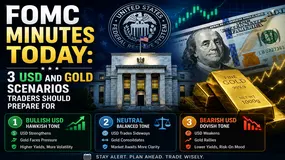
The Fed releases the July FOMC minutes on 19 August 2026. Here are three USD and gold scenarios, confirmation signals, and a practical risk checklist for traders.
Choosing a forex liquidity provider is not a search for the lowest displayed spread or the longest provider list. It is a broker decision about pricing integrity, depth, routing, credit, reporting, incident response, and client communication. This 2026 guide explains how a forex LP, FX liquidity provider, or liquidity provider forex arrangement fits into a broker’s execution chain; what to test before onboarding; why a “best forex liquidity provider” claim cannot replace due diligence; and how to compare cost beyond commission. Use the execution-quality scorecard, provider questions, routing scenarios, and 90-day onboarding plan to assess whether a liquidity relationship can support your actual client mix, instruments, risk model, and jurisdiction. The goal is not to make a universal ranking. It is to build evidence that your broker can explain, supervise, reconcile, and recover its execution service when market conditions are difficult.
India's rupee is expected to open near 95.14-95.16 per US dollar after closing at 95.2075 on Friday, while Brent crude was quoted at $84.50 and RBI market presence supported the currency. This report separates a reported market intervention from a fixed exchange-rate target, explains why oil, US employment data and Federal Reserve expectations matter, and gives a practical risk checklist for forex trading India. It also explains why volatility is not a reason to trust unverified online forex trading platforms.
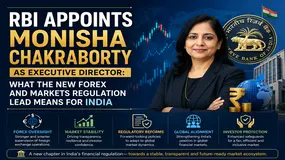
The Reserve Bank of India has appointed Monisha Chakraborty as Executive Director with effect from 3 August 2026; she will oversee the Foreign Exchange Department and the Financial Markets Regulation Department. Chakraborty is a career central banker with over three decades of experience in Supervision, Foreign Exchange, and Government and Bank Accounts, and previously served as Banking Ombudsman. This report explains the significance of the new RBI Executive Director appointment for forex regulation India, the scope of the Foreign Exchange Department and the Financial Markets Regulation Department, and what authorised persons, banks, and forex market participants should monitor as the new ED takes charge.
WikiFXWikiFXWikiFXWikiFXWikiFXWikiFXWikiFXWikiFXWikiFXWikiFX