


FOMC Minutes Today: 3 USD and Gold Scenarios Traders Should Prepare For
The Fed releases the July FOMC minutes on 19 August 2026. Here are three USD and gold scenarios, confirmation signals, and a practical risk checklist for traders.
Original

简体中文
繁體中文
English
Pусский
日本語
ภาษาไทย
Tiếng Việt
Bahasa Indonesia
Español
हिन्दी
Filippiiniläinen
Français
Deutsch
Português
Türkçe
한국어
العربية
اردو




Abstract:Safe-haven assets rally, oil prices rebound, and market confidence improves – but investors must stay cautious amid growing global uncertainty.
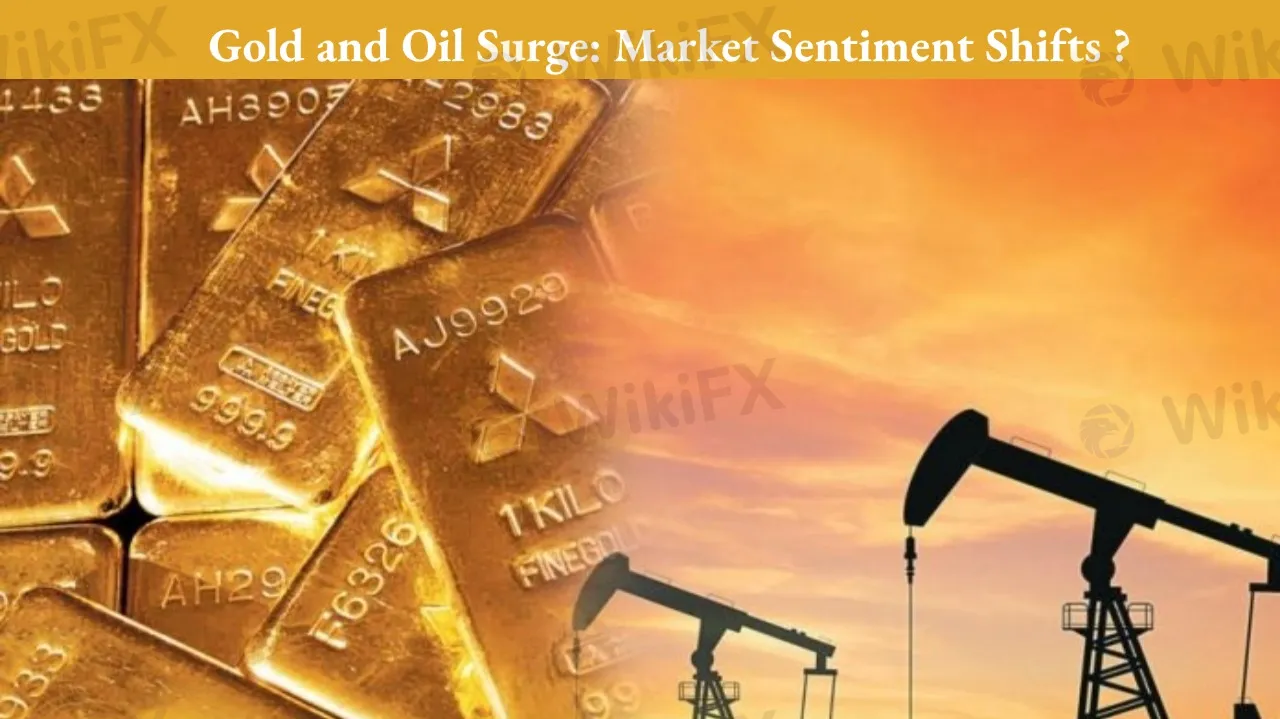
The gold market has shown strong momentum recently, once again becoming a haven for global investors. Spot gold surged to $3,349.6 per ounce, up 1.83%, while U.S. gold futures climbed 1.73% to $3,373. These gains were largely driven by rising global risk aversion.
One major driver is the escalating geopolitical conflict, particularly the renewed tension between Russia and Ukraine. Concerns about prolonged warfare and its ripple effects on global stability have pushed investors toward gold. In addition, trade-related uncertainties stemming from various countries' shifting import-export policies are also boosting demand for safe-haven assets.
A weakening U.S. dollar has further supported gold's upward momentum. The dollar index fell by 0.63%, making gold more attractive for non-dollar holders. Analysts note that in times of rising risk aversion and a softening dollar, gold tends to rally sharply.
Investors are also closely watching statements from Federal Reserve officials to gauge future monetary policy. Market consensus suggests that any signal of a slowing interest rate hike cycle would be positive for gold.
Oil prices are rising alongside gold. Brent crude futures rose to $64.69 per barrel, a 3.04% gain, while West Texas Intermediate (WTI) crude jumped by $2.08, up 3.42%. This strong rebound follows a mild pullback in the previous session.
The immediate catalyst was the latest OPEC+ decision to maintain its planned production increase for July. The alliance announced only a modest increase of 411,000 barrels per day, in line with previous months. This move reassured markets and eased concerns about oversupply.
Some analysts believe this decision was also a signal to member countries that have been exceeding their quotas, such as Iraq and Kazakhstan. By maintaining the current production path, OPEC+ is demonstrating its commitment to market stability.
In the U.S., low refined oil inventories and a surge in driving activity during the summer travel season have further tightened supply expectations. Many analysts predict sustained demand growth in the coming months, which could keep oil prices elevated.
Both gold and oil are surging, but the core driver is the same: uncertainty.
With the global political and economic landscape becoming increasingly volatile, investors are reassessing risk across their portfolios. Gold, as a non-yielding asset, becomes more attractive when interest rate expectations stabilize or decline. Meanwhile, oil, being central to economic activity, reflects market expectations about future supply and demand imbalances.
Gold typically moves inversely to the dollar. As the dollar weakens, gold becomes more affordable to investors using other currencies. Similarly, oil—priced in dollars—is also indirectly affected by currency fluctuations.
The current rally in both gold and oil is not a coincidence. It reflects rising concerns over inflation, geopolitical instability, and the direction of central bank policies.
While the rise in gold and oil offers potential gains, investors also face growing risks:
Volatility Risk: Rapid price movements can attract short-term traders, leading to higher market volatility and making it harder to manage risk.
Complex Information Landscape: With frequent policy shifts across countries, interpreting economic signals becomes more difficult, increasing decision-making uncertainty.
Asset Allocation Dilemma: Rising gold prices may reduce the appeal of equities and other risk assets, forcing investors to reassess their portfolio strategies.
Increased Market Correlation: The rally in safe-haven and commodity assets signals broader macro concerns. A shock in one market could ripple through others more easily.
Given this, investors need to remain flexible and cautious, with strategies that focus on risk control rather than aggressive returns.
To better understand current market trends, it's useful to revisit the strategic role of gold and oil.
Gold: The Ultimate Safe-Haven Asset
Gold is not tied to any government's credit and is often seen as a reliable store of value during crises.
Though it doesnt generate interest, gold performs well in inflationary or low-rate environments.
Central banks also hold significant gold reserves, reinforcing its status as a global benchmark asset.
Oil: The Lifeblood of the Global Economy
Crude oil powers transport, industry, and serves as a critical input in various sectors like chemicals and agriculture.
Oil prices affect everything from energy bills to consumer goods, making them a key indicator of economic trends.
Demand for oil is closely linked to economic activity, so rising prices can also reflect inflation risks and supply bottlenecks.
When gold and oil prices rise together, it signals not only concern over geopolitical risks but also expectations of tighter resources and rising costs across the board.
The synchronized surge in gold and oil reflects more than just asset-specific rallies—it signals a shift in global sentiment toward caution and risk mitigation. In todays uncertain environment, investors should prioritize stability, maintain diversified portfolios, and avoid emotional decision-making.

Disclaimer:
The views in this article only represent the author's personal views, and do not constitute investment advice on this platform. This platform does not guarantee the accuracy, completeness and timeliness of the information in the article, and will not be liable for any loss caused by the use of or reliance on the information in the article.
The Fed releases the July FOMC minutes on 19 August 2026. Here are three USD and gold scenarios, confirmation signals, and a practical risk checklist for traders.

A Prime of Prime forex arrangement can help a broker access trading relationships, credit intermediation, technology connectivity, and liquidity aggregation that may otherwise be difficult to obtain directly. But the label does not prove direct bank access, executable depth, or a particular execution outcome. This 2026 guide explains what a forex Prime of Prime, PoP liquidity provider, prime brokerage forex service, and forex prime broker proposal can mean in practice; where the credit and order-routing chain must be documented; how to test pricing, limits, rejects, records, and resilience; and which commercial terms create hidden operating cost. Use the comparison framework, red-flag list, and 90-day launch plan to assess fit for your client mix and risk model. The objective is a controllable execution dependency with traceable evidence, not a marketing claim about institutional access.
FINEX review 2026 for readers comparing an Indonesia forex broker: understand what Bappebti's A+++ rating does and does not show, then check floating spreads, withdrawals, segregated accounts and the complaint route for PT Finex Bisnis Solusi Futures.

Choosing a forex liquidity provider is not a search for the lowest displayed spread or the longest provider list. It is a broker decision about pricing integrity, depth, routing, credit, reporting, incident response, and client communication. This 2026 guide explains how a forex LP, FX liquidity provider, or liquidity provider forex arrangement fits into a broker’s execution chain; what to test before onboarding; why a “best forex liquidity provider” claim cannot replace due diligence; and how to compare cost beyond commission. Use the execution-quality scorecard, provider questions, routing scenarios, and 90-day onboarding plan to assess whether a liquidity relationship can support your actual client mix, instruments, risk model, and jurisdiction. The goal is not to make a universal ranking. It is to build evidence that your broker can explain, supervise, reconcile, and recover its execution service when market conditions are difficult.
WikiFXWikiFXWikiFXWikiFXWikiFXWikiFXWikiFXWikiFXWikiFXWikiFX