Abstract:When trading in the forex market, one of the most important concepts every trader must understand is the spread. It might seem like a small number, but its impact on your trading results can be significant. In this article, we’ll break down what the forex spread is, how it's calculated, and how it affects your trades.
When trading in the forex market, one of the most important concepts every trader must understand is the spread. It might seem like a small number, but its impact on your trading results can be significant. In this article, well break down what the forex spread is, how it's calculated, and how it affects your trades.
What is Forex Spread?
The forex spread is the difference between the bid price (the price a broker is willing to pay for a currency pair) and the ask price (the price a broker will sell the currency pair to you). In simple terms, it's the cost of trading — and its how brokers make money without charging direct commissions.
For example, if the EUR/USD pair has a bid price of 1.1050 and an ask price of 1.1053, the spread is 3 pips.
Types of Spreads
1. Fixed Spread:
o Remains constant regardless of market conditions.
o Offered mainly by market maker brokers.
o Beneficial during volatile times as it avoids sudden cost increases.
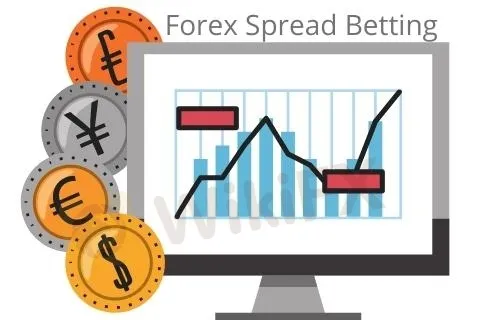
2. Variable (Floating) Spread:
o Changes with market volatility and liquidity.
o Offered by most ECN and STP brokers.
o Can be lower during stable periods but may widen sharply during news events.
How to Calculate the Spread Cost?
To understand how much the spread costs you in real money, use this simple formula:
Spread Cost = Spread (in pips) × Pip Value × Lot Size
Lets say:
• Spread = 2 pips
• Pip value = $10 (for a standard lot)
• Lot size = 1 standard lot
Spread Cost = 2 × $10 = $20
This means you start the trade $20 in the red — the price needs to move in your favor by 2 pips just to break even.

How Spread Impacts Trading?
• Affects Scalping and Day Trading:
Traders with short-term strategies are more sensitive to spread costs, as they make many trades and aim for small profits. Even slightly higher spreads can eat into their margins.
• Liquidity and Volatility:
Spreads tend to widen during major economic news, low liquidity hours, or market uncertainty. This can lead to unexpected costs or stop-outs.
• Broker Type Matters:
ECN brokers typically offer tighter spreads but may charge commissions. Market makers offer fixed spreads but can manipulate prices under certain conditions.
Conclusion
Understanding the forex spread is crucial for managing trading costs and improving profitability. Always check a broker‘s typical spreads and how they behave under different market conditions. A lower spread doesn’t always mean better — consider stability, broker transparency, and execution quality. By decoding spreads, you gain a sharper edge in the forex market.